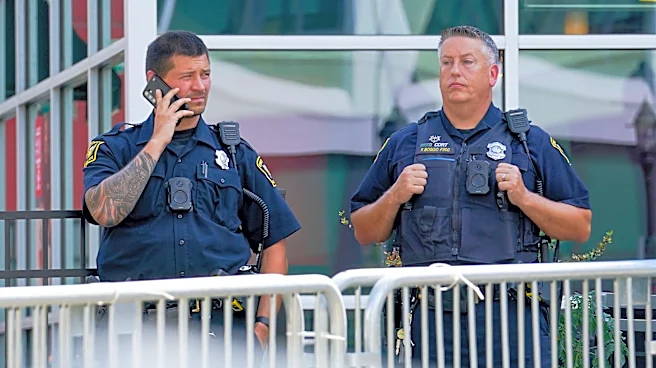







Street barricades, bike racks and a mobile Cincinnati police command center are among the sprawling security efforts implemented by the University of Cincinnati and the city after a string of shootings near campus that resulted in at least two deaths.
The changes are what some UC parents call "baby steps" toward ensuring a safer campus but students describe as a "militarization" of an area of the city of Cincinnati that doesn't necessarily see much greater crime rates than others.
Meanwhile, businesses in Clifton Heights deem the street closures an "unacceptable" shutdown of economic activity during the UC Bearcats' home opener, one of the "most important business weekends of the year," J.D. DuBois, president of the Clifton Heights Business Association,
said in a Sept. 4 press release.
Cincinnati police spokesperson Brad Underwood told The Enquirer the department's officers are strategizing its efforts to account for "environment changes" like the increased foot traffic that comes during dismissal times of nearby high schools, namely Hughes STEM High School.

Social media has also played a role in drawing people and the subsequent gunfire to the area around UC in recent weekends, he said.
South Market street was closed between 2 p.m. and 6 p.m. on Thursday, Sept. 3, ahead of more closures around University Square announced for Friday, Sept. 4, through the weekend.
"While the large police presence and barriers may not be sustainable, we continue to problem solve with our other police and non-police partners for a long-term response," Underwood said in a statement to The Enquirer.
Student concussed, broke 2 fingers in shooting stampede, UC parent says
Efforts to curb criminal behavior in high-traffic parts of campus like University Square surged on Sept. 1, when Cincinnati police installed bike racks around a grassy area called Calhoun Plaza, Underwood told The Enquirer.
Criminal activity has been concentrated in that area on the corner of Calhoun and South Market streets, including in the Aug. 24 and Aug. 30 reports of shots fired that left no fatalities but ended in injuries for at least one student.
Savanna, the parent of a UC junior whose last name The Enquirer agreed to withhold for privacy purposes, said she woke shortly after 2 a.m. on Aug. 30 to a phone call from her daughter, who was hurt in a stampede of people running away from shots fired on Calhoun street.
Her daughter heard one loud "pop" sound then more rounds of gunfire when she started running, fell to the ground and suffered from a concussion, two broken fingers, a wound above her eye and a severe road rash, Savanna said.
Three years in at UC, Savanna said she and her daughter have become "immune" to the text alerts about crime in the area after countless times when Savanna checked in on her daughter, who was always safe and unaffected.
"But when you see your phone ring at 2:19 a.m. and you answer and hear screaming in the background and running, it's a way different feeling for sure," Savanna said.
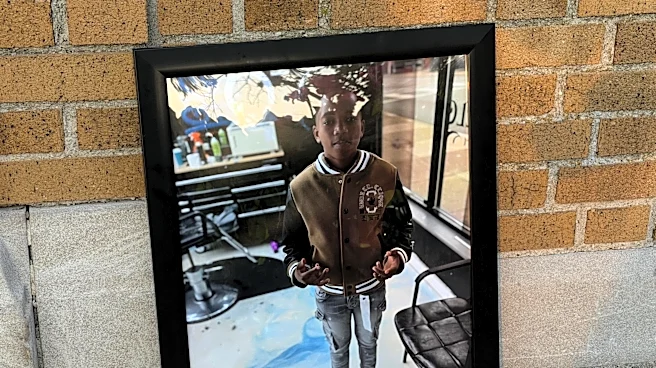
Days after the Aug. 30 incident, there was a fatal shooting on Sept. 1 in the 100 block of Shields Street near the College of Medicine. One gunshot victim was injured and the second, Jonaethyn Edwards, 24, died.
The street closures and blockades erected in the wake of recent violence are "baby steps" toward making UC safer for students, Savanna said. But she worries the blockades will merely trap students and block them from running to safety in instances where shots are fired.
"It seems like a slap on the hand when these people are found," Savanna said about the shooting suspects.
Campus feels "militarized," UC student says
When asked about the recent string of violence, UC Police's public information officer Kelly Cantwell told The Enquirer they are meeting regularly with city leaders to "identify additional actions that can be implemented immediately."
The university is investing in a host of resources to boost security, Cantwell said, including increasing staffing on weekends, adding overtime for both university and Cincinnati police officers and adding temporary lighting near University Square.
But the hordes of police officers that now populate University Square offer little comfort to some students and parents.
There's an impression that officers are there just to keep eyes out, but they don't actually jump in to break up criminal activity until it's too late, Savanna said.

CJ Hastings, a sophomore in UC's College-Conservatory of Music, told The Enquirer what has shocked him most since returning for classes starting Aug. 24 was the "crazy increase" in university and Cincinnati police presence.
Not long after numbers of police multiplied in Clifton Heights, Hastings said, the Sept. 1 fatal shooting occurred near UC'S College of Medicine.
"Does the security even really do anything besides harass and annoy all the people who live around Clifton Heights who now have to deal with all these police officers?" Hastings said.
And if police "militarize" one small area of campus like it's done with University Square, Hastings said, people who engage in criminal behavior are just going to move somewhere else.
Regardless, Hastings said that he doesn't recall this level of violence the same time last year.
Cincinnati police data indicates there were, in fact, slightly fewer shooting incidents this time last year compared to 2026 counts. But current numbers are still considerably lower than shootings in CUF, Corryville and Clifton recorded in 2023.
Clifton businesses condemn police for shutting down streets
The business community chimed in on the police response in a Sept. 4 release from the Clifton Heights Business Association, demanding that the city "withdraw or substantially revise the closure plan."
The grassy plaza now surrounded by bike racks is flanked by a number of popular businesses, including a Raising Cane's, Starbucks, Shake Shack and a Target across the way on the corner of Calhoun and South Market street.
Police announced the closure of Calhoun and McMillan streets between Vine Street and Clifton Avenue each weekend starting on Sept. 4. Neighborhood residents with a valid parking permit and employees of nearby businesses will be permitted to go to parking areas, Enquirer media partner Fox19 reported.
“Street closures are not a substitute for active and effective policing,” DuBois, Clifton Heights Business Association's president said, adding that the association was not consulted prior to the changes.
“The City’s response punishes the businesses and employees who are already victims of these conditions while doing little to address the people actually causing them," DuBois stated.

The blockades will result in lost shifts and income for hourly employees as well as lost sales from businesses, which usually count on increased traffic on weekends like this one when the UC Bearcats play, he said.
"This is not a public-safety solution. It is a refusal to do the more difficult work of enforcing the law," DuBois said.
Where, when recent shootings took place
- On Aug. 18, Harry Nelson, 18, was killed and another was injured in a shooting in Clifton at the 3400 block of Brookline Avenue. Kevin Couch, 19, Matthew Napier, 19, and Kayden Moore 18, all face murder and aggravated robbery charges in connection with Nelson's death.
- On Aug. 24, police responded to reports of shots fired in the area of Calhoun and South Market streets, according to the UC Public Safety X account.
- On Aug. 30, police responded to reports of shots fired in the same area as the Aug. 24 incident.
- On Sept. 1, Jonaethyn Edwards, 24, died due to injuries and another was injured in a shooting at the 100 block of Shields Street near the College of Medicine.
This article originally appeared on Cincinnati Enquirer: 'Baby steps' or overkill? Parents, students respond to UC police surge