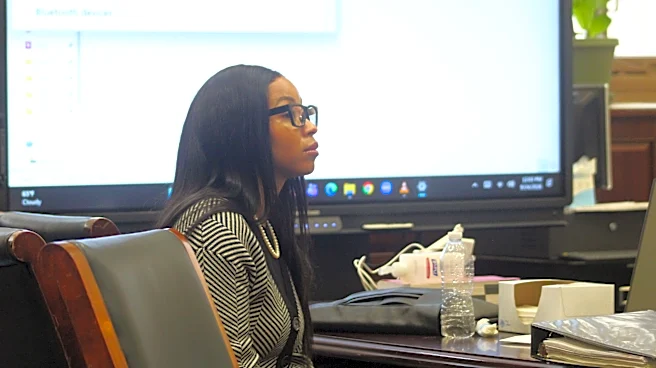









Mikayla Love-Greer is starting off her Tuesday in her mobile office.
That’s how she thinks of her car, a sedan that, depending on the day, might contain forgotten lollipops, sidewalk chalk, crayons and polka dot clipboards. She also has snacks – she won’t have time for a lunch break today – and a Celsius energy drink to power her through the day’s eight appointments.
Love-Greer is a caseworker with Hamilton County Job and Family Services. Her job is to make sure children in the county’s custody are safe and well. She visits the children in her cases at least once a month and tries to build a rapport with them.
One case can mean five monthly visits as she checks on the child, any of their siblings, their mother, their father and their foster parent.
Her caseload of 19 means she has over 40 children to check on at least once a month.
Love-Greer is one of 95 ongoing caseworkers at the agency. Their work and the children's care is funded largely by Hamilton County's children’s services levy, which voters approved in 1981.
The current levy, which expires this year, costs property owners $81.15 per $100,000 of property value and generates about $81 million per year. County officials say that's not enough to cover the rising cost of caring for more children and paying for out-of-home placements.
Now Hamilton County commissioners have placed a levy with a nearly 50% increase on the ballot this November that would cost property owners $121 per $100,000 in property value. Many of the children's services are mandated by state and federal law, meaning if the levy fails, county officials will need to find the money elsewhere in its tight budget.
For now, Job and Family Services employees work with what they have. On this rainy August morning, Love-Greer is starting her day with a trip to Mason to see Braylen, one of her more medically complex children. The day will be filled with visits with children and parents, conversation and note-taking, evaluation and maybe a snack.
9 a.m. — 'I didn’t want him to be alone.’
Braylen, 14, lives in a foster home with four other siblings.
He was 12 years old when his mother shot him in the head in an attempted murder-suicide. He suffered a traumatic brain injury and is now in a wheelchair. Love-Greer says he’s made a lot of progress since his time in the hospital after the injury.
“How’s it going, B?” Love-Greer asks him as she sits at the kitchen table. “You’re looking good!”
Braylen spent months at Cincinnati Children’s, where Love-Greer kept him company.
“He doesn’t have many family members who are cleared to see him,” she said. “I didn’t want him to be alone.”
He moved from the hospital to a rehabilitation center, where he spent a few months before JFS found foster parents able to care for his needs in April. Then they found Amy Bock, who runs a disability ministry at a local church and welcomed Brayden as a foster son.
Bock says Braylen is usually more talkative, but today he is quiet. He sometimes speaks aloud and sometimes uses a tablet computer with buttons he can press to play words.
“He asked me if he could stay in bed all day today,” Bock says. “Maybe we can do that one day before school starts."

Love-Greer said she has seen children with more complex medical needs recently. More children require therapeutic foster care, residential treatment, and crisis stabilization settings now than in previous years, said JFS spokesperson Jane Prendergast. Their placement costs more, she said, and it's in short supply statewide.
Braylen is in the top three when it comes to the most medically complex kids in Love-Greer’s caseload, she said. She also checks on a 17-year-old boy with autism spectrum disorder who is nonverbal and “pretty aggressive.”
“A lot of kids come into care because their parents just don’t know how to care for their needs,” she said.
Love-Greer asks Braylen about school, therapy and a recent family vacation to Saugatuck, Michigan. She takes notes on an iPad as she goes. Each visit means an activity log she must complete.
Braylen’s 4-year-old foster brother nuzzles up to him and Braylen gives him a hug back. He mouths along to “Baby” by Justin Bieber. When Love-Greer shows him the first few notes of “Happy Birthday” on his piano keyboard, he plucks them out after her.
9:30 a.m. to 11 a.m. – Navigating traffic and therapy
After visiting Braylen, Love-Greer drives back to the JFS building in Bond Hill, navigating rain and traffic on I-75 as she joins a virtual meeting with Bock and two trauma consultants with JFS.
They discuss Braylen’s mental health and how much, if anything, he remembers of his mother and the shooting that left him paralyzed. They try to decide what kind of therapy would help him most.
Braylen does music therapy, physical therapy, speech therapy and aquatic therapy, which he will soon swap out for Lokomat, a robotic rehabilitation device that helps people work on walking.
All children in the custody of JFS are automatically covered by the Ohio Medicaid Program, though medical complexities can make for more costly cases due to the time children spend in residential centers. That can cost hundreds of dollars per day.
Because Braylen still has feeling in his fingers and toes, his doctor said, he may someday be able to walk again.
"He told us not to get our hopes up too much," Love-Greer said. "But that's exciting."

11 a.m. to noon – Filling in on a hard case
Back inside the JFS building, Love-Greer relieves one of her coworkers supervising a visit between Josh, a nonverbal 7-year-old with autism spectrum disorder, and his mother.
She said she and her fellow caseworkers often fill in for each other when it comes to supervising visits. It depends on their own schedules for check-ins.
Josh came into JFS' custody because his mother couldn't care for his needs, Love-Greer says. He was in a foster home first but punched his foster dad in the face. He's now in kinship care.
She watches through a large glass window as Josh bounces around a small room with a couch and some toys. Josh’s mother sits on the couch and he occasionally runs back to her.
“I don’t need to worry about it with them, but if I was concerned about what a parent might say to their child, I’d be in the room with them,” she said.
Love-Greer says a "huge chunk" of the children she monitors are on the autism spectrum. JFS officials have said one of the factors increasing costs for children's services is that more children have complex problems – aggression or self-harm behaviors, runaway risk – that require residential centers or group homes.
Love-Greer has a range of kids with difficult behaviors for a traditional foster parent to manage. She has a client who is just 9 years old, who is in a group home. Usually the kids in these homes are older. She had to remove another child from kinship care because he was physically hurting his grandmother.
Love-Greer gives Josh and his mom a 15-minute warning before the visit time is up.
For children over 2, parents and family members get at least two hours to visit. For children under 2, they get at least four hours.
Love-Greer is concerned about potential cuts to support staff which handle some administrative tasks for the children in county custody if the levy doesn't pass.
"Now, I can comfortably spend an hour on home visits, but if I have to handle school enrollments or kinship studies, it would be less time for the people," she says, gesturing to Josh and his mom.
Once time is up, Love-Greer, Josh and his mom head down to the lobby. Love-Greer will supervise the hand off between Josh’s mom and his caregiver, who’s waiting in her car outside the building.
But Josh doesn’t want to leave. He runs around the lobby and grabs onto various adults, dodging both his mom and Love-Greer.
She calls his caregiver, who then enters the lobby herself to collect Josh.
Love-Greer and Josh’s mom watch as his caregiver takes Josh’s hand. He walks quietly with her out of the building.
“It’s all about the right person,” Love-Greer says.

12:30 p.m. to 1:30 p.m. – Figuring out how to pay for soccer
The next stop is checking on 7-year-old Makiyla and her 5-year-old brother Amir in Price Hill.
Their mother has some mental health and substance use issues, Love-Greer says. The children were found in a house filled with garbage. Their mother is still struggling and JFS is seeking permanent custody of the children.
When children are removed from a home, the county has up to two years of temporary custody. After that point, the children may be reunified with family members or JFS may seek permanent custody.
If a parent is making an effort and seeking help, such as addiction treatment, a judge may grant them extra time before JFS has permanent custody.
"If they're working the program, they'll get their kid back," Love-Greer says. "We see that sometimes. I wish we saw it more often."
Marchelle Donald, the social worker who works at Makiyla and Amir’s former elementary school, is their foster parent.
Makiyla is waiting on the sidewalk when Love-Greer pulls up in her car.
“Where are your shoes?” Love-Greer says with a laugh. “You’re gonna mess up those white socks.”
Makiyla and Amir show off their new backpacks and tennis shoes for the new school year: Hello Kitty for her and Spiderman for him.
Love-Greer sits at the kitchen table to talk to Donald and the foster network caseworker for the children. They talk about plans for the school year and the children’s extracurricular activities.
Makiyla is in a STEM club and Amir plays football and soccer. In previous years, the extracurriculars have been funded by Kids In School Rule, a county program that connects students in foster care to activities that fit their interests.
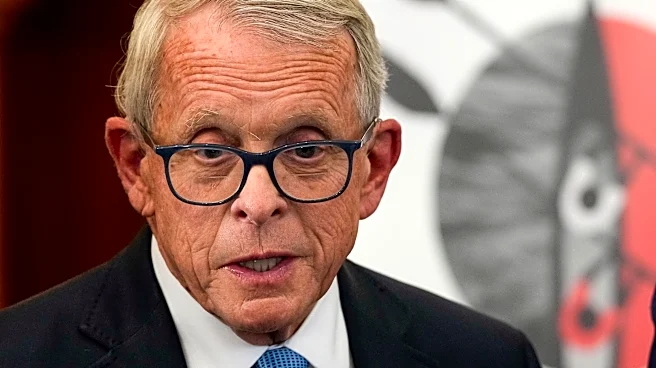
Cuts to the program, part of $36 million in cuts the Hamilton County commissioners made to the JFS budget last year, mean that money is gone. Love-Greer is trying to find alternative funding for Amir's soccer through OhioRISE, a state program started by Gov. Mike DeWine to serve children with complex behavioral needs. In the meantime, Amir's foster parent will pay for it directly.
"Sports are a big deal for him," Love-Greer says. "It's that positive male interaction."
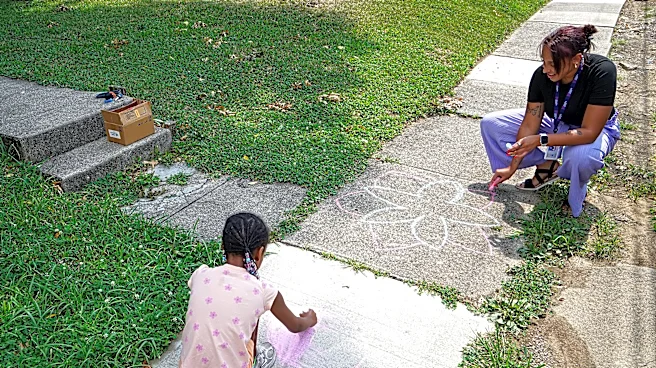
With that plan in place, Love-Greer gets up from the table to keep her promise to color with Makiyla. She keeps chalk in her car in the warm months and crayons in the cooler months.
“Makiyla is talkative anyway,” she says, smiling at the girl coloring in her purple flower on the sidewalk. “But some kids need something to do while I talk to them.”
Love-Greer lets Makiyla keep a piece of pink chalk. She leaves her coloring on the sidewalk as Amir practices skateboarding.

2:10 p.m. – Trying to break down barriers
If Love-Greer can’t reach a parent, she needs to document that she made three attempts to do a pop-up visit each month.
She says the majority of her cases involve kids whose parents were also in the foster care system. That's true of the mother she's trying to reach now.
“It's a lot of generational cycles happening," she says. One of her cases involves a pregnant 16-year-old, who keeps running away from placements.
With a parent who grew up in foster care themselves, Love-Greer says there is "immediate distrust" of caseworkers and she has to work hard to break down barriers.
The mother she's trying to reach now in Winton Hills rarely responds, but Love-Greer will make two more attempts to pop in and visit her this month.
“At this point, not responding to me means she’s further from getting her kids back,” Love-Greer says.
3:05 p.m. – 'Stuck in this dynamic’
Another complicating factor in many of Love-Greer's cases is domestic violence.
At the house she's visiting next for a pop-up visit, she always looks for a white Jeep outside. That Jeep means the mother's boyfriend is home and Love-Greer likely won't be able to have a productive conversation with her.
"I’ve talked to her about domestic violence. Her boyfriend’s been through the YWCA training for perpetrators," she says, "But they’re both still stuck in this dynamic."
With the boyfriend around, the home is not safe for children.
Love-Greer pulls up and parks on the street.
“Okay, no white Jeep,” she says. “Let’s go.”
The woman doesn't answer the door. Love-Greer only had 15 minutes before she has to head to her next appointment anyway. She'll have to try again another day.
3:35 p.m. to 4:50 p.m. – 'A lot of kids sit in limbo’
Love-Greer then heads to the foster home of William, 11, and his brother William, 10, near the JFS office in Bond Hill. They go by Bill and Trey.
They’re two of five siblings and have been in the care of JFS for six or seven years as the county seeks permanent custody. This case is an anomaly because of a parent's appeal for custody. Children currently in the temporary custody of JFS have spent an average number of 398 days in JFS custody, Prendergast said.
Love-Greer says one of the most frustrating parts of the job can be waiting for a magistrate to post a decision even after the custody trial ends.
“A lot of kids sit in limbo for months or years,” Love-Greer says. “It should never take this long.”
The storm has intensified and tornado warnings are sounding so Love-Greer, the children, their foster mom and foster network caseworker take shelter in the basement.
Love-Greer asks Bill and Trey about the summer camp they attend, if they have all their school supplies for the new year and what books they’ve been reading. Then she plays a game of Risk with the boys.
The rain breaks and Love-Greer says goodbye to Bill and Trey and their foster mom.
4:52 p.m. – Heading home
Love-Greer drives back to the JFS building.
Today was a light day. Her longest days are when children are removed from their parent's custody. Those can last until the early hours of the next morning as she tries to find a placement so children don't have to stay overnight in the JFS office building.
Every day looks different. Sometimes she’s at court, sometimes she’s at school meetings and often she's driving all over the county and beyond.
Tomorrow, her day will start again around 8 or 9 a.m. and will last until about 6:30 p.m., if things go as scheduled.
“There’s never a dull moment," she said. "I never feel like my checklist is fully completed."
Jane Park contributed reporting.
Regional politics reporter Erin Glynn can be reached at eglynn@enquirer.com, @ee_glynn on X and @eringlynn on Bluesky.
This article originally appeared on Cincinnati Enquirer: 'A lot of kids sit in limbo.' Why Hamilton County seeks tax increase