




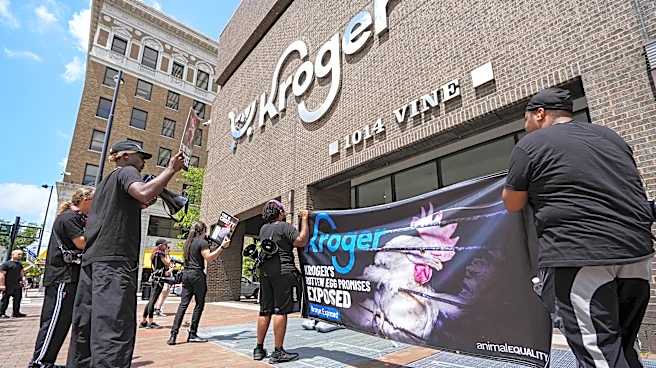


Thecage-free egg proteststargeting Kroger come at a particularly bad time for the Cincinnati-based supermarket giant when executives are worried about lowering costs to woo cash-strapped shoppers and jumpstart sales growth.
While41% of its eggs sold in 2024 were cage-free, the additional cost is a hard sell for many consumers. On Kroger’s website, a dozen Grade A large white eggs are priced at $1.49; a dozen large brown cage-free eggsgo for between $3.99 and $4.99.
"Keeping food affordable and delivering value for our customers, particularly as families face higher costs, remains a core priority," Kroger said after the arrests of nine protesters on Sept. 23.

Eggs are an 'everyday essential' closely watched by consumers
Inflation has weighed on consumers, retail sales and the overall economy for much of the decade.
As of August, the price of food at the grocery store has shot up more than 31% since March 2020 at the start of the COVID-19 pandemic – outpacing overall inflation that climbed 29% in the same period, according to data by the U.S. Bureau of Labor Statistics.
And the price of eggs has been among the most volatile in supermarket aisles: soaring from a U.S. average of $1.53 for a dozen large grade A eggs in March 2020 to as high as $6.23 in March 2025, before dropping back to $2.27 in August 2026, according to federal data.
Eggs are a very sensitive item for Kroger too. Internally, the grocer’s merchandisers classify it among five items – out of thousands throughout its stores – as “everyday essentials.” Store officials consider eggs, along with milk, sugar, iceberg lettuce and bananas, as grocery items that shoppers watch particularly closely. If your eggs are considered too pricey, the thinking goes, then your store is considered too expensive.
This article originally appeared on Cincinnati Enquirer: Protests of Kroger's cage-free eggs come as shoppers fret over prices