




For years at the U.S. Department of Transportation, I worked on audits involving multibillion-dollar transit projects in Seattle, San Juan and Washington, D.C. So I followed The Enquirer's recent examination of Cincinnati's streetcar at its 10-year anniversary with particular interest.
The Connector has now carried more than 7.5 million passengers. Ridership has climbed dramatically since fares were eliminated. And the streetcar has become a familiar part of Downtown and Over-the-Rhine.
But after 10 years, Cincinnati still hasn't definitively answered the question that has followed the streetcar from the beginning: Was it worth the investment of $145 million to build and $7 million annually to operate?
tracks through a decade of data
I don't hear that question being asked about the 2020 sales tax increase for the bus system or the planned Bus Rapid Transit projects.
However, at this point, does it really matter? Unless the city would even consider the option of mothballing the streetcar, the free rides will likely continue. The streetcar advocates are now focused on its expansion.
Pureval blames Washington

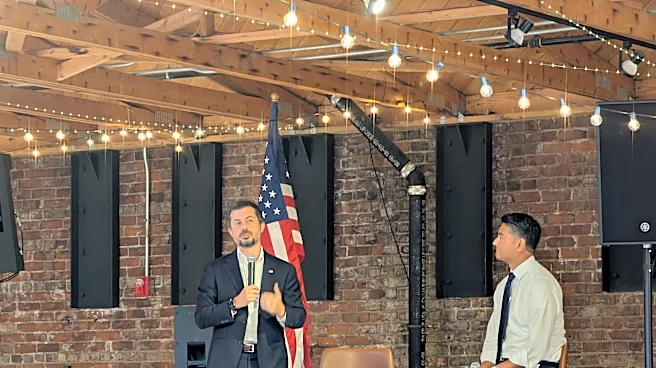
Former Secretary of Transportation Pete Buttigieg and Mayor Aftab Pureval recently appeared together at a local Labor Day event. They were specifically asked if they supported an expansion of the streetcar. Pureval expressed his support but criticized the current administration in Washington. He was quoted as saying, “They are not supportive of those kinds of transit projects, but we are not standing in place.” He then essentially took credit for the two planned BRT projects.
That was a cheap shot at the current administration. The fact is that Cincinnati’s BRT projects are funded from the DOT’s Capital Investment Grants Program, the same program that would fund a streetcar expansion. As of August 24, they remain on the list of projects that DOT plans to fund. Plus, they are slated to be funded at the 70%-80% level, approximately $250 million, compared to only 30% federal funding of the streetcar, approximately $45 million.
Referring to the expansion of the streetcar, the mayor was also critical in saying, "It's not going to happen under the current administration." While true, his statement is extremely disingenuous. As far as I can tell, in his five years as mayor, Pureval has not lifted a finger to advance an expansion proposal to the DOT for funding. So, of course, it is not going to happen in this administration.
An old study offers a new opportunity

But I have a suggestion that could serve two important purposes. In 2018, the Federal Transit Administration issued a report that examined five urban circulator projects, including Cincinnati’s streetcar. It is a very sophisticated analysis based on econometric modeling that was intended to assess the economic impact of those projects.
My non-economist interpretation of the analysis is that with respect to the streetcar, the results are mixed. For example, it found positive effects on property values in the "Streetcar Influence Area." But it also essentially reported that since the streetcar was deployed in an area that was already being redeveloped, it was difficult to disentangle the economic impacts of the streetcar from the economic development already underway.
The study examined data beginning from the announcement of the project to the streetcar’s opening in 2016, but only a year into its initial operation. That is a significant limitation of the study for Cincinnati’s current purposes.
Now that the streetcar has been in operation for 10 years, if the city would update the study’s modeling, it could help give a more authoritative answer to whether the streetcar has been a success and if applied to an expanded Streetcar Influence Area, it would also serve as the type of due diligence necessary to advance a proposed expansion that Mayor Pureval has not chosen to undertake.

Todd J. Zinser is a Cincinnati native and resides in West Price Hill. He retired as the Inspector General of the U.S. Department of Commerce after 31 years of conducting audits and investigations of federal officials, programs, and operations. He remains a certified fraud examiner. He is the Founder and Executive Director of the Cincinnati Oversight Project and is the host of a podcast on IHeart Radio and YouTube, “Citizen Watchdog with Todd Zinser, which can also be viewed on www.cincinnatiwatchdog.com.
This article originally appeared on Cincinnati Enquirer: Before Cincinnati considers expanding the streetcar, prove it works | Opinion