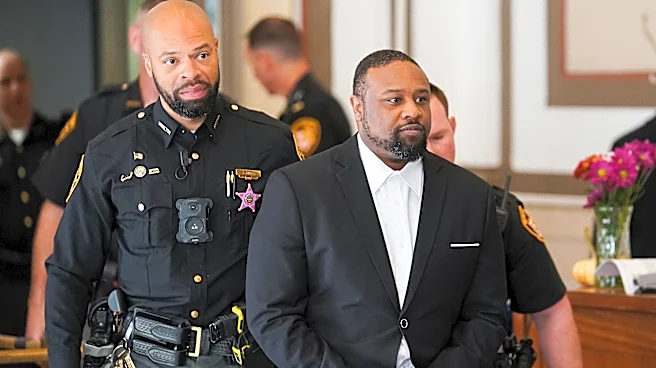





Rodney Hinton Jr. said he "had to turn" his car toward a Hamilton County sheriff's deputy in order to strike him, adding he was angry at police that day, according to testimony that appeared to undercut Hinton's insanity claim.
Jaime Adkins, a forensic psychologist who interviewed Hinton twice about the fatal collision in May 2025, described Hinton's statements Oct. 14, during the fifth day of testimony in his murder trial.

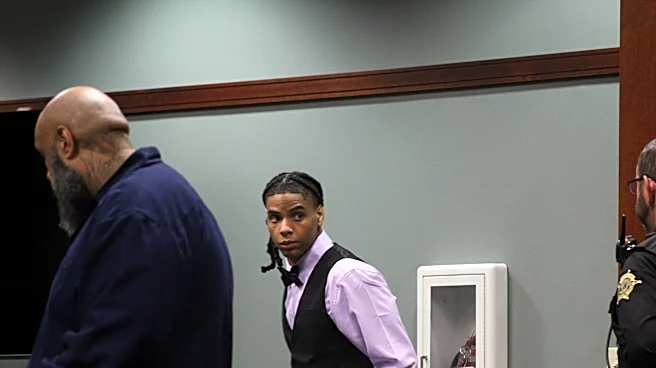
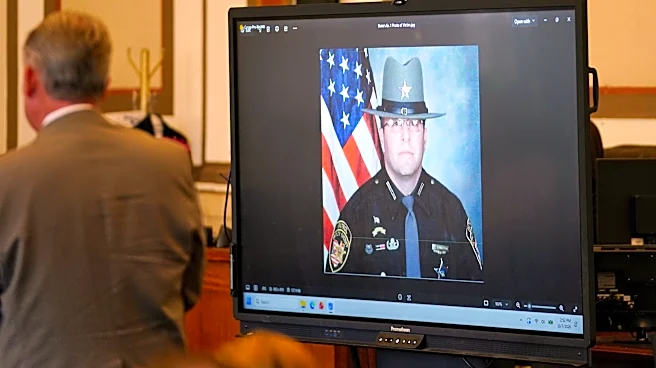
Prosecutors say Hinton intentionally drove into Deputy Larry Henderson and are asking a jury in Hamilton County Common Pleas Court to find him guilty of charges including aggravated murder. Hinton has pleaded not guilty by reason of insanity.
During an interview in February, Adkins asked Hinton about what he was thinking when
he saw the deputy, who at the time, was standing on a traffic island helping pedestrians cross the street.
"I can't say my thoughts were real," he told Adkins. "I was in an emotional daze."
Hinton then said, "I had to turn a little bit to hit (the deputy)."
A few hours earlier, police officials had shown Hinton and other family members footage of his 18-year-old son Ryan being fatally shot by an officer.
'I wasn't really thinking'
Adkins asked Hinton if he intended to drive into the deputy.
"Sorta, kinda, not really. Like I said, I wasn't really thinking. Not rationally," Hinton responded. "If I was thinking right, I wouldn't have done that."
Hinton said he wasn't angry at the deputy.
"Were you angry at the (officers) involved in your son's shooting?" Adkins asked.
"Yes."
"In that moment, did you know he wasn't one of them?"
"I don't know," Hinton said.
Did Hinton know right from wrong?
Hinton's mental state at the time of the crash is a significant part of the case. The 40-year-old has been diagnosed with schizoaffective disorder and bipolar disorder. But in order to be found not guilty by reason of insanity, Hinton has to prove that he didn't know right from wrong when he drove a car at about 45 mph into Henderson.
In previous testimony, a crash reconstructionist said data from Hinton's car as well as video showed that Hinton's actions were intentional.
Also on Oct. 14, a psychologist testifying for the defense said Hinton's mental illness symptoms were made worse because of the emotional distress he experienced after his son's death.
The psychologist, Maria Espinola, said Hinton was disconnected from reality at the time of the crash and didn't know the wrongfulness of his actions. She said he was experiencing both dissociation from reality and psychosis.

"The amount of emotion he felt about (his son) overwhelmed him to point where he lost himself," Espinola said.
His body was there, she said, but his mind was not.
Espinola also diagnosed Hinton with post-traumatic stress disorder and said he experienced "a high level of childhood trauma," including emotional neglect, abuse and being raised by a parent with a substance abuse disorder.
The worst trauma of Hinton's life, the death of his son, happened the day before the crash, Espinola said.
She also testified that there was no indication Hinton was taking medication intended to treat mental illness around the time of the crash. But Adkins testified that Hinton told her in separate interviews in November 2025 and February of this year that he was taking psychotropic medication at the time.
Hinton's attorneys have not yet questioned Adkins, which is expected to take place when testimony resumes Oct. 15.
This article originally appeared on Cincinnati Enquirer: Hinton told psychologist he 'had to turn' his car to strike deputy