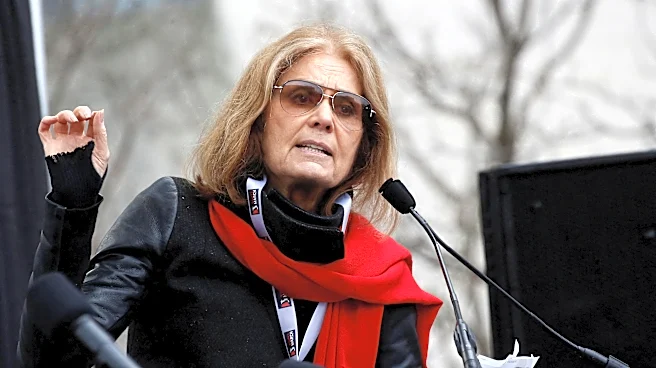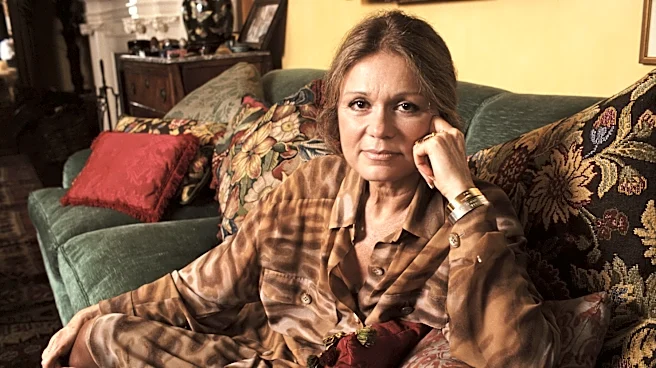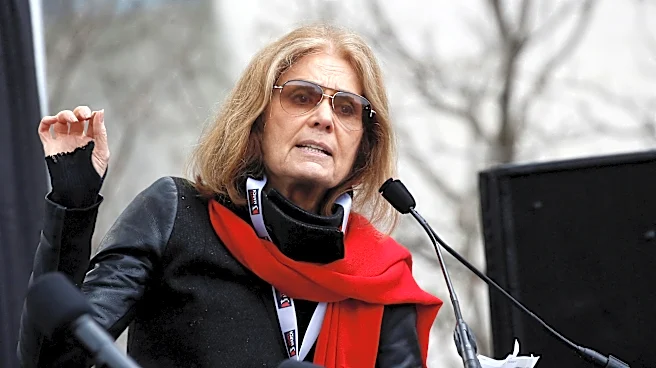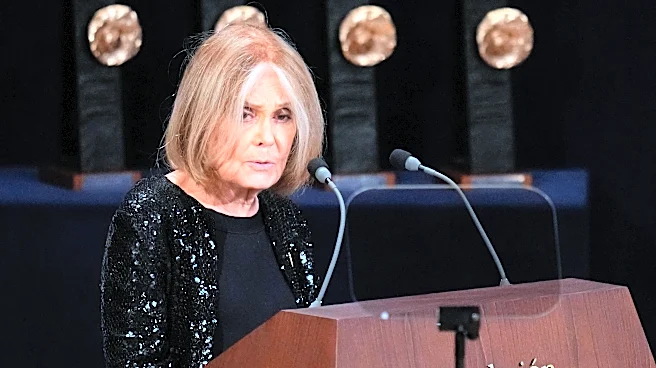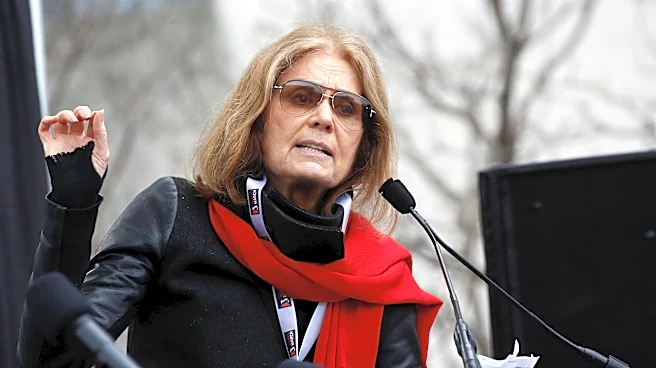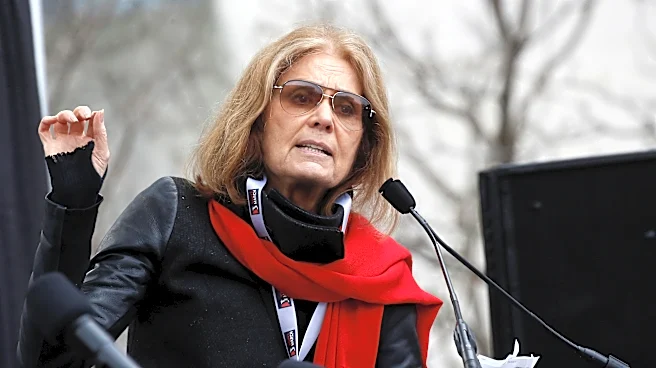




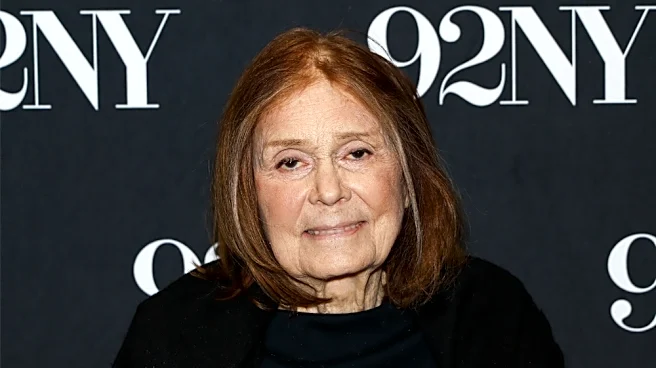

Toledo-born activist and journalist Gloria Steinem died Sept. 2 at 92after a life of participation in the women's equality movement.
While she spent most of her professional career living in New York, Steinem frequently referenced her Ohio and Midwest roots as playing an important part in her character. She died at her home in New York City, surrounded by her loved ones, accordingto a post on her Instagram
."Gloria’s greatest gift was her ability to listen to others, to make others feel seen and heard," the post reads. "Her words, actions, and example gave people permission to be their truest selves. Gloria lived true to her independent spirit, always with curiosity and a great sense of humor."
activist, feminist icon, dies at 92
Her family faced financial difficulties and health issues
Her mother, Ruth Nuneviller Steinem, was a reporter and editor for The Toledo Blade, according to the news outlet. When her mother first began writing, she did so under a man's name to help her get published. She was Steinem's first introduction to the world of journalism.
Steinem was born in Toledo in 1934 and spent the first few years of her life on the road with her father, Leo Steinem, who was a traveling antiques and jewelry dealer, before her family settled in East Toledo. Her parents separated when she was about 10, and she began living with her mother full time, according to WTOL 11.
“The roots of the road, the roots of my being a writer, the roots of the Midwestern attitude towards life, which I think of as bringing out of the Toledo in me – no pretense. Let’s just do the real thing," Steinem said in an archival interview with WTOL 11.

Steinem's mother dreamed of being a journalist
Even before her birth, Steinem's parents were involved in the journalism world. They met when they were working for the student newspaper at the University of Toledo, The Teaser, where they were both editors between the years of 1919 and 1923.
Steinem's mother struggled with mental illness, and she became her primary caregiver from an early age. The family faced financial hardship for many years. In 2025, Steinem wrote about some of her memories with her mother, who left her career behind when she got married, in her 2015 memoir, "My Life on the Road."
“Many women are like me, living out the unlived lives of our mothers,” Steinem wrote in the reflection, telling the story of her mother teaching her how to fold a paper into thirds to make a reporter's notebook.
Steinem attended Waite High School in Toledo until she was 17, when she left the school early to move to Washington, DC to live with her older sister. She finished her senior year at a high school in DC in 1952.

Steinem continued Toledo connection throughout life
Throughout her life, Steinem participated in advocacy for racial justice, reproductive rights and labor rights, among others. She was a founding editor of New York Magazine, and was a co-founder of Ms. Magazine, which is made up of feminist-focused reporting. In 2013, she was awarded the Presidential Medal of Freedom by then-President Barack Obama.
Steinem graduated with a degree in government from Smith College in Massachusetts and spent some years in India learning about non-violent political movements. But through all her travels and illustrious career, she always tied her life back to her beginnings in Ohio.
Steinem told WTOL 11 that she took inspiration heavily from women working in factories in Toledo.
“I learned a lot from women here because I think it was women in the factories who were beginning to sue for discrimination because it was very clear they were doing the exact same thing as the men next to them in the assembly line,” she said to WTOL 11.
Steinem returned to Toledo to speak at the University of Toledo multiple times in her career, and in 1993 received an honorary Doctor of Humane Letters from the school.
In 2018, Steinem returned again to speak about reproductive rights and the #MeToo movement, highlighting the prevalence of sexual harassment as part of a campaign for then-State Representative Teresa Fedor. In that same year, she became highly vocal about keeping the last abortion clinic in Toledo open.
A group of Toledo-based feminists worked together to create the Steinem Sisters Collection, housed at the Toledo Lucas County Public Library. It is the only feminist collection kept at a public library in the nation, according to the library's website.

Steinem's interest in the women's movement goes back generations
In 1887, Steinem's paternal grandmother, Pauline Perlmutter Steinem, moved to Toledo from Europe, where she was born in Poland and educated in Germany.
She quickly became involved in advocating for women's rights, including serving as president of the Toledo Federation of Women's Clubs and as president of the Toledo chapter of the National Council of Jewish Women.
Because women didn't have concrete voting rights at the time, Pauline helped organize groups of women who could vote together to avoid the risk of harassment at the polls. She became the first woman elected into a public office in Toledo when she became a member of the Toledo Board of Education.
She also held additional positions throughout her life, like a trustee of the Toledo Public Library, the president of the Ohio Woman Suffrage Association and aiding Jewish family members to escape Nazi persecution in Europe during World War II. She died in 1940 when Steinem was 5 years old.
Steinem said she didn't discover the impact of her grandmother on the women's equality movement until she was older, according to WTOL 11.
Even in old age, Steinem remained vocal about her beliefs, even announcing on her 92nd birthday in March a memoir about her life − including her early life in East Toledo − which will be published Sept. 22.
Dispatch reporter Lilli Malone can be reached at lmalone@dispatch.com or on Instagram at @lillimwrites.
This article originally appeared on The Columbus Dispatch: Ohio-born Gloria Steinem always remembered where she came from