





If you are a gardener by hobby or if it is your profession, you most likely have some degree of obsession with the weather. Weather and gardening have an obvious, natural connection since the weather is sometimes the only thing that keeps an avid gardener in the house.
We have several great meteorologists on our local news stations. They are very informative and I enjoy learning new things about the weather. As an example, back on Aug. 11 we had a massive storm covering a large that area caused a lot of wind damage. Watching the TV meteorologists, I learned that this type of storm has a name. It was a "derecho,"which is described as a widespread, long-lived, fast-moving band of severe thunderstorms. These storms cause destructive straight-line
winds across hundreds of miles, often nicknamed an "inland hurricane."
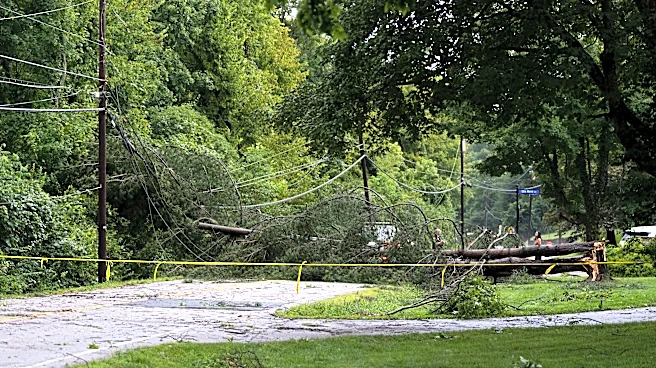
This description is very accurate based on watching the storms come in on the radar and seeing the reports of the aftermath of the storm. Most all the problems after the storm are directly related to damaged trees. The fallen trees took out the utility lines and blocked the roads. Most of the property damage to homes was from trees falling on them.
After devastating weather events such as this, some people can’t help but wonder if there was something that could have been done to prevent the damage and protect the trees.
How to spot unhealthy trees
With a storm like this, some of the damaged trees were very healthy but the strength of the winds was more than they could sustain. At the same time, trees that have deteriorating health are the most vulnerable in storms. Unfortunately, most homeowners pay little to no attention to the health of their trees.
When the health of a tree starts to decline there are symptoms to look for. The first direction to look is up in the canopy at the leaves and branches. Look for early color change or early leaf drop with leaves falling off sooner than normal. Look for thinning in the canopy. You are looking for large gaps in the branches where leaves used to be thick. Dead branches are a definite sign. After a storm like this they will be all over your yard.
You can also find symptoms on the trunk and bark. Look for deep cracks and large splits in the main trunk. Peeling bark is also a sign of deterioration if the bark flakes off in large, unusual chunks. Canker is also a problem. Cankers are sunken, dead, or discolored patches that form on the wood.

Working our way down the tree, look at the base of the trees and the roots. Mushrooms or shelf-like growths sprouting near the bottom of the tree are another symptom of deterioration. If the tree has suddenly started to tilt to one side, that should also cause concern.
If you have trees you are concerned about you should have them evaluated. You should have this done by a certified arborist. Like many professions, almost any arborist can refer to themselves as “certified.” A legitimately-certified arborist will obtain their certification distinguished as “ISA.” This means their certification is from the International Society of Arboriculture.
Just like when we go to our doctors, a certified arborist can make recommendations on how you can improve the health of your trees. Having healthy trees will decrease their vulnerability to damage from storms.
Keeping your trees healthy and living will also help protect the value of your home. Healthy, mature trees add an average of 3% to 20% to a property's total value. If you live in a neighborhood with expansive neighborhood tree cover, the trees can boost values of all the homes by tens of thousands.
This article originally appeared on Cincinnati Enquirer: Unhealthy trees are more vulnerable to storm damage. How to spot them