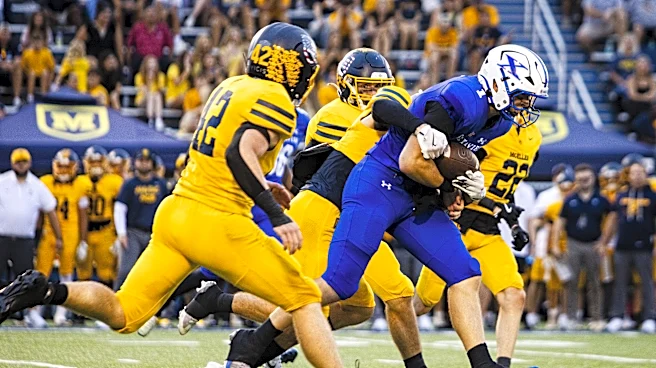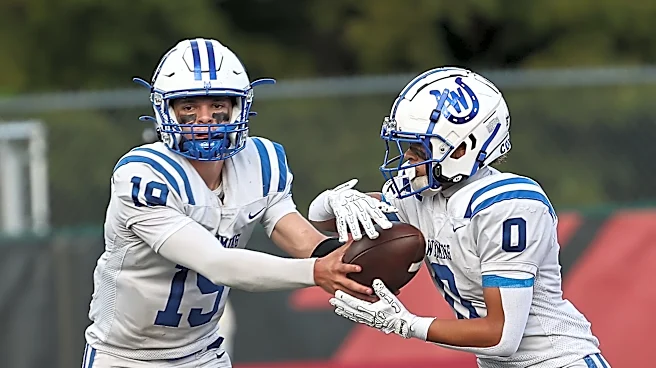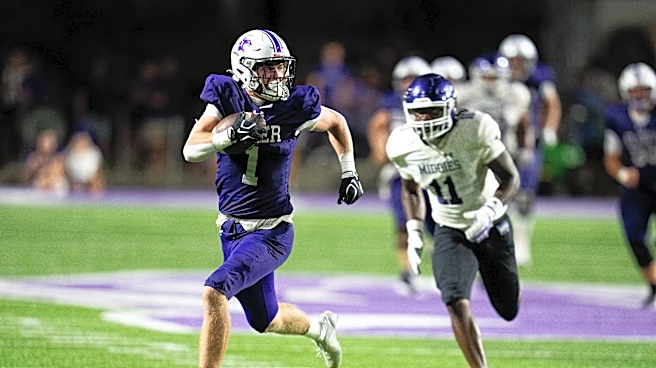

Andrew Lyman is a senior wide receiver at Elder High School and one of the better football players in Cincinnati. He played at Kings last season, earned second-team All-Ohio honors, then transferred to
Elder for his senior year. Under Ohio High School Athletic Association rules, he was permitted to play Elder’s first five games this season. Now OHSAA has ruled him ineligible for the rest of the regular season and the playoffs.
Elder appealed. The appeal was denied.
The important issue is whether the Ohio High School Athletic Association should be able to rule a high-school senior ineligible, reject an appeal and then tell the public almost nothing about why. OHSAA has said only that "the facts presented in this case did not lead the OHSAA to apply one of the exceptions."
Ohio changed the transfer rules for a reason

That is not much of an explanation, particularly because Ohio changed its transfer rules this year. A high-school athlete is free to transfer from one school to another. OHSAA does not prohibit the transfer. But for years it has imposed an athletic consequence designed largely to discourage students from changing schools for athletic reasons.
If an athlete transfers after participating in a sport during the previous 12 months, the athlete ordinarily may compete only during the first half of the new school’s regular season. Then the athlete becomes ineligible for the remainder of the regular season and the OHSAA tournament unless an exception applies.
In football, that means Games 1 through 5.
The rule makes sense as an anti-recruiting measure. High-school sports could quickly become a free-agent system if players routinely moved to stronger programs for better opportunities.
OHSAA already recognized exceptions for specific circumstances, including a bona fide family move, a change in legal custody, a school closing, certain bullying situations and other narrowly defined events. But those exceptions did not cover every legitimate transfer.
A student could have a real, non-athletic reason for needing a different school and still fail to fit neatly into one of the listed categories. OHSAA’s member schools decided that was too rigid.
This year they adopted Bylaw 4-7-8. It allows full eligibility to be restored when the leaders of the two school systems enter into a memorandum stating that the transfer is necessary to protect the student’s physical or mental well-being or to address other appropriate extenuating circumstances. In effect, the member schools created a broader safety valve for legitimate transfers that were not about sports.
That brings us back to Lyman.
Was Lyman's transfer judged on evidence or assumption?

The first question OHSAA should answer is whether Elder sought relief under this new bylaw. If it did, did Kings and Elder both execute the required memorandum and represent that Lyman’s transfer was based on legitimate circumstances unrelated to athletics? If the answer is yes, then what exactly did OHSAA reject?
Elder coach Doug Ramsey says the family followed the rules. He complained that OHSAA based its decision on an "assumption − something you can’t necessarily prove."
What assumption? OHSAA has not said.
But the obvious inference is that OHSAA believed Lyman’s transfer was really about athletics despite what the family and the schools represented. Lyman was already an All-Ohio receiver. He transferred to Elder, one of Ohio’s best-known football programs. Those facts certainly justify scrutiny. They do not prove motive.
So did OHSAA have evidence showing that football influenced the transfer? Or did it simply look at an outstanding player transferring to Elder and conclude that athletics must have been the real reason?
That distinction matters.
A great athlete can have the same legitimate non-athletic reason for changing schools as anyone else. If the new rule works for ordinary athletes but becomes harder to use when the student is a star, then the exception is not functioning as intended.
Perhaps our inference is wrong. Perhaps OHSAA rejected the request for some entirely different reason. If so, it can say so.
OHSAA can protect privacy and still provide answers

That is what makes the lack of transparency so frustrating. OHSAA cannot announce the result, withhold the reasoning, and then fault people for trying to figure out what happened. It does not need to reveal Lyman’s medical information, family circumstances, or other private details. But it can identify the bylaw involved and explain, in general terms, why the exception failed.
The member schools created this new rule because they concluded the old system could unfairly penalize legitimate transfers. If Kings and Elder invoked that rule and OHSAA rejected their judgment, it should explain why. Until then, Ramsey’s reference to an "assumption" hangs over the decision.
If OHSAA assumed Lyman’s transfer was about football, it should tell us what evidence supported that conclusion. If that is not what happened, it should tell us that too.

Dennis Doyle lives in Anderson Township and is a member of the Enquirer’s Board of Contributors.
This article originally appeared on Cincinnati Enquirer: OHSAA should explain why Andrew Lyman can't play for Elder | Opinion