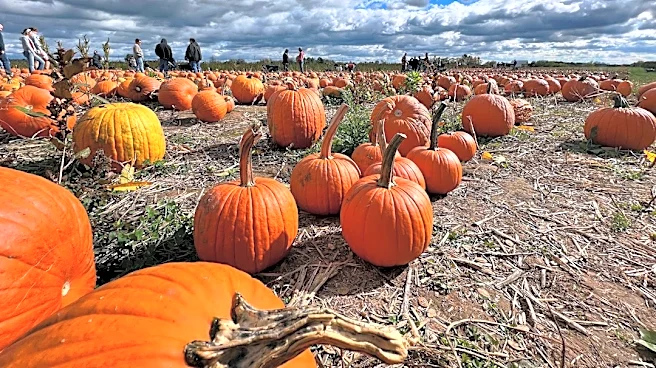








Fall brings a festive lineup of holidays, including Día de los Muertos, All Saints' Day, All Souls' Day, Diwali, and Thanksgiving. But for many people, Halloween is the one that stands out because of its costumes, candy, spooky fun and centuries of tradition.
While you figure out a Halloween costume or decide what candy to buy for trick-or-treaters, do you wonder when Halloween actually is or if it's a federal holiday? Here's what to know.
When is Halloween 2026?
Halloween is always on Oct. 31, according to Old Farmer's Almanac. Halloween falls on a Saturday in 2026.
When does daylight saving time end in 2026? Clocks fall back hours after Halloween
Daylight saving time always ends on the first Sunday in November. This year, clocks fall back one hour at 2 a.m. on Sunday, Nov. 1, just hours after Halloween ends.
Is Halloween a federal holiday?
Halloween is considered a "commonly celebrated"
holiday, but it is not a federal holiday, according to USA.gov. Banks will be open and stores are likely to operate during their normal hours.
Where did Halloween originate? It began with an Irish tradition called Samhain
The earliest known western Halloween traditions trace back to Ireland.
The ancient Celtic festival of Samhain (pronounced “sow-win”) was celebrated on Oct. 31 and planted the seed that would lead to what’s known as Halloween in modern times, according to History.com. The Celts, a collection of tribes from central Europe, had seasonal fire festival for each of the four seasons. Samhain, which occurred between the fall equinox and the winter solstice and marked the transition to winter, was considered the most significant.
During Samhain, celebrants would light fires in family homes while harvesting. When the harvesting was completed, community fires would be lit.
Why do people dress up for Halloween?
So, what does Samhain have to do with modern-day Halloween?
Well, similar to how celebrants of Halloween dress up, the Celts would prepare offerings for their ancestors and fairies during Samhain.
The Celts believed their ancestors would cross over to the living world. To ward off the spirits of the dead, they dressed up as animals and monsters as they made offerings.
Other Halloween traditions merged with Samhain celebrations
It wasn’t just Samhain costumes that continued to modern-day Halloween.
If you’ve bobbed for apples at a Halloween party, it actually originated from honoring Pomona, the Roman goddess of fruit and trees. Many Roman traditions were merged with the traditional Celtic celebration of Samhain, History.com reports.
How did it go from Samhain to Halloween?
All Saints’ Day incorporated Samhain traditions into its celebration. When Pope Gregory III declared Nov. 1 to be All Saints' Day, the night before was called All Hallows Eve — the same day as Samhain.
In America, colonial Halloween festivities during the 19th century included ghost stories and pranks. Halloween soon became common when Irish immigrants came to the country during the potato famine of the 1840s, according to History.com.
By the 20th century, parents were encouraged to tone down the grotesque and scary elements of Halloween, and soon, it lost most of its superstitious and religious overtones.
Where did trick-or-treating originate?
Going door to door for candy originated in America.
Like the Celts, Americans dressed up for Halloween, but not to avoid being kidnapped by ghosts. Instead, they went to people’s houses for food and money, and eventually for candy.
Trick-or-treating became an inexpensive way for people to celebrate Halloween and avoid having their homes vandalized (hence, the trick in trick-or-treating) as vandalism had at one point become a widespread part of October 31 celebrations, according to History.com.
How many days are there between Halloween and Thanksgiving?
Thanksgiving in 2026 falls on Thursday, Nov. 26, meaning there are 25 full days between Halloween and Thanksgiving this year.
This article originally appeared on Cincinnati Enquirer: When is Halloween 2026? Last day before daylight saving time ends