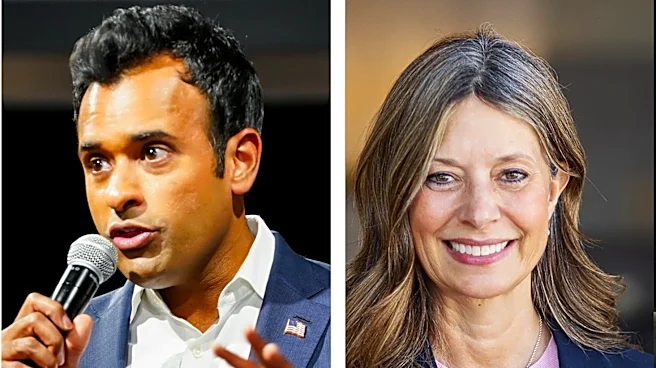




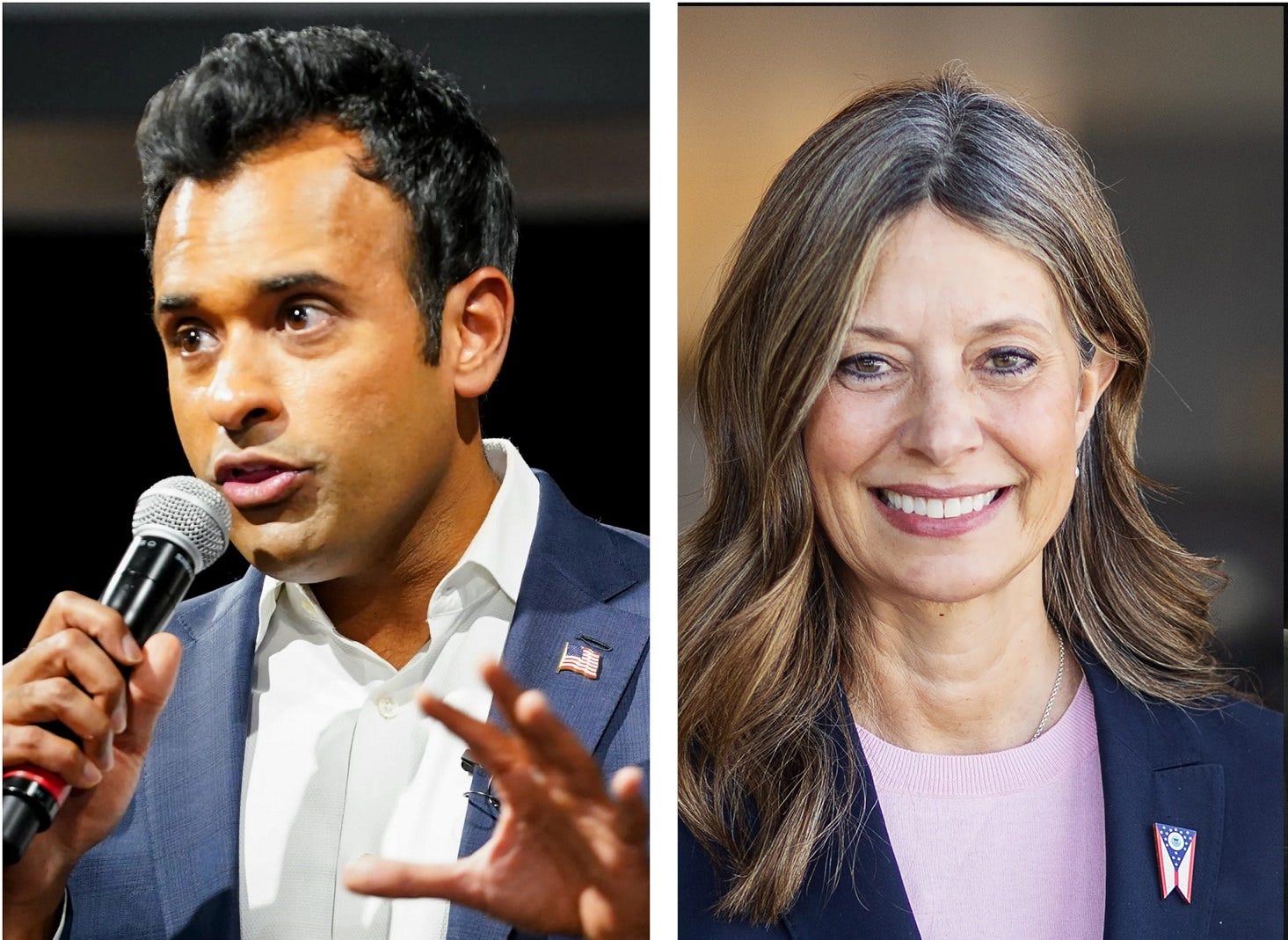
Vivek Ramaswamy accepted debate invitations from CNN and Cincinnati’s WLWT, then dared Amy Acton to join him. Her campaign said no.
The charge came on cue. She is hiding. She is weak. If she will not face him on television, she cannot lead Ohio.
Katie Hobbs heard the same thing four years ago.
Hobbs was running for governor of Arizona against Kari Lake, who wanted a shared stage. Hobbs refused. Her campaign said Lake had turned the Republican primary debate into a showcase for election conspiracies, interruptions and personal attacks. Lake called her a coward. Editorial pages scolded her. Hobbs won.
Ramaswamy isn't Lake, and Ohio isn't Arizona. The candidates are different. The political play is familiar. Attack an opponent relentlessly, demand
that she appear beside you, then call her weak when she refuses to help turn those attacks into a television event.
Acton’s campaign says it will not help platform someone who spreads what it calls baseless claims about her and her family. It points to AI-generated imagery that it says falsely portrays her as having a substance-abuse problem, and to advertising that invokes the sexual abuse she has said she suffered as a child.
Those aren't disagreements over taxes, schools, or energy. They are a campaign method.
Debates matter. Voters deserve to see candidates tested in the same room, answering questions without a script. That can reveal knowledge, temperament and whether someone can think under pressure. That is a legitimate public interest. It is not the only one.
A debate works when both candidates accept some obligation to truth. Otherwise it becomes an hour of live television in which one candidate must spend her time correcting the other’s inventions.
A debate is not a deposition. It is a television product. Candidates interrupt, pivot away from questions and deliver lines rehearsed for social media. The format may reveal something about temperament. It may also reward whoever is best at creating a spectacle. That distinction matters, because governing is not the same skill as dominating a televised confrontation.
Acton does not get a pass. Refusing a debate cannot mean refusing scrutiny. She should sit for long, unscripted interviews with Ohio journalists, appear at public forums and explain her plans clearly enough for voters to test them. Ramaswamy should do the same.
Voters are entitled to answers. They are not entitled to make one candidate hand the other a shared microphone.
Ohio has more than one way to judge a candidate under pressure. Ramaswamy can take the CNN hour and the WLWT hour. Acton can take sustained questions from reporters and from voters in town halls. Voters can watch both and decide who sounds like a governor.
What nobody can fairly demand is that Acton donate a stage to an opponent whose campaign has made her family, her childhood trauma and fabricated images of her part of its message, then call her unfit for declining.
Hobbs was warned that skipping the stage would sink her. It did not. The race was close, but Arizona voters found her anyway.
Acton is making the same bet. She must submit to serious examination. She does not have to participate in a campaign spectacle to prove she can govern.
Ohio voters are entitled to examine Amy Acton. Vivek Ramaswamy is not entitled to use her as his television prop.
Ray Watford is a retired newspaper production director who lives in Hilliard, Ohio.
This article originally appeared on Cincinnati Enquirer: Acton owes Ohio answers, not Ramaswamy a stage | Opinion