

Most Ohioans know Vivek Ramaswamy is a billionaire running for governor. What they don’t know is that the Republican’s wealth has soared despite the struggles of a company he founded just before jumping into politics.
Founded in 2022, Strive Inc. was Ramaswamy’s investment firm, but he left a year later to run unsuccessfully for president while remaining a major shareholder. Since then, the company has made huge bets on cryptocurrency, acquiring more than 20,000 bitcoin – worth about $1.2 billion.
Ramaswamy has dismissed his involvement in the company, mostly in response to questions about the firm’s 2025 move to Dallas from Columbus, Ohio, where it was founded. Ramaswamy characterized himself as “just an investor” in the company.
But company disclosures
warn investors that Strive is a “controlled company” where its biggest investors (specifically Ramaswamy, who it calls the "principal stockholder") retain outsize influence over big decisions, according to filings with the U.S. Securities and Exchange Commission. An analysis by The Enquirer finds:
- Strive is a huge factor in Ramaswamy's overall wealth; the candidate's stake is worth more than $250 million, which is more than 10 times his entire portfolio of dividend-paying stocks disclosed in Ohio regulatory filings early this year. His Strive stake appears to be his second-largest asset contributing to his net worth.
- Ramaswamy directly and through a family trust owns more than 8% of Strive outright, but his class B shares give him at least 40% of the shareholder vote at the company.
- Ramaswamy's stake in Strive would be worth even more money if things were going better in the crypto market. Strive's big move into Bitcoin coincided with a massive 35% slide from the cryptocurrency's all-time high in October of 2025.
- Strive has lost more than $960 million in the nine months ending June 30 and its stock is down 85% from $169.80 on Sept. 12, 2025 (the day of a key merger) to $25.54 on Oct. 19.
- Ramaswamy has the ability to influence mergers and "other extraordinary transactions" and Strive has been very busy in the past 18 months, engaging in two mergers, two initial public offerings for preferred stock and a reverse stock split.
The findings raise questions about the accuracy of Ramaswamy's hands-off characterization of his role at Strive as well as whether his ongoing involvement with the company might distract him if he's elected governor.
Neither the candidate nor officials with his campaign answered questions about his ongoing input with the company, his role in recent mergers or whether government officials can also operate businesses while holding office.
Strive officials did not respond to The Enquirer questions regarding Ramaswamy's ongoing participation at the company, how frequently he is in contact, whether he visits the Dallas headquarters or what input he provides for mergers and other big strategic moves.
The revelations come in an election season where politicians from President Donald Trump to U.S. Rep. Greg Landsman have faced intense scrutiny over their investing activity. Whether politicians make or lose money investing, it can be a bad look: either they might be cashing in on connections or privileged information or showcasing just how really inept they are with money.

Ramaswamy founded Strive after penning ‘Woke Inc.’
Born and raised in the Cincinnati suburb of Evendale, Ramaswamy graduated from St. Xavier High School, then went to Harvard University and later Yale Law School (he was a classmate of Vice President JD Vance). After Harvard, he began an investment career spending seven years at New York-based hedge fund, QVT Investors.
Ramaswamy famously made his fortune after founding in 2014 Roivant Sciences, a biotech firm that nurtures unapproved drugs in search of the next big pharma opportunity. An early investment in a potential Alzheimer’s drug made both Roivant and Ramaswamy a lot of money but also attracted controversy after it was spun off into a separate company, Axovant, which went out of business a few years after it failed to win approval as a viable treatment.
The majority of Ramaswamy’s wealth remains tied to his more than $2 billion Roivant stake. But he left his role as CEO of the firm as other interests drew him away. In 2021, he published his broadside against social activism’s effects on corporate America, "Woke Inc: Inside Corporate America's Social Justice Scam."
Touting his anti-wokeness message, in 2022, Ramaswamy cofounded Strive Asset Management in Columbus, Ohio. His firm pledged to invest in stocks and other assets based on their financial performance, not on where they stood on hot-button issues or identity politics. But he didn’t stay long; soon the campaign trail beckoned.

Ramaswamy leaves, Strive moves to Texas and shifts investment focus
He left the firm in 2023 to run for president, leaving a lieutenant, Matt Cole, previously the company’s chief investment officer, in charge. Within a couple of years, a number of changes started taking place.
In late 2024, Strive announced an expansion and plans to relocate its headquarters to Dallas. In the announcement of its move, Strive noted its business was evolving.
“A key part of this business will include a focus on integrating Bitcoin into standard portfolios,” the company said, adding the cryptocurrency would be a “hedge against risks” the firm expected to persist for years to come, “including unsustainable global debt levels, rising fixed income yields, long-run inflationary pressures, persistent geopolitical pressures, and potential restrictive monetary controls.”

Once considered a fringe digital asset, cryptocurrency has grown into a $2.8 trillion worldwide market (albeit a volatile one), with Bitcoin being the most popular, with $1.7 trillion held around the globe, according to Forbes. The digital asset is appealing to many people online to make purchases or send money because cryptocurrency is just like money without the entanglements of banks or governments getting in the way. But the fact that it is not a “fiat currency” officially blessed by a government that issues it, means it's not legal tender. In fact, it can be quite volatile because much of its value depends on what the market says it is worth.
Within months of becoming a publicly traded company through a merger, it announced an additional one in late 2025 with a second company that owned a healthy stash of more than 5,000 bitcoin. Strive has also issued preferred shares to raise money for the purchase of still more bitcoin, most recently on Oct. 20. Strive is paying as much as a 15% annual dividend on those preferred shares, but its business model is betting that Bitcoin’s growing value over time will be higher than the dividend rates.
Uday Rajan, the senior associate dean for faculty and research at the University of Michigan, said Strive's strategy is similar to what's called in finance a "carry trade." That's when an investor borrows money at a low rate to buy an asset that appreciates at a higher rate, then pockets the difference, or what's called “the spread.”
"It's always risky when one is essentially taking a gamble that an asset will increase in value," Rajan said. "Bitcoin has lost value over the last year," adding the cryptocurrency has rebounded slightly in the last few months.
In the short term, Strive has yet to turn a profit. So far, it has amassed roughly $1.2 billion worth of “digital assets.” On Aug. 10, Strive disclosed its financial results for the first half of 2026: It lost $563 million on revenues of $5.7 million.
‘I’m just a shareholder’ of Strive, a ‘controlled company’
In a July 31, 2025, podcast with International Brotherhood of Teamsters president Sean O’Brien, Ramaswamy claimed it wasn’t his call to move his former company from Ohio where he was running for governor to Texas.
“I’m not on the board. … I’m just a shareholder of the company at this point,” Ramaswamy said, adding Strive’s CEO made the decision “independently.” He concluded Cole made his “objective” decision after becoming convinced “the business environment is way more favorable than the business environment … in Ohio for that kind of company.”
Yet, Strive’s federal disclosures offer some additional nuance regarding Ramaswamy’s involvement at the company now based in Texas.
Ramaswamy is referred to in corporate disclosures as the “principal stockholder” and, along with other top company officials, controls more than 50% of shareholder voting rights and the power to name a majority of members to its board of directors.
In the company’s latest annual report, Strive cautions investors that it is a “controlled company” under greater sway by its biggest investors, including Ramaswamy, who is mentioned by name.
“We are a ‘controlled company,’ and insiders have influence over us and could limit your ability to influence the outcome of key transactions,” the report reads at the beginning of its lengthy “risk factors” section. The report later explains that underNasdaq rules, a company with more than 50% of its voting power held by an individual or controlling group can elect to not to maintain a board with a majority of independent directors. Such a company can also have key board committees (such as compensation and corporate governance) without independent members.
In other words, major investors can stock the board with company officials they choose and have outsized say in who is selected to run the company and how much they get paid. Strive’s proxy notes that Ramaswamy and a family trust together own at least 72% of the company’s class B shares, which enjoy 10 times the voting power of its regular class A shares.
“Insiders have influence over us. … Such stockholders are able to influence matters requiring approval by our stockholders, including the election of directors and the approval of mergers or other extraordinary transactions,” the company disclosed in government filings.
Jonathon Zytnick, a business and securities law professor at Georgetown University, said the whole point of setting up a controlled company is to maintain influence for a major shareholder, frequently a founder. He noted such a shareholder might formally stay in a company's executive suite or provide difficult-to-ignore input with no formal role. Either way, such a shareholder has a lot of influence because they're selecting board members that oversee executives.
"Regardless of whether the investor is acting behind the scenes, these (board members) are his people," he said.
Jill Fisch, a professor of corporate law at the University of Pennsylvania, said "controlled company" structures are designed to allow major shareholders to maintain control even if their outright ownership in a business becomes a minority stake. She added it was a legitimate question whether, if such an arrangement is in place, the controlling group is using that power.
"(If you are a founder, it gives) you have the practical ability to influence corporate decisions. Whether you exercise that power is separate," she said.

Trump and other politicians draw scrutiny over investments
Ramaswamy’s stake in Strive and its complex financial maneuvers come at a time when other politicians have drawn scrutiny and criticism for how they handle their financial affairs.
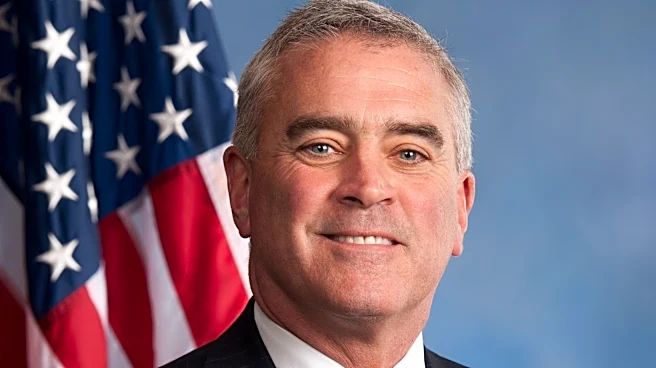
U.S. Rep. Greg Landsman, a Democrat, has been bashed repeatedly in his campaign against GOP challenger Eric Conroy, over the belated 2024 disclosure of stock trades. Landsman said in October 2024 he disclosed the 91 transactions in an August 2024 filing as soon as he learned of them but many long after the 45-day deadline to report. He claimed it was a “mistake.” Anti-Landsman ads meanwhile have implied the congressman was somehow trading on his access and also a hypocrite for supporting proposals to curb stock trades by members of Congress.
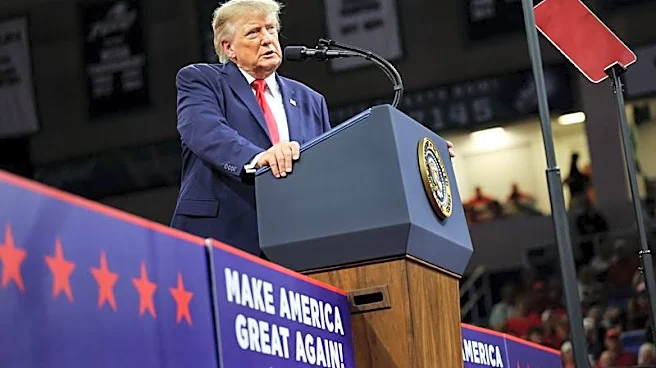
Meanwhile, Trump’s 2025 financial disclosuremade this past summer turned a lot of heads, particularly his more than $1.4 billion in income from his family’s crypto ventures, according to Reuters. The president’s nearly $800 million windfall from World Liberty Financial, a crypto venture he cofounded with his sons, as well as another $635 million from the sale of his Trump meme coins, were the biggest contributors to his $2 billion in income, Reuters reported. Much of that income was through royalties and licensing income, not coin assets. His golf and resort businesses generated just over $500 million in 2025.
The White House has repeatedly said the president's business interests are overseen by his children.

This article originally appeared on Cincinnati Enquirer: Despite exit, Vivek Ramaswamy maintains influence at investment firm