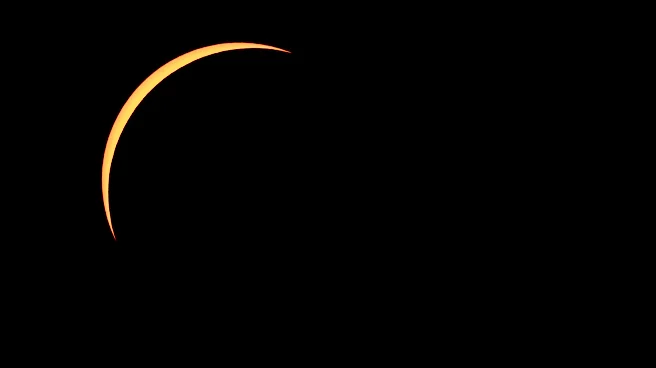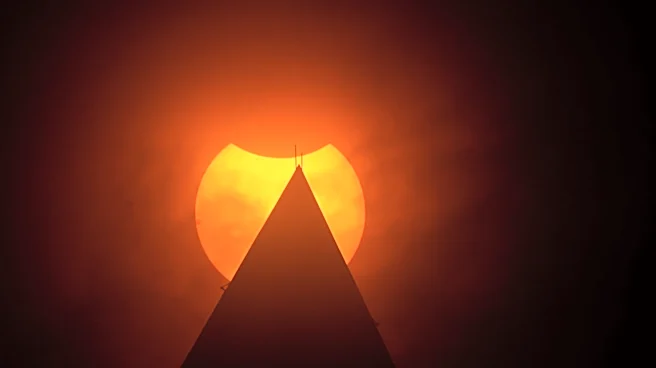


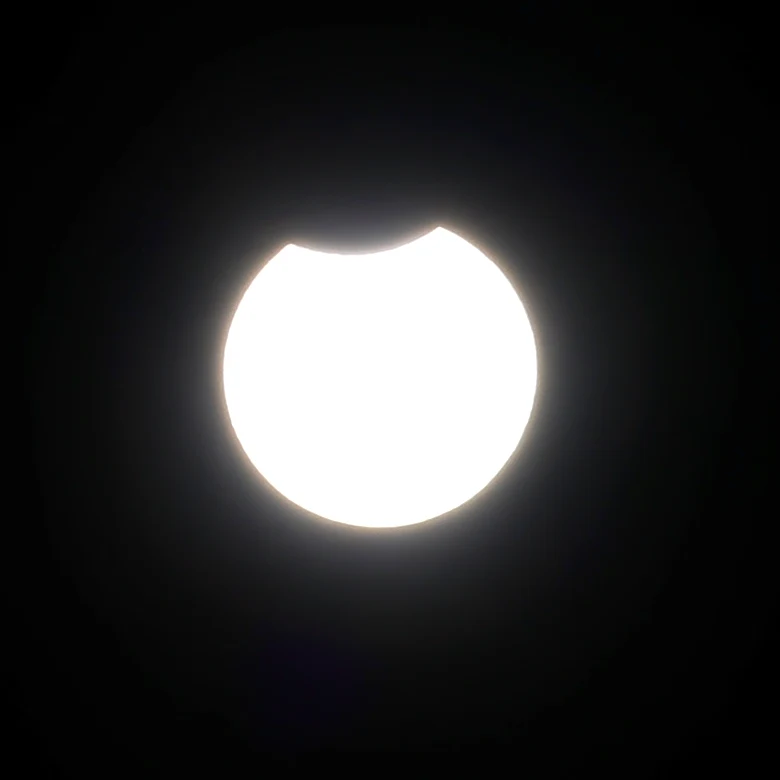




Asolar eclipse will make its celestial debut on Wednesday, Aug. 12. Will it be visible in Ohio? Well, kinda.
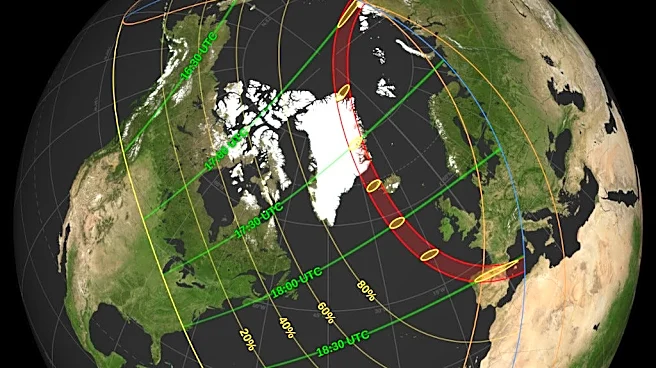
Parts of theNortheast, Midwest and Alaska will see the moon partially covering the sun. According to NASA, 23 states fall completely outside the eclipse's viewing zone. The event's path of totality, where the sun is fully blocked, will occur overseas.
The total eclipse will cross Greenland, Iceland, northern Russia, Spain and part of Portugal, while a partial eclipse will be visible across portions of the northern U.S., Canada, Europe and northwestern Africa.
Here's what to know about the eclipse, including where it will be visible and when to watch.
What time is the solar eclipse?
The total solar eclipse will occur on Wednesday, Aug. 12, beginning at approximately 11:34
a.m. ET, according to Time and Date. The maximum eclipse will occur at 1:46 p.m. ET.
Will the solar eclipse be visible in Ohio and Northern Kentucky?
It appears that a small-percentage partial solar eclipse could be visible in parts of Ohio, weather permitting. However, as additional rounds of thunderstorms are expected across the region on Wednesday, it doesn't seem likely that we'll get a chance see our sliver of the celestial phenomenon.
With proper viewing gear, some parts of the Buckeye state will be lucky enough to spot the solar eclipse. According to National Eclipse, here is the percentage of visibility in some of Ohio's cities:
- Cleveland - 3.0%
- Toledo - 1.8%
- Columbus - 0.6%
As for Cincinnati and Northern Kentucky, it doesn't appear the partial solar eclipse will have any visibility, per National Eclipse.
Which states will see the solar eclipse?
If you live in one of the following states, or D.C., there's a chance you'll catch at least part of the eclipse, weather permitting:
- Alaska.
- Connecticut.
- Delaware.
- Illinois.
- Iowa.
- Indiana.
- Kentucky.
- Maine.
- Maryland.
- Massachusetts.
- Michigan.
- Minnesota.
- Montana.
- New Hampshire.
- New Jersey.
- New York.
- North Carolina.
- North Dakota.
- Ohio.
- Pennsylvania.
- Rhode Island.
- South Dakota.
- Vermont.
- Virginia.
- Washington, D.C.
- West Virginia.
- Wisconsin.
How to safely watch
The most straightforward way to view the eclipse is with a pair of solar eclipse glasses.
Solar eclipse glasses or handheld solar viewers can be purchased, but should comply with the ISO 12312-2 international standard, according to NASA. The space agency does not certify the safety of solar eclipse glasses, USA TODAY previously reported.
The responsibility of guiding U.S. consumers to the safest eclipse glasses is largely left to the American Astronomical Society. The organization maintains a list of approved vendors that sell solar eclipse glasses.
Those who cannot procure a pair of solar eclipse glasses can construct a pin projector from common household objects. NASA provides instructions on its website.
Contributing: Julia Gomez, Eric Lagatta, James Powel and Fernando Cervantes Jr., USA TODAY.
This article originally appeared on Cincinnati Enquirer: A solar eclipse will be visible from Ohio today. When to see it