




There are freak accidents. There are one-off accidents. And then some accidents keep happening in the same place.
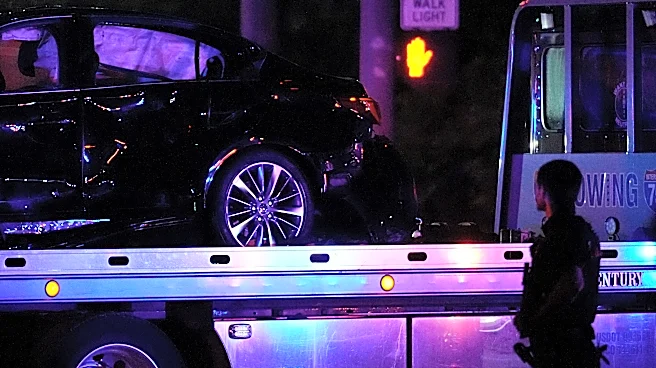
On Aug. 15, a car traveling east on Queen City Avenue went through a guardrail at the dead end, plunged down an embankment, and landed upside down in Mill Creek. Four young men were killed. A 27-year-old woman somehow escaped from the submerged vehicle.
Five crashes are a pattern
It was a horrific accident. But it was not the first accident there.
An Enquirer review of state crash data found at least five crashes at this dead end since 2021. In four of them, vehicles went into Mill Creek. In the fifth, the driver struck the guardrail but stopped short of the water.
Think about that for a moment.
Five crashes. Four vehicles in the creek. All at the end of the same street.

Those drivers thought they were going somewhere other than into the creek. That is what makes the history of Queen City Avenue important.
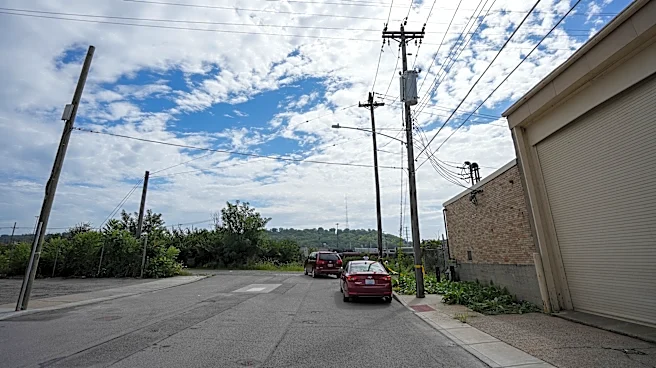
During a multimillion-dollar sewer project completed in 2019, engineers redesigned this portion of Queen City Avenue. The resulting configuration created an eastbound path toward Mill Creek that can give a driver the visual impression that the roadway continues straight ahead.
It doesn’t. It ends at the creek. But the warning was remarkably modest. A "No Outlet" sign was posted as drivers entered the street. At the other end was a guardrail − and beyond it a steep embankment leading directly into Mill Creek.
In 2021, the crashes began.
Certainly, drivers have responsibilities. They must obey signs, control their speed, remain attentive and never drive impaired. Cincinnati police are investigating whether speed or impairment contributed to the Aug. 15 crash − nothing about a confusing roadway excuses reckless driving.
But five crashes at the same dead end raise a different question: At what point does repeated driver error become evidence of a roadway problem?
We know that question could have been asked before four people died.
On June 7, just over two months before the fatal crash, another vehicle drove off the same dead end, went down the steep embankment and landed upside down and partially submerged in Mill Creek. The driver was rescued.
That should have been an unmistakable warning.
Driver responsibility doesn't end city's responsibility

Indeed, the state crash records reviewed by the Enquirer show that the warnings went back years. The June accident was simply the latest demonstration that a driver who failed to recognize the end of Queen City Avenue could get past the roadway’s protection and wind up in the creek.
Once Cincinnati knew drivers were repeatedly making the same mistake at the same location, the answer did not have to be complicated.
Make it impossible to miss that the road ends.
Large reflective warning signs could have been placed directly across from the terminus. Flashing lights could have made the dead end unmistakable at night. Vegetation could have been kept clear so the warning and guardrail were plainly visible.
And after vehicles had demonstrated that they could get past the existing guardrail and into Mill Creek, the city should have asked the obvious question: Was that barrier adequate?
Why only now?
Cincinnati is asking those questions now. Following the Aug. 15 deaths, the city says it plans changes to make the dead end safer. That is appropriate. But it also raises the uncomfortable question at the center of this tragedy: Why now?
Roads are not designed on the assumption that every driver will behave perfectly. Engineers anticipate mistakes. Curves have chevrons. Dangerous intersections have flashing warnings. Bridges have barriers. The purpose is not to relieve drivers of responsibility. It is to keep a foreseeable mistake, when reasonably possible, from becoming a catastrophe.
The crashes at the end of Queen City Avenue provided Cincinnati with real-world evidence. Not once. Repeatedly.
Perhaps the investigation will conclude that excessive speed or impairment was primarily responsible for the Aug. 15 crash. If so, that fact should be reported plainly. But it will not erase what happened before Aug. 15.
Four vehicles had already demonstrated that cars could end up in Mill Creek at this dead end. Those were warnings. Now four young men are dead, and Cincinnati is finally taking another look at the end of Queen City Avenue.
The question isn’t why the city is acting now. It is why it didn’t act sooner.

Dennis Doyle lives in Anderson Township and is a member of the Enquirer Board of Contributors.
This article originally appeared on Cincinnati Enquirer: Five crashes at one dead end. Why didn't Cincinnati act? | Opinion