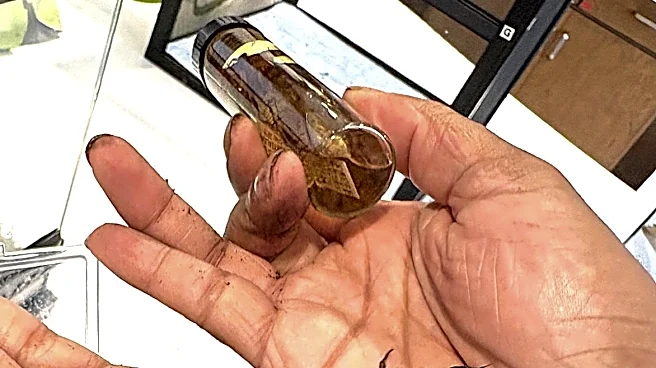








They may look like something from a horror movie, like Joro spiders or the midge swarms that take over Lake Erie every year, but these massive insects are actually a sign of healthy Ohio streams.
In a recent "Macro Monday" post, the Ohio Division of Natural Areas and Preserves spotlighted hellgrammites, the larval stage of dobsonflies, as one of the best indicators of high-quality stream ecosystems.
Despite their intimidating appearance, hellgrammites are among the best indicators of clean, healthy streams. Here's why.
What are hellgrammites and dobsonflies?

Hellgrammites and dobsonflies are two stages of the same insect's life cycle. The aquatic larva is known as a hellgrammite, while the winged adult is called a dobsonfly. They can deliver a painful pinch with their strong jaws.
Ohio
is home to at least seven species of hellgrammites, according to The Ohio State University. Anglers often use hellgrammites as live bait, especially for smallmouth bass.
Adult dobsonflies can reach about 4 inches long and are known for their oversized jaws and nighttime activity, according to The Chesapeake Bay Program.
Dobsonflies are large, soft-bodied insects that are typically gray, brown or black, with prominent pincers and long antennae. They usually live less than two weeks as adults but can spend years in the larval stage living in local streams.
Why hellgrammites are actually a good sign

Hellgrammites may look intimidating, but wildlife experts see them as a welcome sight because it's often proof that a stream has stayed clean for years.
The Ohio Division of Natural Areas and Preserves adds that it values finding the "creepy, cool" creatures during stream monitoring because they signal that a waterway is exceptionally healthy.
Female dobsonflies lay their eggs on branches overhanging clean streams, according to the Ohio Division of Natural Areas and Preserves.
After hatching, the larvae drop into the water and settle on the stream bottom. With their strong jaws, these tiny predators catch and eat other small aquatic bugs. Hellgrammites can remain underwater for up to five years, growing up to several inches long before emerging onto land to transform into adult dobsonflies.
Because they are highly sensitive to pollution and can remain in the same stretch of stream for years, finding older hellgrammites suggests water quality has remained high over time, the agency explains.
Do they bite or pinch?
Yes. Hellgrammites can deliver a painful pinch if handled roughly, according to the National Parks Service.
Large hellgrammites can break the skin, causing brief pain and minor bleeding, according to Orkin, but their bites are not venomous, and they are not known to transmit disease. Hellgrammites do not actively seek out people or attack humans.
Adult dobsonflies, especially females with shorter, sturdier jaws, can bite defensively when handled, according to The Chesapeake Bay Program. Long-jawed males are far less likely to pinch people because their oversized jaws are used mainly to compete with other males for mates.

What to do if you spot a hellgrammite
Leave it alone or move it with a stick, leaf, or container rather than bare hands. Avoid handling a hellgrammite if possible because its jaws can deliver a painful pinch.
If you are bitten, the Mayo Clinic recommends gently wash the area with soap and water. Seek medical care if swelling worsens, the area develops signs of infection, or you feel unwell.
This article originally appeared on USA TODAY: These giant, creepy bugs are actually a good thing for Ohio. Here's why