





TSA has evolved over the years, from allowing passengers to keep their shoes on at security to banning certain hair care tools in carry-on bags.
The next step in the evolution? New scanners for security checkpoints.
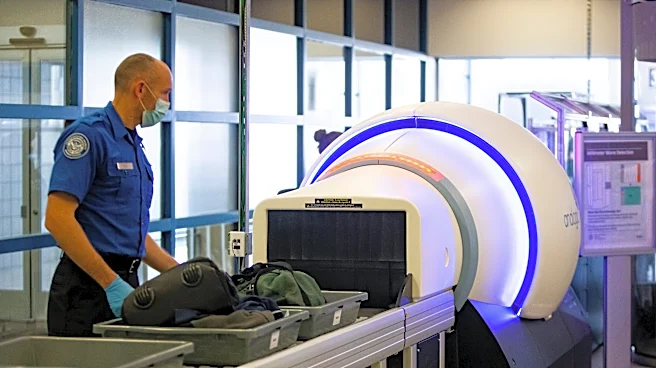
According to Simple Flying, TSA will soon replace its X-ray machines with new 3D CT scanners, and your usual flying experience will change.
The new technology lets officers analyze baggage differently, creating detailed three-dimensional images they can rotate, zoom, and inspect from multiple angles. X-ray machines create two-dimensional images.
The rollout of advanced scanners that the TSA invested more than $781 million in could streamline the security process at the airport, but there are three things a passenger may do differently.
Here's what to know.
1. TSA scanners might not fit some carry-on bags
The cons of the new scanners? That carry-on you packed might be slightly oversized and not fit in the new scanners. If that happens, you may be sent back to the ticket counter to check it.
2. New TSA scanners will allow you to keep your luggage closed
Having to pack a smaller carry-on might be a hassle for some travelers. What might not be is having to remove your electronics and liquids at security and then putting them back. With this new technology, you won't have to do that anymore.
Because the scanner take comprehensive 3D pictures, passengers can walk through security without opening their luggage. Meaning, you can keep your bag of liquids and your laptop in your bag.
3. TSS 3D scanners can ruin film photography
If your hobby is film photography, you might want to pack your camera in checked luggage, or leave it at home.
When exposed to the powerful machinery in a CT scanner, your film may suffer from fogging, loss of image quality or permanent degradation.
However, there is another option if you do end up bringing your film through TSA - you can remove it from your luggage before screening and specifically request TSA to do a hand inspection.
When are the new CT scanners coming to airports?
While an exact rollout date has not been announced, 1,200 of these scanners have been deployed at 300 airports, according to Business Insider, including New York, Boston, Los Angeles, Atlanta, Denver and Chicago.
This article originally appeared on Cincinnati Enquirer: 3 key changes to know as TSA rolls out 3D scanners at security