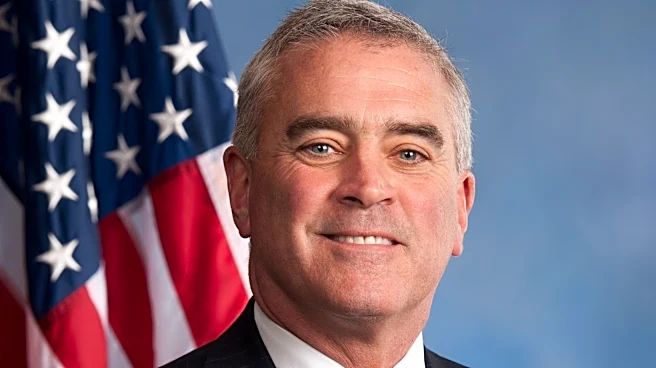






For 27 years, I practiced medicine in Cincinnati. Then I spent more than a decade representing Ohio in Congress. Across both jobs, I heard the same frustration from patients and families: They are paying more for health care but too often getting less from the system. Together with my patients, I experienced firsthand insurance companies and government interfering with our preferred treatment plans. That is why I founded Americans for Health Excellence.
This spring, we commissioned McLaughlin & Associates to survey 2,000 likely voters nationwide. The top health care concern was not close. Fifty-one percent named the cost of health insurance as their top health care concern, more than four times the next-highest response, and that concern crossed
party lines.
Those numbers reflect what doctors see every day. The best health care decisions are made between a patient and a physician who knows their history, understands their condition and can recommend the treatment most likely to work. But too often, that relationship is undermined by coverage rules, high out-of-pocket costs and insurance practices that make it harder for patients to follow the plan they and their doctor chose.
What struck me even more was how much voters agree on the solutions. At a time when Americans seem to agree on very little, the reforms we call Pocketbook Solutions each earned support from roughly 75% of voters or more.
Eighty-eight percent support letting manufacturers offer copay cards to seniors on Medicare. Picture a retired machinist in Dayton filling four prescriptions a month on a fixed income. Americans with private insurance can often use these cards. He cannot, simply because he is on Medicare.
Eighty-three percent support a flat out-of-pocket cap per prescription in Medicare, tiered by income, so one trip to the pharmacy does not wipe out a month's budget.
And 83% support letting cash payments count toward deductibles and out-of-pocket maximums. Think of a young mother in Columbus on a high-deductible plan who finds her son's medication cheaper through TrumpRx than through her insurance. She saves money at the counter, but not a dollar of it counts toward her deductible. Rep. Greg Murphy's Every Dollar Counts Act would fix that. Patients should be rewarded for finding a better price, not penalized for it.
There is another reason Ohio families pay more than they should. For decades, wealthy countries have used government pricing systems to pay less for American-developed medicines. The cost of developing those medicines does not disappear. Too often, the cost gets shifted onto the American patient. Seventy-three percent of voters support legislation to end that foreign exploitation of American patients. The USTRx Act would give our trade negotiators a permanent tool to do it.
President Trump has already shown what is possible by bringing drug manufacturers to the table voluntarily, launching TrumpRx, and putting Germany on notice with a trade investigation into its drug pricing practices.
Ohio's congressional delegation now has the chance to build on that progress. Cosponsoring the USTRx Act and the Every Dollar Counts Act would be a good place to start.
Patients should not have to wait for a complete overhaul of our insurance system to see lower costs. These fixes do not require a bigger government program. They require holding every part of the health care system accountable to the American patient.
As a doctor and former combat surgeon, I learned that action matters most when the need is urgent. You stabilize the patient in front of you, then keep working on the bigger problem.
Health care should work the same way. Ohio patients need relief they can actually feel, and Congress has practical, bipartisan solutions ready to go.

Dr. Brad Wenstrup is executive director of Americans for Health Excellence, a retired colonel in the U.S. Army Reserves and a former U.S. Representative from 2013-2025.
This article originally appeared on Cincinnati Enquirer: Americans agree on health care costs. Why can't Congress act? | Opinion