



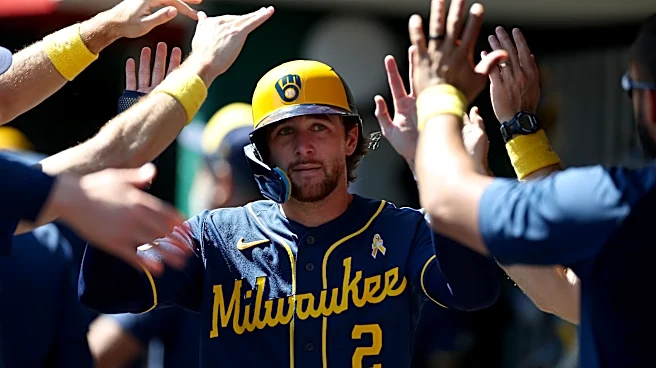

MILWAUKEE – As the Cincinnati Reds and MLB face an offseason of great uncertainty, the Reds appear to be operating from at least a position of continuity in their efforts to fix what went wrong this season.
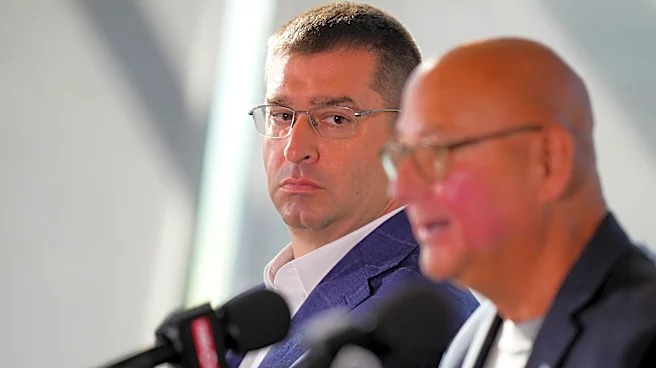
Team president Nick Krall said over the weekend that he expects the management team from the front office to the manager’s office to remain intact into next season, based on recent communication with ownership.
“We’ve had some conversations,” said Krall, who has been the subject of predictable criticism and vitriol from fans and rarely present media members this season.
Whether the sense of job security results from a decision by recently promoted CEO Phil Castellini or from Krall’s strong relationship with Phil’s dad, managing partner Bob Castellini,
that side of the Reds organization has been conspicuously silent this season – on any and all subjects since the younger Castellini took over and ducked out of public sight.
Either way, Krall has to clean up a big 2026 mess, the blame for which he puts firmly on his own shoulders.
After making the playoffs in manager Terry Francona’s first season at the helm last year, the Reds added 49-home-run slugger Eugenio Suárez and a handful of veteran relievers during an off-season that raised 2026 expectations to the team’s highest levels in maybe a decade or more.
They then face-planted quickly into last place after a strong April.
Underperformance by key hitters, including Suárez, and a flurry of first-half injuries (also including Suárez) accelerated the tailspin that has them on the verge of finishing their worst season since they tanked their way to 100 losses in 2022 -- still nine games under .500 after a 4-3 victory over the Brewers Sunday (Sept. 13) that avoided a second winless road trip of the season.
“It’s been a very tough season,” Krall said. ”Obviously, it all comes back on me. And we’ve got to make better decisions as an organization, and that’s on me.”

Even if the team’s top two pitchers both missed the first six weeks of the season with injuries, including All-Star Hunter Greene missing all but five starts, and their closer and half the bullpen joined them on the injured list in May.
“You can make all the excuses you want, but at the end of the day we haven’t done what we set out to do, and we’ve got to figure out how to do a better job going into next year,” Krall said.
“Look, at the end of the day, I oversee our baseball operations department, so it’s on me,” he added

And it’ll be on him, along with general manager Brad Meador the rest of the front office team and Francona, to fix it during an offseason that everyone in baseball expects will include a lockout by owners at the Dec. 1 expiration of the current collective bargaining agreement.
Also expected: Bigger revenue teams will strike early in the free agency period leading up to the lockout, but small market teams such as the Reds will do nothing until the other side of what some believe will be a lengthy shutdown.
Which makes the task taller for the Reds. It might also make management continuity more important in the short run for a team that doesn’t plan to blow up its core.
To that end, Francona has talked repeatedly in recent weeks in the context of working with Krall and Meador to improve the team as he enters the final guaranteed year of a contract that includes a club option for 2028.
And the Reds, perhaps obviously, want to keep their Hall of Fame-bound manager.
“I love working with the guy and I couldn’t see myself working with somebody else in that role,” Krall said.
So where do they go next, with a lockout looming, continued TV revenue shortfalls and a roster that needs significant retooling?
The short answer is Krall can’t know until he gets a payroll budget sometime in the days and weeks leading up to the lockout and what the landscape looks after that indefinite shutdown — both in terms of available players and new rules for the industry.
“We’re gonna have to look at all (those) factors,” he said. “We’ll sit down at the end of the season and go through our roster and have those tough conversations about what we need to do.”
They should have at least $60 million in payroll flexibility based on expiring contracts and likely non-tenders, depending on what direction ownership takes the 2026 budget.
A chunk of that is likely to be sucked up by a $23 million qualifying offer to veteran starter Brady Singer, whose value as a one-year overpay candidate is enhanced by the loss of Greene (Tommy John surgery) next season and the labor flux that adds uncertainty to the available pool of pitchers over the winter.
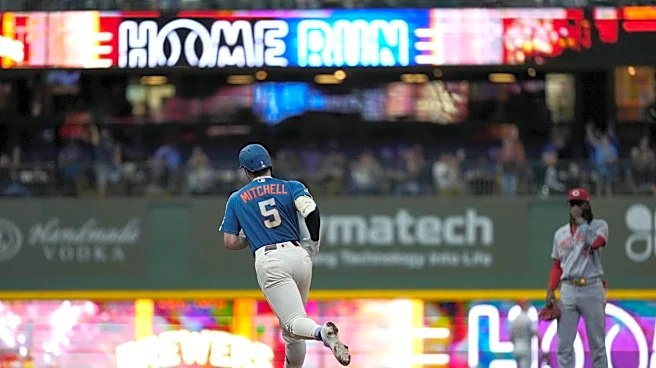
Beyond that, Krall and those in the clubhouse say they like the frontline talent they start the retooling process with – including rising young ace Chase Burns, who made another workload-limited start in the weekend series finale in Milwaukee (three innings, five strikeouts, two runs on a two-run homer by Joey Ortiz in the second).
“We’ve got a good core group of players,” Krall said. “I mean, we’ve got a guy who was in the Cy Young running in Burns. You’ve got Elly (De La Cruz), who’s been close to MVP caliber, and he’s missed a month of the season due to (hamstring) injury. And Sal Stewart has a chance to win Rookie of the Year.
“You’ve got a good core group of players,” he said. “But we’ve got to do a better job of figuring out how to make the rest of it work.”
Instead of improving their below-average offensive production, the Reds got worse in 2026. Defensively, their outfield is slow; their infield barely adequate; the catching below average. And the starting pitching that was a top-of-the-league strength in 2025 fell far off that performance this year.
“We’ve been inconsistent all year. We’ve got to find some consistency somewhere,” Krall said.
They’d better find it fast if they plan to win with this “good core,” considering the short-term contract status of the 67-year-old manager, the fast-ticking clock in De La Cruz’s club control before free agency and several other short windows on player control.
Krall downplayed the sense of urgency created by those factors.
“Every year is an urgent year,” he said. “Every year you’re trying to get to the postseason. Every year you’re trying to be as good as you possibly can, and we just haven’t done that this year. We’ve got to figure out how to be better going into next year.”
As for the clocks quickly winding down on key short-term assets, “You’ve got to be cognizant of it, but you also need to know that you’ve got to be smart for the long term,” Krall said, “and make good decisions for the long term, and not just the short term.”
This article originally appeared on Cincinnati Enquirer: Reds front office expected to return intact next season: Nick Krall