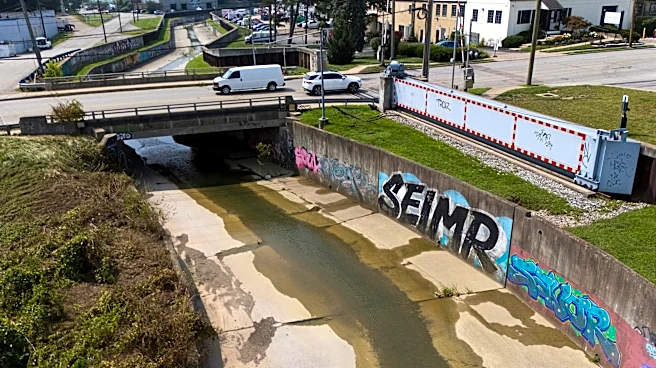

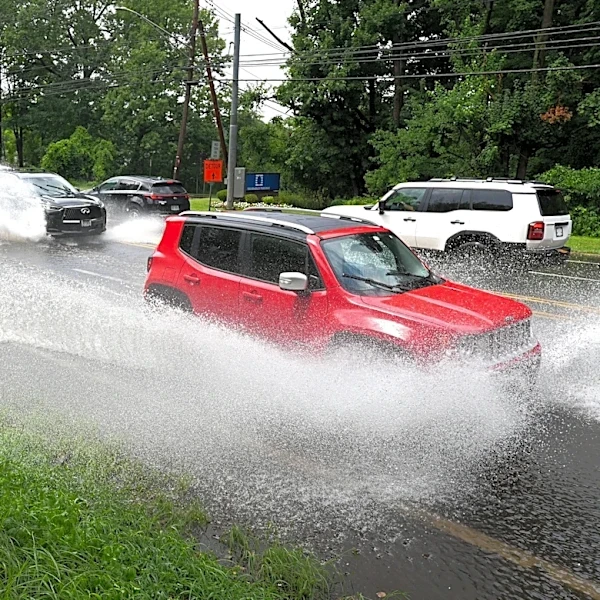




Hamilton County continues to assess damage from the July 17 storm that flooded streets, homes and businesses and caused one death.
Nick Crossley, director of the Hamilton County Emergency Management Agency, said the county hopes to submit an assessment of the damage to the state this week in hopes of financial aid. Crossley gave an update on flooding damage at the Hamilton County commissioners' meeting on Tuesday, July 28.
What does it take to get money from the state or federal government?
Crossley said there are four tiers when assessing damage for federal aid: affected, minor, major and destroyed.
He said to get state money for local governments, the damage must reach a threshold of about $4.2 million in uninsured losses. Crossley said it's hard to reach that threshold without a major infrastructure loss.
For
assistance for individual residents, the county has to prove that there are 25 homes that have suffered major damage or been destoyed.
To qualify as major damage:
- The home must have severe structural failure or visible high-water lines.
- The home must be unsafe or uninhabitable without major repairs.
- Water must be 18 to 24 inches high in a living area or above an electrical outlet.
To be destoyed:
- The home has totally collapsed or washed away.
- It must be "completely beyond repair."
How does the county assess damage?
Crossley said it can be more difficult to assess damage from flooding than with a tornado, when officials can fly over a region and see the damaged or destroyed houses.
He said Cincinnati and other communities in the county have been going door to door in affected areas to determine the level of flood damage.
“Sometimes we can see it on the outside of the home — we can see the water line, and we then document that water line. But if they can't see it, then they're attempting to contact residents to find out the level of damage," he said.
Crossley said Cincinnati is still conducting their assessment and Fairfax found two major damage incidents: one home and one business.
Crossley said the county has received no other community reports and said that probably means other areas had only basement flooding.
What happens next?
Crossley said the office of Ohio Gov. Mike DeWine is waiting for data from the county before deciding whether to declare a state of emergency.
Residents can report a sewer backup to the Metropolitan Sewer District by calling 513-352-4900 or by submitting a report online.
If your property is eligible, you can receive cleaning services, reimbursement for damage and protection from future sewer backups, District Director Diana Christy said. Residents have to report a sewer backup within 48 hours but have up to two years after the event to file a claim for the program.
Christy said the sewer backup program has a budget of $8.2 million for 2026. As of June, $3.4 million was spent.
Regional politics reporter Erin Glynn can be reached at eglynn@enquirer.com, @ee_glynn on X and @eringlynn on Bluesky.
This article originally appeared on Cincinnati Enquirer: What's your level of storm damage? Here's how to report it