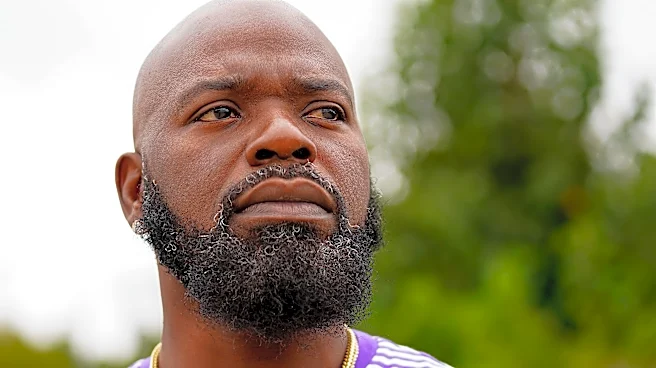











When 43-year-old Ron Miller started to lose feeling in his legs in August, the surgeon who performed his spinal surgery in 2025 told him to get to UC Medical Center's emergency room immediately.
Miller arrived at around 10:30 p.m., explained to intake staff that his surgeon had sent him to be admitted and left detailed notes in his patient file. After a nurse took his vitals, Miller was asked to sit in the waiting room. Around 2 a.m., a provider took him back to get a CT scan.
Then Miller returned to the waiting room and sat for about another 4 hours before leaving, untreated.
"We felt very ignored," said Miller's partner, "Ebony J" Wynn. "We are in an emergency, and it felt like nobody was listening."
This is the exact scenario that emergency room
nurse personnel dread.
And yet, Miller's long wait at UC Medical Center's emergency room isn't out of the ordinary. The average time patients spent in Cincinnati emergency departments before leaving the visit was almost 3 hours between October 2024 and September 2025, according to new data from the Centers for Medicare and Medicaid Services. In Cincinnati, those visit times range between 2 and 4.5 hours.
St. Elizabeth Healthcare in Edgewood, Mercy Health West Hospital and The Jewish Hospital all averaged less than 2.5 hours for ER visit times, according to the CMS data, while St. Elizabeth Healthcare in Florence, Bethesda North, Good Samaritan and Mercy Health Anderson average over 2.5 hours.
"We believe this performance reflects the daily commitment of our physicians, nurses, clinical staff, and support teams who work together to provide timely, high-quality care for the communities we serve," said Clark Wheeler, assistant vice president of quality operations at St. Elizabeth Healthcare. "Our goal remains to ensure every patient receives safe, compassionate, efficient, and high-quality care when they need it most."
By comparison, people who go to The Christ Hospital's ER stayed for about 3 hours, and those at UC Medical Center waited for well over 4 hours on average.
ER workers across the country worry that rising health care costs, a growing number of uninsured people and a sicker patient population will make these visit times even longer.
"It really is a crisis," said Dr. Gregory Fermann, chair of emergency medicine at UC Health. "Emergency care is in a tough spot because it is a lot of patients that are trying to seek our services, and we're doing our best to try to meet that need."

Patients without primary care end up in emergency rooms
While people in Ohio live less healthy lives and spend more on health care than people in 42 other states, according to an analysis by the Health Policy Institute of Ohio, many in the country are experiencing an "access block" to primary care, Fermann said. Only about 70% of young adults reported having a primary care physician, a June 2026 study by Ohio State University shows. For those who do, less than half have had an appointment in the last year.
With rising health care costs and more people without insurance, the emergency room acts as a safety net for receiving care, especially for those who struggle to follow their care plans, get to appointments and afford medications, said Candice Elmore, dean of Galen College of Nursing's Cincinnati campus.
"It's no secret that people are choosing between medication and food, medication and electricity, medication and heat," Elmore said.
This isn't likely to get better in the coming years, she added. Changes to Medicaid eligibility requirements and the shift of funds going to hospitals and health care providers means more people will delay seeking care until they can't anymore, which is when they go to emergency rooms.
Since ERs prioritize patient intake based on severity of their condition in a process called triage, many people may find themselves waiting for hours, whether it be for a medication refill or a more serious − but maybe not life-threatening − condition, Galen said.

Nurses stretched thin with overcrowded ERs
Many nurses feel like they are not providing the level of care that their patients deserve due to understaffing, said Kylee Ham, president of the Registered Nurses Association at University of Cincinnati Medical Center. Several nurses have told Ham that they have suicidal thoughts, and the mental toll can get so bad that many decide to leave bedside care or the profession altogether.
Mandatory staffing ratios, or the number of patients a registered nurse can take care of at once depending on their specialty, mean that nurses in the ER usually don't care for more than four patients at a given time. But those staffing ratios do not always prevent some ER nurses from caring for eight patients simultaneously, Ham said.
"There's no way you can possibly provide the care that that patient deserves when you have that many of them," she said. "It's hard to describe how frustrating it is and how difficult it makes it to do your job."
And if there aren't enough nurses to cover other floors of the hospital, then beds on those floors may also become unavailable. This means more patients will be held in the emergency room, sometimes for days, which takes away space for new admissions. Emergency nurses must then take care of those admitted patients in the emergency room, as well as stabilizing the patients who come in with urgent needs.
Galen likens this to "dominoes falling," where nurses and other ER staff are already stretched thin and asked to provide even more care to patients with increasingly complex care needs.
UC Medical Center's ER sees over 70,000 patients a year, including roughly 7,000 who are transferred from other regional hospitals. Those patients are usually transferred as level 1 traumas, in need of immediate treatment, said Cory Shaw, president and CEO of UC Health. UC is the only level 1 trauma center in the area and also has a comprehensive stroke center.
Even with the expansion of UC Medical Center's emergency department, the beds are filling up quicker than patients can be seen. And amid a hiring slowdown, providers are struggling to keep up, leaving visit times unchanged, Ham said.

UC Health's emergency severity index requires patients with life-threatening conditions be treated first. In Ron Miller's case, that meant sitting in an uncomfortable chair as his legs grew heavier until he couldn't wait any longer and went home, he said.
When he went back to the emergency room later that day, after speaking with his surgeon again, a nurse took Miller's vitals before directing him back to the waiting room. He experienced the same problem with a different group of people, Miller said. Another nurse eventually came out and apologized, saying they missed the doctor's notes asking for a direct admission and that the hospital was overcrowded. Though he was eventually admitted and underwent back surgery to address the herniated disk pressing against the nerves of his spine, Miller's story is not abnormal.
"That's triage," Fermann said. "We have to make some really difficult decisions to send folks back to a chair when we wouldn't normally do that."
This article originally appeared on Cincinnati Enquirer: Emergency rooms in 'crisis' mean longer visits. It's getting worse