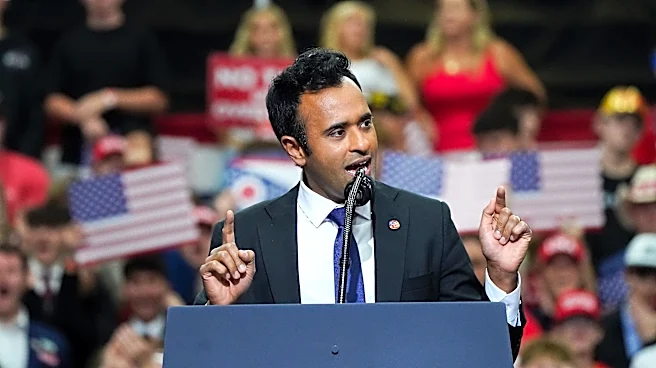





Ohio gubernatorial candidate and Cincinnati-area native Vivek Ramaswamy said he wants to end sanctuary cities in a post on X over the weekend.
Ramaswamy vowed to end sanctuary cities in Ohio during an Oct. 9 rally, saying "We believe in the rule of law in this country which means we are ending sanctuary cities in Ohio - from Cincinnati to Cleveland,” in an X post by the Republican Party.
However, Ohio doesn't really have sanctuary cities. Here's what to know.
What is a sanctuary city?
According to Global Refuge, a sanctuary city doesn't have an official definition, but it "refers to a policy that limits or defines the extent to which a local/state government will share information with federal immigration law officers."
The word "sanctuary" can refer to a place that feels
safe. However, the term does not always refer to immigration-related themes.
Ohio governor candidates Vivek Ramaswamy wants to end sanctuary cities
While Ramaswamy visited Delaware County for the Back the Blue rally, he emphasized ending sanctuary cities and holding activist judges accountable for releasing repeat violent offenders in a post.
Ramaswamy previously called Cincinnati "shameful" for being a sanctuary city
In 2025, Ramaswamy, a Cincinnati-area native with parents who legally immigrated from India, said Cincinnati should ditch its sanctuary-city status. Cincinnati declared itself a "sanctuary city" in February 2017 during President Donald Trump's first term, but the 6-2 vote by Cincinnati City Council was largely symbolic because city police didn't enforce federal immigration laws anyway.
In the years since, Cincinnati hasn't passed any rules or taken any action to block U.S. Immigration and Customs Enforcement from arresting immigrants here illegally.
How many sanctuary cities do Ohio and Kentucky have?
Ohio doesn't specifically have sanctuary cities. It has certain jurisdictions that contribute to areas being considered sanctuary counties, but it only has four of them.
According to the Center for Immigration Studies data as of as of June 29, 2026, sheriff's department policies in Franklin and Hamilton counties and county jail policies in Lorain and Mahoning make them sanctuary counties in Ohio. However, a spokesperson for the Franklin Count Board of Commissioners states, "While Franklin County is a welcoming community for new Americans, there have been no formal actions taken to designate Franklin County a sanctuary county."
In Kentucky, CIS reports that Campbell County, near Cincinnati, Franklin County, Jefferson County, and the City of Louisville are sanctuary locations in the Bluegrass State.
What do sanctuary cities do?
Areas that are considered sanctuary do not hide undocumented immigrants from detection by federal authorities.
To be considered a sanctuary, towns, cities, counties, states, and other jurisdictions limit their cooperation with federal immigration authorities. These "sanctuary" policies may include:
- Limit the local police's power to arrest for federal immigration offenses or to hold individuals on civil immigration warrants
- Prohibiting “287(g)”, which is a program that allows ICE to deputize local law enforcement officers to enforce federal immigration law
- Preventing immigrant detention centers from being built in their state, community, or jurisdiction
- Prohibiting the information sharing of undocumented community members with federal immigration law enforcement officers
How many sanctuary states are in the U.S.?
According to the Centers for Immigration Studies, there are 13 sanctuary states:
- California
- Colorado
- Connecticut
- Illinois
- Massachusetts
- New Jersey
- New York
- North Dakota
- Oregon
- Rhode Island
- Utah
- Vermont
- Washington
This article originally appeared on Cincinnati Enquirer: Vivek Ramaswamy calls to end sanctuary cities. Where Ohio has them