




And as 2026 progresses, I keep returning to the same conviction as a member of our Greater Cincinnati community and as a leader at Women Helping Women: Believe survivors. Invest in survivors.
Because safety without economic safety is not true safety.
As economic hardship deepens across the country, survivors of domestic violence are carrying an especially dangerous burden. Financial instability does not cause violence, but it can fuel its impact, prolong it, and make leaving far more difficult. At the very moment survivors most need support, resources are being stretched thinner than they have been in years.
For someone navigating danger, that gap can be deadly.
Domestic violence thrives on power, control and delay. Yet too many systems surrounding
survivors are built around delay: waiting lists, eligibility requirements, fragmented services and resource scarcity.
After more than a decade of leading an organization that has served more than 61,000 survivors during that time, I believe the defining question is no longer whether we understand domestic violence. It is whether we are willing to respond differently.
Awareness matters. But awareness is only step one. Action must be step two.
A ribbon cannot pay a security deposit when a survivor needs to leave tonight. A speech cannot replace four tires an abuser slashed. A hashtag cannot cover lost wages, childcare, or an eviction notice.
Awareness must be matched with resources.
One of the most powerful and often unseen forms of domestic violence is economic abuse. Abusers sabotage employment, destroy credit, control access to money and weaponize debt. When financial survival depends on the person causing harm, coercive control can follow survivors into nearly every decision they make.
For too long, we have measured success by whether survivors survive. We should be asking whether they have what they need to thrive.
Five years ago, Women Helping Women created the Survivor Equity Fund around a simple idea: If financial barriers can trap survivors in danger, flexible financial assistance can help unlock safety.
From 2024 through 2025, the fund distributed more than $1.7 million in support to survivors. By the end of 2026, we hope to distribute another $700,000. Much of that support goes toward housing − rent, relocation, deposits and emergency stays.
That matters because housing is not separate from safety. For many survivors, housing is safety.
The return on this investment is powerful. Families remain housed. Survivors maintain employment. Children avoid displacement. Dollars remain in the local economy.
Research also shows that flexible financial assistance can improve survivor well-being and health long after the immediate crisis has passed. Those outcomes do not happen because survivors suddenly become more “resilient.” Survivors have always had strength.
What changes outcomes is often much simpler: We remove the barriers.
The longer I work in this movement, the more I return to something I believed when I first entered domestic violence advocacy nearly 30 years ago: Systems are the result of choices. Funding is a choice. Policy is a choice. Philanthropic priorities are a choice. How quickly we respond is a choice. And choices can change.
Difficult economic times do not make innovation less possible. They make it more urgent. Across Ohio, domestic violence homicides increased by 37% in 2025. At Women Helping Women, we continue to see the devastating consequences when violence and economic instability collide.
The good news is that solutions do not always require building an entirely new system. Sometimes they require something much simpler: trust survivors, move resources quickly, and give people the ability to decide what safety requires for themselves and their families.
This October, as our region lights up purple for Domestic Violence Awareness Month, I hope we make that light mean more than awareness.
Let it represent action. Let it represent investment. Let it represent a commitment to remove barriers and put real resources behind the words: we believe you.
Because the future of this work cannot be merely helping survivors survive. It must be believing survivors. It must be investing in survivors.
It must be freedom.

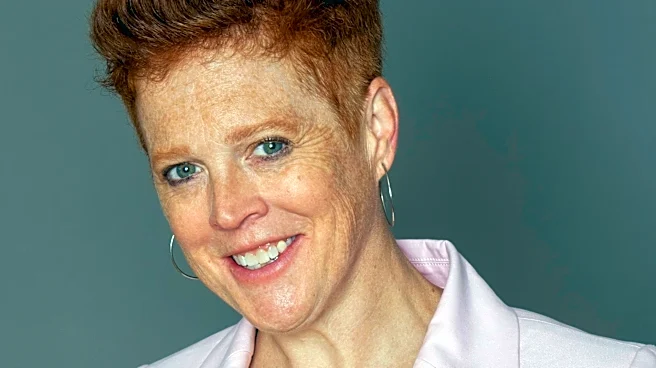
Kristin Shrimplin is president and CEO of Women Helping Women. If you or someone you know is experiencing domestic violence or sexual assault, help is available 24/7 through Women Helping Women’s hotline at 513.381.5610.
This article originally appeared on Cincinnati Enquirer: Domestic violence survivors need resources, not just ribbons | Opinion