






With most gun thefts occurring from vehicles, Cincinnati leaders will consider beefing up security requirements for parking lots, including more cameras, barriers and better lighting.
Cincinnati City Council next week is expected to debate at least two ordinances related to parking security – a more strict version backed by Mayor Aftab Pureval and another introduced by council members Seth Walsh and Meeka Owens
.Parking lot owners, including an influential family of political donors, have raised concerns to city leaders about the cost of some of the proposed requirements.
Reducing the number of guns stolen out of vehicles
By bolstering parking lot security, city officials hope to reduce crime for Downtown visitors. But there's also another factor: discouraging gun theft from cars, said Mayor Aftab
Pureval.
"A majority of illegal guns on the streets in Cincinnati are stolen from cars," Pureval said.
As of Sept. 21, there have been 267 firearms stolen this year out of vehicles, 70% of all stolen guns in the city, according to statistics from the Cincinnati Police Department. That's up from 2023 when 56% of all stolen guns were taken from vehicles.
Police could not supply figures on how many guns were stolen from cars in Downtown lots, or on overall vehicle thefts from Downtown lots.
City working with parking lot operators

Since April, city officials have fine-tuned multiple versions of the parking lot ordinance to address concerns of the local parking industry.
The original version introduced by City Manager Sheryl Long in April put more security requirements on parking lots than subsequent versions introduced by the mayor and city council.
Long's version required both parking lots and garages to have security plans, cameras at entrances and exits, and a full-perimeter fencing or some type of pedestrian barrier.
After concerns were raised by parking companies about the cost, the mayor released a "Plan B" that gave surface parking lots the option to either install cameras that cover the full perimeter of the parking lot or a full perimeter fence that restricts both pedestrian and vehicular traffic.
"There was a lot of, I think, good arguments for why pedestrian barriers would be overly expensive and not necessarily contribute to the public safety concerns of cars being broken into," Pureval said.
He delayed the vote until after council reconvened from summer break.
Both versions required:
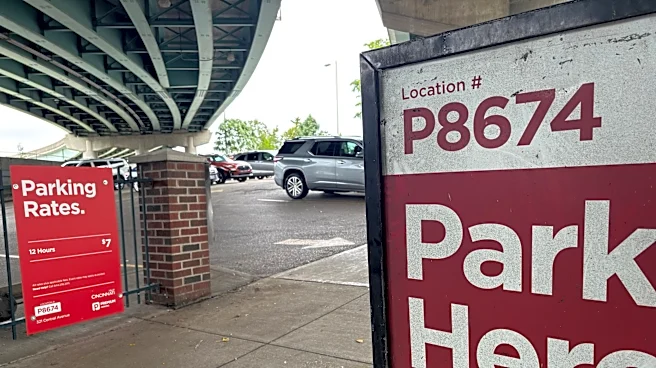
- Signage requirements that clearly show the rates and payment methods
- Parking lots with more than five spaces and garages to adhere to illumination standards recommended by the National Parking Association
- Various consumer protections preventing towing or booting of vehicles in the first 20 minutes of arrival, and requiring a lot to either provide a payment ticket upon entry or signs explaining how someone gets a ticket showing they paid
- Parking lots and garages to report crime within 24 hours.
A conference call in August led to a new version
The ordinances piqued the interest of the Chavez family, who own parking lots throughout the city.
In August, Pureval, Walsh, Owens and members of the Chavez family held a conference call to talk about parking regulations, the mayor, Walsh and Owens confirmed to The Enquirer.
Weeks after the conference call, Owens and Walsh introduced a version that would only require cameras in garages. Gone were any requirements for cameras or a full-perimeter fence from surface lots.
The Owens and Walsh ordinance kept the requirements for lighting, signage and crime reporting as well as other provisions in the earlier versions and added language to allow for tandem parking spaces where two more vehicles can park behind each other.
When asked what influence the Chavez family will have on the new requirements, Owens said they're simply listening to affected business owners.
"If we're creating an environment where we are asking people to invest in Cincinnati, create jobs, operate good businesses, then listening to all people is important," Owens said.
Who is the Chavez family?
Messages left at the Chavez' company were not returned.
The Chavez family have a parking and property empire in the city. Chavez Properties subsidiary Park Place lists 20 lots in the city of Cincinnati, in addition to parking lots in Atlanta, Columbus, Dayton and Nashville.
According to Board of Elections campaign finance reports, the Chavez family has been regular contributors to Walsh, Owens and Pureval's campaigns over the years:
- Martin Chavez, a partner at Chavez Properties, contributed $4,100 to Walsh's campaign for Ohio Treasurer.
- Martin and Robert Chavez, partners at Chavez Properties, gave Meeka Owens' campaign for Hamilton County commissioner $5,000.
- Various members of the Chavez family have donated $7,700 to Pureval's campaigns since 2021.
Why Walsh is concerned about cameras in lots
Walsh said he's worried about increasing the number of cameras in the city. There needs to be more research about where cameras are needed to combat crime rather than just mandating cameras everywhere, he said.
"We need to be nuanced about this and not just go down a road in which we install cameras everywhere and then 10 years from now regret that there are cameras everywhere," Walsh said.
He said he'll introduce a motion for the administration to look at what additional measures can be taken with surface lots. "We just aren't ready yet on that."
The mayor said he will still push for his version that requires a security plan for both surface and garage parking lots.
"I think they still have concerns over my version B," Pureval said. "So the whole impetus of this, to regulate closley and add requirements for cameras, are all added costs to the parking industry in general. I understand that perspective, but ultimately, what I'm doing is trying do what's in the best interest of the city."
This article originally appeared on Cincinnati Enquirer: City's plan to making parking lots safer raised concerns from donor