



More than 100,000 Ohioans are no longer receiving government help to buy food after federal overhauls to the Supplemental Nutritional Assistance Program.
According to state data, 137,000 fewer Ohioans were enrolled in SNAP from July 2025, when President Donald Trump signed the One Big Beautiful Bill Act, through July 2026. That includes roughly 60,000 children, and under drastic changes to the program's eligibility requirements, likely veterans, young people aging out of foster care, and certain noncitizen populations.
The loss comes at a time when Americans, regardless of financial status, are struggling to afford basic needs like groceries, rent, utilities and health care. Since 2019, at-home food costs have risen 33%. According to the Economic
Policy Institute, the average cost of groceries per month for a single person in Franklin and Hamilton counties is more than $350. The average monthly SNAP benefit for an Ohio household is $191.
Still, more changes are on the horizon − ones industry experts fear will only burden already spread-thin state and county agencies, add to the people removed from the program, stress food banks and contribute to higher rates of chronic disease.

“Sometimes I worry that if we put more restraints and more process and more controls on these programs, the end result is people who really need the help have a harder time getting it. And that's not good for anyone," said Mike Hochron, senior vice president of communications and public affairs at the Mid-Ohio Food Collective.
What are the big changes to SNAP benefits?
Some changes to SNAP started the moment Trump signed the One Big Beautiful Bill Act. In July 2025, certain noncitizen populations who are legally in the U.S., including refugees, asylees, victims of domestic violence and victims of human trafficking were no longer eligible for SNAP.
Veterans, people experiencing homelessness and young people aging out of foster care, adults between ages 55 and 64 and parents with children older than age 14 were no longer automatically exempt from work requirements, such as working more than 30 hours per week, in order to get SNAP benefits.
On Nov. 1, 2025, county agencies began screening all individuals between ages 16 and 64 to check if they fit the exemption criteria. The effects of those screenings didn't come to fruition until the end of January 2026, when SNAP recipients were informed whether or not they were still eligible.
But the changes didn't stop in 2025. The program had rules about what the benefits can and cannot be used for, but some states have added further limits since the act's signing. Republican Sen. Jon Husted championed a ban on certain "junk food" and sugary beverages, such as soda pop, set to take effect in October 2026. However, the new law was put on hold in September by the U.S. Department of Agriculture to allow for public comment.
On Oct. 1, federal funding for state administrative costs to run SNAP was slashed by 25%, a whopping $67 million for Ohio. While Ohio's most recent state budget contained provisions to help fill this gap, Brian O'Rourke, health care policy analyst at the Health Policy Institute of Ohio, noted that these funding cuts came as the federal government added more administrative work to state and county plates, such as more frequent eligibility checks.
“Some of those things, we're not even seeing the implications of yet," O'Rourke said. "But Ohio is going to need to cover those shortfalls or there will be significant consequences in terms of staffing shortages or difficulty keeping up with systems.”
Nearly every county in Ohio saw SNAP numbers drop
Of Ohio's 88 counties, 86 showed lower numbers, with 85 of the 88 counties reporting lower numbers of children in the year since the federal law was signed.
In Ohio's most urban counties, Franklin County's enrollment numbers dropped by approximately 34,500, Hamilton County's dropped by 10,000 and Cuyahoga County's numbers dropped by 13,000 between July 2025 and July 2026.
In Delaware County, the state's wealthiest county, enrollment numbers dropped by roughly 400.
In New Albany, Ohio, deemed Ohio's richest city in 2024 and one of the wealthiest suburbs in the country in 2026, a new food pantry will celebrate its groundbreaking on Oct. 15. It's already existing food pantry served over 400 households in 2025 in the New Albany-Plain Local School District and the 43054 zip code.
"Hunger is not a 'they' and a 'there' problem – its an 'us' and a 'here' problem," Hochron said.
Food banks strain under higher costs of living, SNAP shifts
According to a 2026 study from the Ohio Association of Foodbanks, 52% of Ohio surveyed households reported skipping meals in the past year, many every month, due to increased cost of living pressures. This was most common among households that lost SNAP benefits, and for households that reported reduced SNAP benefits, almost 50% said they expected to rely more on food banks in the next year.
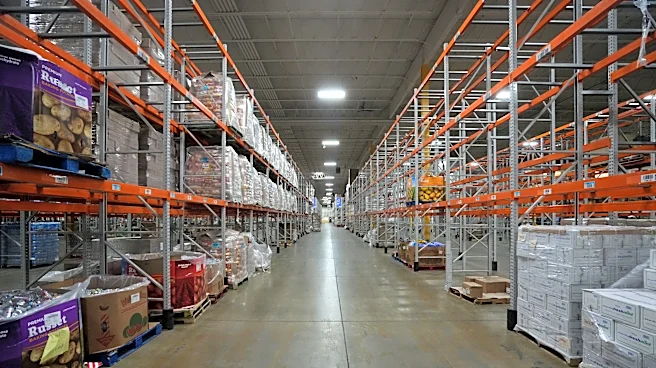
The Mid-Ohio Food Collective, which serves 20 Ohio counties and helps feed well over 500,000 people, has roughly 60% more people to serve than it did during the peak of the COVID-19 pandemic, Hochron said. Of those households, 76% include at least one child or one senior, and more seniors come in saying they never expected to be there.

“SNAP is all that more essential for the families who are already stretching to make ends meet," Hochron said. “So many of us are one bad day away from ‘I never thought I would be here and I need a little bit of help.’”
Many are already reaching out for this support.
The Freestore Foodbank, with two locations in Cincinnati, has been serving about 100 more people per day since the federal spending bill passed last year, said Kam McKenzie, manager of SNAP outreach. Many of the people newly using these services are seniors asking for help applying with SNAP benefits.
The influx of people has led Freestore Foodbank staff to come up with a contingency plan, McKenzie said. For those who have trouble getting their benefits on time, the food bank will let them visit more than once a month, which is the typical allowance.
But further changes are ahead.
States to pay a percentage of SNAP benefit errors next year
Starting Oct. 1, 2027, states will start paying a percent of the total SNAP benefit costs based on their payment error rate, which is typically defined as over-payments or under-payments of $57 or more. In the past, the federal government covered all of the actual benefit costs.
asserted that the SNAP program is rife with fraud
For states with error rates under 6%, the federal government will continue to fund all benefit costs, but for rates above 6%, states will pay a higher percentage of those costs. In Ohio, the payment error rate in fiscal year 2024 was almost 10% but came down to roughly 7% the next year, according to the Ohio Department of Job and Family Services. If the 2024 rate had been used, that would require Ohio to pay about $321 million.
This, combined with the shift in administrative costs that kicked in this month, could spell further bureaucratic costs and consequences.
"What our community and families, but also our workforce and our economy, depend on is this combination of strong, well-run federal nutrition programs alongside robust local charitable support systems," Hochron said. "One cannot take the place of the other."
Business and consumer issues reporter Samantha Hendrickson can be reached at shendrickson@dispatch.com
This article originally appeared on The Columbus Dispatch: More than 100,000 Ohioans lost SNAP benefits since Trump cuts
Our editors independently choose our recommendations. Some content is produced with paid support from a third party, however our editorial decisions remain independent. If you buy through our links, the USA TODAY Network may earn a commission. Prices and availability may change.