


Ohio's gasoline tax is 38.5 cents a gallon. I can do the math standing at the pump. Fifteen gallons, $5.78. That's the most a driver could save on a fill-up. It isn't a promise.
On Sept. 21, AAA put regular gas in Ohio at about $4.52 a gallon. Diesel ran about $6.77. That's a bill you watch climb, one spin of the numbers at a time.
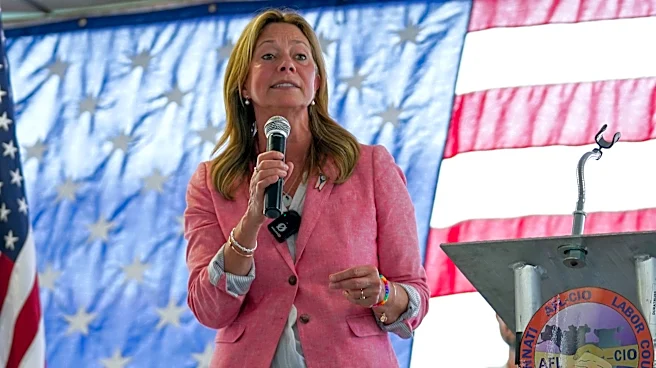
Gubernatorial candidates Amy Acton and Vivek Ramaswamy both want a gas-tax holiday. The savings are partial. The lost road money is certain.
The savings at the pump aren't guaranteed

Acton spoke first. She called for an emergency suspension and said Ohio could offer temporary relief "without compromising on investing in our infrastructure." She did not say how long it would last or what money
would replace the tax. When Ramaswamy offered Medicaid-fraud savings, she said that money belongs in health care. Fair enough. Then name the money that belongs on the road.
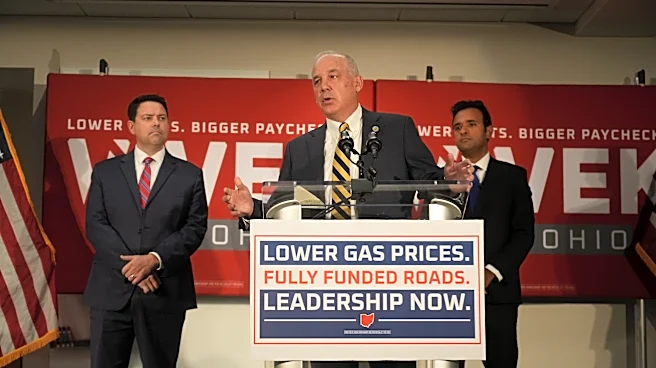
Ramaswamy followed hours later with a plan: Suspend the 38.5-cent gasoline tax and 47-cent diesel tax for 90 days. Cover the hole with ODOT money, then general-fund dollars, then the rainy-day fund if needed. Refill the rainy-day fund later with Medicaid-fraud recoveries from a federal deal he has not yet made.
Read the first item on that list again. Road money pays for the road-money holiday. That isn't a backfill. It's the same bucket, tipped over.
Gov. Mike DeWine, a Republican, called that a "very, very bad idea." He put the 90-day hit near $750 million. Legislative leaders say $640 million to $700 million. Take the low number. It's still a hole.
House and Senate leaders plan a vote Sept. 30.
The gas tax is not a mystery fund in Columbus. House Bill 62 set the current rate in 2019. In fiscal 2025, Ohio collected about $2.75 billion in motor-fuel taxes. ODOT's books sent more than $1.5 billion to the state highway system and about $983 million to cities, counties and townships.
Somebody still has to pay for the pothole on the township road.
The road money has to come from somewhere
To anyone choosing between a full tank and a week of groceries, $5.78 is real money. Diesel hits farmers, truckers and everybody who depends on what a truck delivers. That's why a gas-tax holiday sells.
Nothing in the law says a station has to pass the cut along, penny for penny. It can raise its price and keep some of the difference. Oil can climb and swallow more.
In 2022, Maryland, Georgia and Connecticut tried state gas-tax holidays. The Penn Wharton Budget Model found drivers got between 58% and 87% of the cut at various points, and the price drop often didn't last the whole holiday.
Drivers may see part of the 38.5-cent cut. The road fund loses all of it. Every dollar pulled from the general fund or the rainy-day fund comes out of something else. The bill should say plainly that cities, counties and townships get their share back.
Count the days, too. A 90-day holiday that starts in October runs past Election Day. The relief arrives before the votes are counted. The bill arrives after.
Acton and Ramaswamy both need to show their math

Ramaswamy's backfill starts with the road fund and ends with a promise. Acton's is a wish until she names a fund and a number. One has the wrong answer. The other has none.
Roads don't belong to a party. They are asphalt and salt. They don't read press releases.
A holiday does not make oil cheaper. War has squeezed the Strait of Hormuz for nearly seven months. That is what is driving the price of a gallon.
Name the tax, the program and the dollar that pays for it − in the open, and for keeps.
Five dollars and seventy-eight cents won't pave a county road.
It will buy a week of headlines.
Ray Watford is a retired newspaper production director who lives in Hilliard.
This article originally appeared on Cincinnati Enquirer: Ohio gas tax holiday is easy politics. Paying for it isn't | Opinion