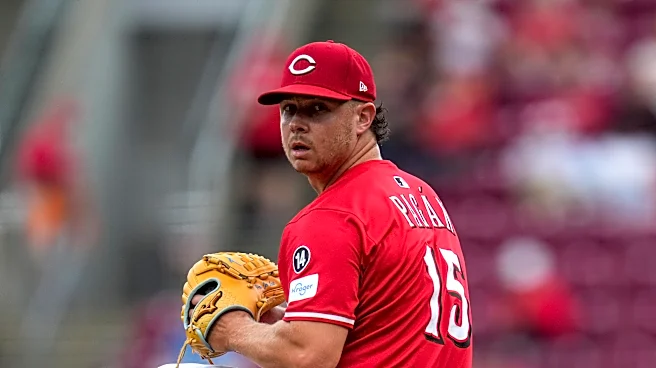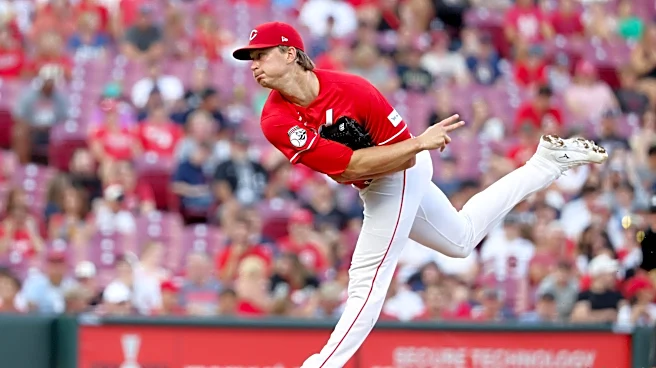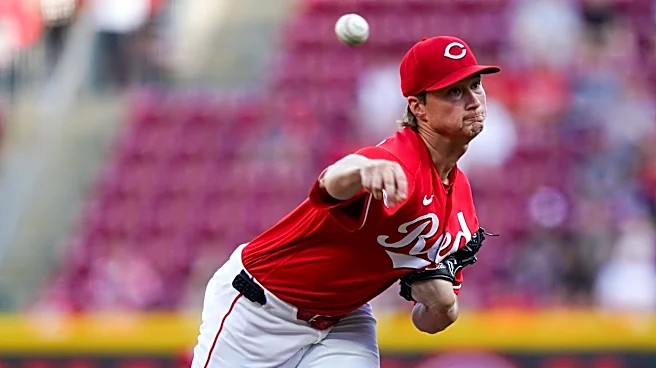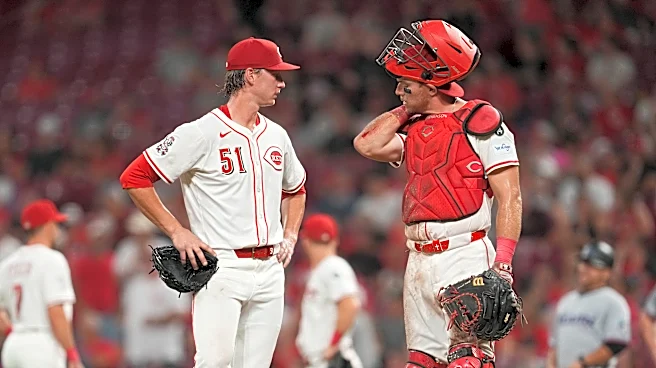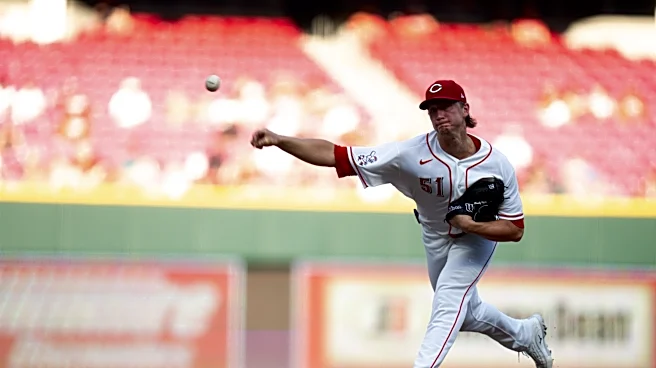

Brady Singer slipped across first base covering the tail end of a double play try and wound up on his own tail end.
He got up and finished the inning, after which it was announced that a reliever had started
to warm up in the Cincinnati Reds bullpen.
Was Singer hurt? And unable to pitch the sixth inning of this series opener against the Athletics?
Maybe. And of course not.

Singer returned to the mound for a 1-2-3 inning that capped a sixth quality start in seven weeks, in a game the Reds eventually won 5-4 on a comeback, with the tying and winning runs both scoring on wild pitches during the same at-bat in the eighth.
Two days earlier it would have qualified as a surprise that Singer would have started this game at all, the pending free agent at the top of a long list of players the Reds shopped in the days and weeks leading up to the Aug. 3 MLB trade deadline.
That few doubted he would pitch the sixth regardless of what kind of groin, hamstring or ankle pain might have resulted from the splits and splat in the fifth is a big part of why he survived the deadline to make that start in a Reds uniform.
Why he’s one of most valued pitchers in the rotation internally by the front office and manager.
Why he’s all but assured of getting a $23 million qualifying offer at the end of the season
Why he might yet wind up a significant part of whatever the Reds put together next year in another attempt to back up last year’s playoff appearance with another one under manager Terry Francona.
Singer, who pitched through a blister the first few weeks of the season and later a bruised foot from getting hit by a line drive, has been the durable workhorse for an otherwise oft-banged-up Reds rotation – the only member of the starting crew to stay off the injured list these past two seasons he’s been with the club.
Team president Nick Krall said he weighed that value, both as role model for younger pitchers as well as a competitor on the field, when deciding to take Singer off the market on deadline day and put him in the team’s plans moving forward.
If he accepts the qualifying offer, he becomes the 2027 version of last year’s Nick Martinez, who pitched on the one-year qualifying offer many in the industry thought was an overpay but that wound up impacting the Reds successful run to the playoffs on and off the field.
If he doesn’t and chooses to enter what could be a fraught free agent market with a labor lockout looming, the Reds would be in line for a relatively high compensation draft pick in 2027.
“We’re going to play the rest of the season out and see what happens. We’ll discuss that when we get to November,” Krall said.
This article originally appeared on Cincinnati Enquirer: Brady Singer survives deadline, offers glimpse of Reds future in win?