

After the Cincinnati Bengals score a touchdown, 65,000 fans at Paycor Stadium give voice to the team’s fight song, “The Bengal Growl.”
Hear that Bengal growlin’
Mean and an-ga-ree.
Here he comes a-prowlin’
Lean and hun-ga-ree.
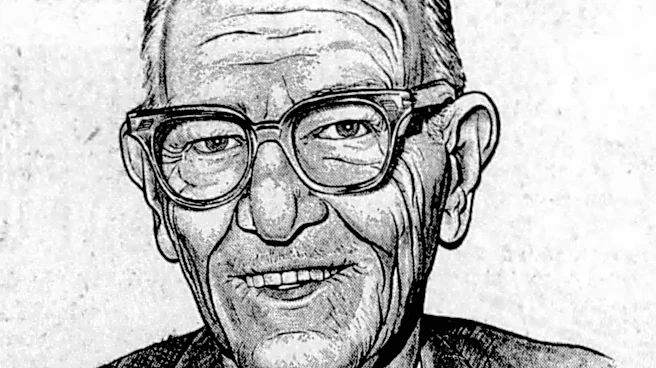
The corny-yet-catchy song has been a staple of Bengals games since the team’s first season in 1968. It was written by George T. “Red” Bird, the Bengals’ first director of entertainment, at the request of owner-coach Paul Brown.
Bird, known as Red because of his red hair, was in charge of all entertainment before and during the game, from marching bands at halftime to Bird’s Band, a jazz group that rallied the crowd between plays.
He had worked alongside Brown going back to 1938 at Massillon Washington High School in Massillon,
Ohio, then with the Cleveland Browns.

Bird was born in Fayette, Ohio, in 1900. At age 10, he was the youngest member of the community band. After high school, he was first trumpet with the Dodge Brothers Industrial Band in Detroit, then student director of the Ohio State Band.
When Bird ran out of money for college, he started playing with big bands in burlesques and vaudeville shows.
Once he married Marie Turner, a blues singer on WSAI radio, he went back to school to the Cincinnati Conservatory of Music and the University of Cincinnati.
He was teaching music at Xavier High School when a band director job opened in Massillon.
“I went to Massillon out of curiosity,” Bird told The Enquirer in 1968. “… In show business, I always counted seats. And to my amazement I saw 22,000 people watching a Canton-Massillon game. That caused me to take the job.”
Bird moved next door to the football coach, Brown, who had just led the Massillon Tigers to state and national championship titles. Bird brought the same precision and innovation to marching bands that Brown did to football.
Rather than military-style marching up and down the field, he had performers move in formation to changes in the music. He added splashes of color and showmanship.
“I transpose the techniques and gimmicks I had in show business onto the football field,” Bird said.
He brought swing music from the radio to the marching band, now called the Massillon Tiger Swing Band. He mixed in dance moves, baton-twirling majorettes and a mascot wearing a real tiger skin.

“Paul and I formed an agreement that the football season in Massillon would be like Mardi Gras in New Orleans. … When the football team wasn’t doing something out there I’d have something going on,” Bird said.
Together, they created what was dubbed “The Greatest Show in High School Football.”
When Brown became coach of the Cleveland Browns in 1946, Bird went along as pro football’s first director of entertainment.
A news report on the Browns’ opener singled out Bird’s contribution: “Almost matching the grid game in eye-catching appeal is the premiere of George (Red) Bird’s Musical Majorettes, 33-piece girls’ band, which goes before the public after eight weeks of ‘secret practice.’”
Bird remained in Cleveland after Brown was fired in 1962, but was happy to return to Cincinnati when his old friend called.
For Bengals games, Bird auditioned the top high school bands and drill teams to perform at halftime, oversaw the Ben-Gals cheerleaders, and personally conducted a jazz band in Bird’s Bandstand on the field.
Bird retired in 1977 and died two years later. His daughter, Shirley Bird, who had started as a Musical Majorette, took over as the Bengals’ director of entertainment.
Bird’s Bandstand went silent in 1991 as recordings replaced live music. Yet, “The Bengal Growl” endures.
“I like it,” Bengals owner Mike Brown said when The Athletic asked about the fight song in 2021. “I think it’s different. A lot of people like to say it’s too campy, but I think it’s distinctive. I think it generates a good feeling. … To me, it’s a big part of the legacy of our team.”
Sources: “Bird's Bengal Band” by Cam Miller, “Long live ‘The Growl’” by Jay Morrison, tigerswingband.com, Enquirer and Dayton Daily News archives.
This article originally appeared on Cincinnati Enquirer: How 'mean and angry' Bengals fight song creator changed NFL entertainment


