






A federal judge on Oct. 20 reversed the bans the Memphis City Council gave to a group of advocates who protested the Council's decision to delay voting on a data center moratorium.
U.S. District Court Judge Thomas L. Parker for the Western District of Tennessee made the ruling just hours before the Council's next scheduled meeting.
Prior to filing his written ruling, Parker expressed skepticism over the bans during an Oct. 19 hearing. Parker said the City Council's reasoning "sounds like viewpoint discrimination or prior restraint."
"You're saying you know what these people have to say and what their views are," Parker said. He also seemed weary of the Council's belief that banning the perceived leaders of the protest would prevent a similar protest in upcoming
meetings.
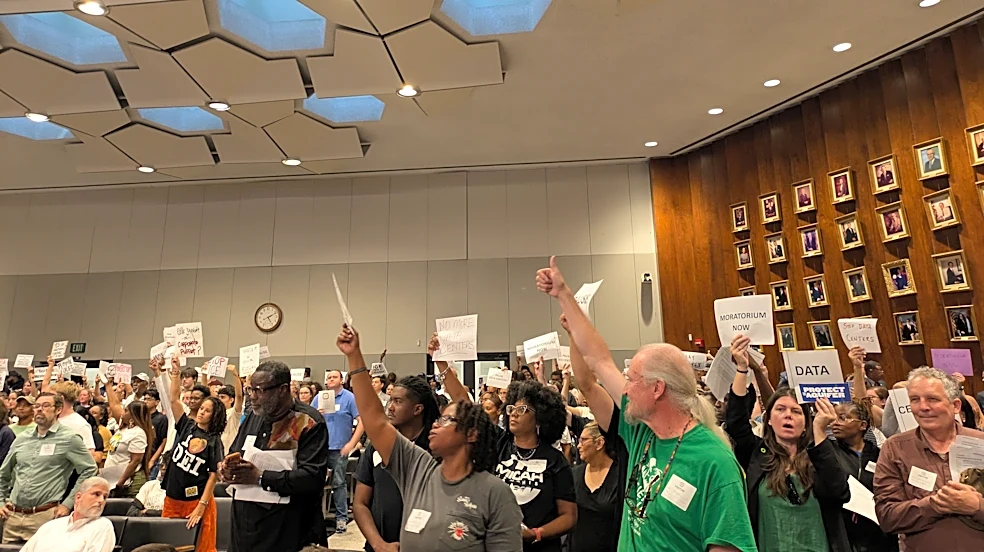
On Oct. 6, the Council voted to punt the final vote on a data center moratorium to the Oct. 20 meeting. That decision led to protests in the Council chambers, and the meeting was recessed. Councilmembers reconvened two days later to finish that meeting's agenda.
In addition to reconvening days after the original meeting, the Council also banned seven people, according to longtime Council attorney Allan Wade. They were banned from the next two Council meetings, scheduled for Oct. 20 and Nov. 10.
Six of the people to receive a ban letter filed a lawsuit on Oct. 14 challenging the constitutionality of the Council's public comment policies, which include decorum requirements that bar people from calling out Councilmembers by name. The lawsuit described those rules as a "speech restriction policy."
Those six people also filed a motion for a temporary restraining order against the bans. Since it was granted, those six people would have been allowed to attend the Oct. 20 meeting.

Judge questions whether protests became a 'riot'
In court filings, the Council's attorneys described the protests at the Oct. 6 meeting as a "riot," and Wade likened it to the Jan. 6, 2021 attack on the U.S. Capitol. Parker, during an Oct. 19 hearing, however, said videos from the Memphis City Council meeting showed disorder, but not to the point of a riot.
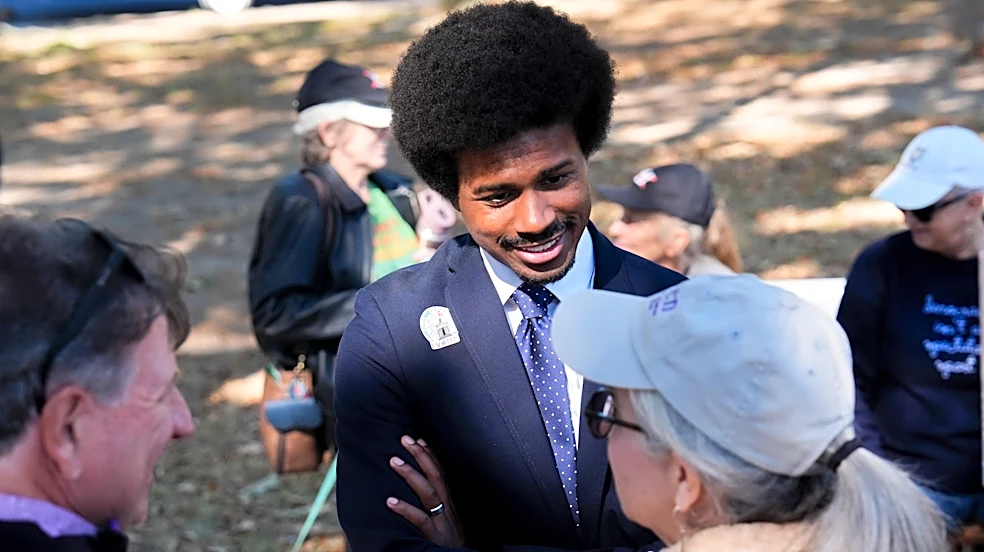
He noted seeing Councilwoman Michalyn Easter-Thomas giving the crowd a thumbs-up gesture and Councilmen Jeff Warren and JB Smiley Jr. speaking with Tennessee state Rep. Justin J. Pearson to the side of the crowd.
"They were just having a conversation. There was no fear in their eyes that I could see," Parker said.
Parker also questioned the behavior of Councilwoman Yolanda Cooper-Sutton, who argued back and forth with the crowd after the vote to delay the moratorium discussion. In response to that, Wade told the court Cooper-Sutton was also given a two-meeting suspension, but did not elaborate what that suspension was for.
Wade went on to say Cooper-Sutton's suspension was given to her after the end of the meeting, after the Council completed its agenda on Oct. 8, and added he would file the notice she was given with the court.
That notice was filed late on Oct. 19, and included a letter from Council Chairwoman Jana Swearengen-Washington in which Cooper-Sutton was suspended from chairing her committees for 30 days.
"Due to your violation of the Council's rules of decorum stemming from disruptive verbal remarks made at the October 6, 2026 Regular Council Meeting, I am hereby imposing a 30-day suspension of your committee duties as Chair of the Libraries and Neighborhood Improvement Committee and Vice Chair of Public Services, Arts and Youth Initiatives Committee," Swearengen-Washington wrote in the letter.
Despite the suspension from chairing two committees, Cooper-Sutton is not barred from attending the meetings or fulfilling her role as an elected member of the Council, Wade wrote in the filing.
"The Council's disciplinary authority extends to committee assignments and committee leadership positions, but not to suspending an elected Council member from representing her district, attending Council meetings, or voting on matters before the Council," Wade wrote in the filing.
The lawsuit is being brought by six people: community advocates Amber Sherman and LJ Abraham, activist KeShaun Pearson and his mother Kimberly Owens-Pearson, a high school senior, whom The Commercial Appeal is not naming due to their being a minor, and Justin J. Pearson.
Pearson, a Democrat, is in the midst of a contentious race for a seat in the U.S. House of Representatives against Republican Tennessee state Sen. Brent Taylor. Early voting for that race's general election began Oct. 14, the same day the lawsuit was filed, and Pearson has made data centers one of his campaign's focal points.
The seventh person to be banned was later identified by Wade as Brandy Price, a local activist who is regularly at Council meetings. Price, Wade said, did not give a legitimate address on a public comment card, so the Council was unable to serve notice of the ban.
Lucas Finton covers crime, policing, jails, the courts and criminal justice policy for The Commercial Appeal. He can be reached by phone or email: (901)208-3922 and Lucas.Finton@commercialappeal.com, and followed on X @LucasFinton.
This article originally appeared on Memphis Commercial Appeal: Federal judge reverses Memphis City Council bans before data center vote