





After weeks of discussion — and two and a half years with one of the nation's largest hyperscale data center projects in its backyard — the Memphis City Council moved forward in placing guardrails on data center development, while pausing on a moratorium.
A resolution for a proposed temporary moratorium was removed from the Sept. 15 agenda and will be held until City Council's Oct. 6 meeting.
Instead, the council approved — on second reading by consent agenda — two resolutions that would devise parameters for data centers, especially hyperscale data centers. Both resolutions laid out new guidelines brought forward by council member Philip Spinosa and council member Jeff Warren at the Sept. 1 meeting.
During the City Council's Planning and Zoning
Committee meeting Sept. 15, several discussions were brought forward, including data center restrictions and a new environmental impact study from the University of Memphis. The updates were a carryover from the council's Sept. 1 meeting, when Spinosa first introduced his own proposed resolution focused on data center regulations.
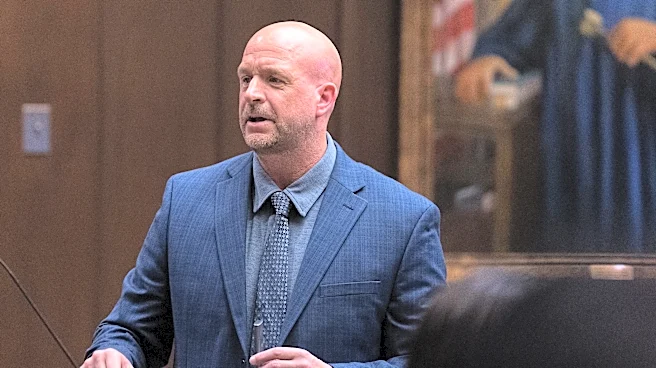
"Been a lot of positive momentum from the last council meeting and today," Spinosa said during committee ahead of the regular council meeting.
Spinosa's proposition would replace a temporary moratorium by allowing data centers with some restrictions. His resolution targets "large load development" and digital infrastructure to replace a "blanket data center moratorium with source-neutral, tiered and timed review."
Air quality report on Colossus
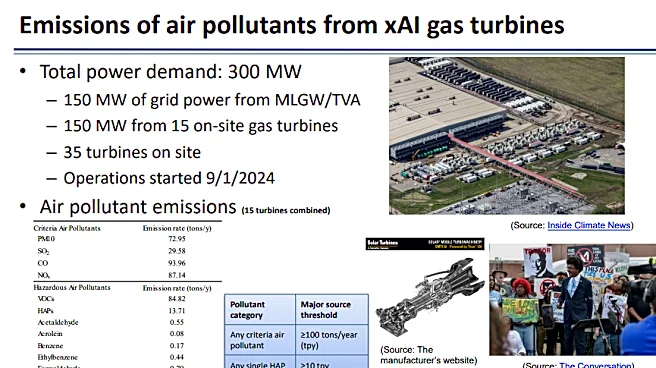
During the committee meeting, the University of Memphis environmental health professor Chunrong Jia presented an air pollution study regarding SpaceXAI's Colossus data center at 3231 Paul R. Lowry Road. The hyperscale data center was SpaceXAI's first Memphis-area data center (since the company has built Colossus 2, with plans for three more within the Memphis and Southaven, Mississippi, areas).
According to the study, Colossus has 300 megawatts of electricity demand, with 150 megawatts coming from gas turbines. (In June 2025, the Shelby County Health Department approved an operations permit for 15 turbines at the site.)
Since operations at the site began in September 2024, there has been minimal change in air quality and surface-level heat in nearby communities, according to the study, which relies on satellite imagery rather than localized air monitoring. The study was conducted from September 2024 through August 2025.
The University of Memphis study outlines that the use of satellite pixels is not direct measurement, but a "proxy." The images are too large to "resolve pollution gradients near individual sources," and satellite imagery is also affected by weather and atmospheric conditions, according to the presentation.
During the presentation, Jia said the study only highlighted Colossus, not Colossus 2 at 5420 Tulane Road.
"We think that is more problematic because it is closer to communities," Jia said regarding Colossus 2 and the ongoing SpaceXAI expansions in Southaven, Mississippi.

During the committee session, council member Yolanda Cooper-Sutton cited concerns over air pollution and a lack of cooperation from the Shelby County Health Department, which oversees air quality for Shelby County.
"We don't control the air on the city side," she said, adding that City Council does not have the authority or jurisdiction for certain elements of data center regulation.
What is the proposed resolution?
Under Spinosa's proposed resolution, any data center with a demand of 20 megawatts or more, would be subject to stricter reviews, including site plans, total electrical demand, anticipated computing capacity, cooling system design, water consumption and demand, along with proposed wastewater discharge data, backup power generation and battery storage capacity.
All new data centers would be required to implement "closed-loop cooling systems" under the proposed resolution. (While closed-loop systems can use less water, they require significantly more electricity to operate.) Additionally, the resolution proposes that no data center should use groundwater or aquifer water for cooling purposes. Companies would be required to submit annual water consumption reports as well.
Future of data centers, zoning explained
During committee, council member Jeff Warren described the future of data centers as a utility.
"This isn't about a moratorium, but how we regulate them," Warren said.
Additionally, data centers will be required to meet a renewable energy goal of 60% of demand via green energy within three years of operation. The green and renewable energy usage has been a major point of contention for council members Pearl Eva Walker and Warren.
Fossil fuel generators will also only be allowed for use for backup and emergency power, according to the resolution. Currently, the majority of the turbines in use by SpaceXAI are located in Southaven, Mississippi at the company's power plant at 2875 Stanton Road. As of July 2026, SpaceXAI had nearly 70 turbines in operation powering its Colossus 2 data center, which is located in Shelby County.
Spinosa's resolution applies to new data centers.
Existing ones, will effectively be grandfathered in and only required to supply data regarding water usage, electricity consumption, fossil fuel generator usage, water demand and potential expansions within a 12-month period following the city's adoption of the resolution.
Memphis and Shelby County Division of Planning and Development Director Brett Ragsdale said the department is continuing to define zoning and categories for data centers. Those categories, determined by size and infrastructure footprint, will determine specific zoning for future data centers. The zoning requirements would limit where a data center could or could not be built.
What's next for the temporary moratorium?
The initial proposed moratorium, which is a temporary 12-month ban on new data center development and permitting, will be reviewed at the upcoming Oct. 6 City Council meeting.
"(I'm) not opposed to a moratorium or data centers," council member Rhonda Logan said during the Sept. 15 committee meeting.
Logan said she wants to see better zoning implemented on how to regulate and locate data centers.
During the committee session, council member J.B. Smiley Jr. said the goal is to meet the community's needs and concerns on data centers. Making sure the city understands the issues and addressing those concerns was part of the rationale for the delay.
"We have been here for over two years telling you the rain is coming," Memphis Community Against Pollution Executive Director KeShaun Pearson said during public comment. "It is past time to step and do something."
Pearson echoed resident concerns raised during public comment about the need for a moratorium and reductions in rapid data center development.
Neil Strebig is a journalist with The Commercial Appeal. He can be reached at neil.strebig@commercialappeal.com, 901-426-0679
This article originally appeared on Memphis Commercial Appeal: Memphis City Council delays moratorium on data centers