




After a six-hour meeting that left both constituents and Council members confused, the Memphis City Council issued a pause on data center development in a divided vote on Oct. 20.
But the pause the Council approved is significantly shorter than what the public asked for. An 18-month data center moratorium that drew hundreds of people to the last few meetings failed in dramatic fashion.
Two years after Elon Musk set up camp in Memphis and embarked on establishing his hyperscale data centers, some local residents reached a breaking point. They pushed Council to pass an 18-month pause on data center development, an ask that was delayed at an Oct. 6 meeting. The delay was met with public outcry.
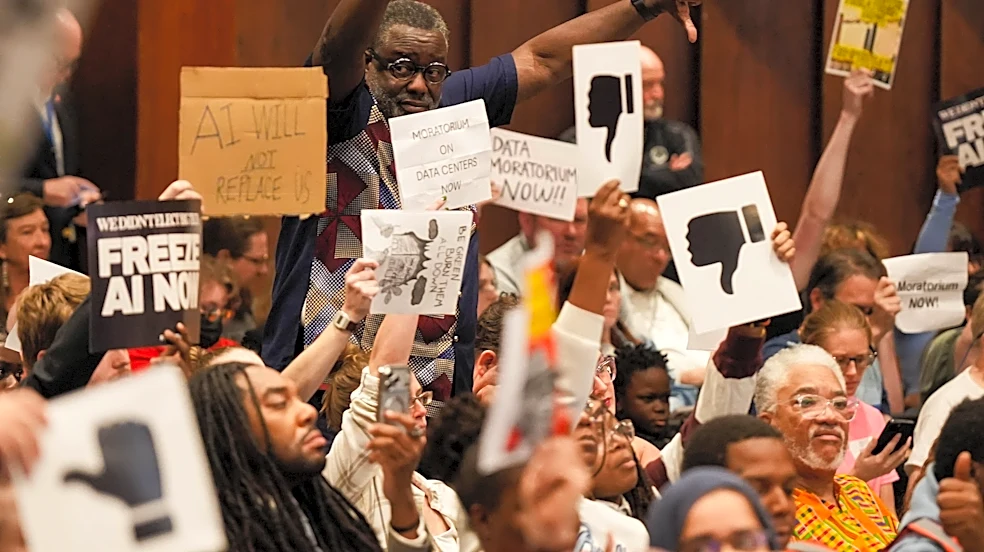
At an Oct. 20 City Council meeting, people poured into
Council chambers to rally around the moratorium.
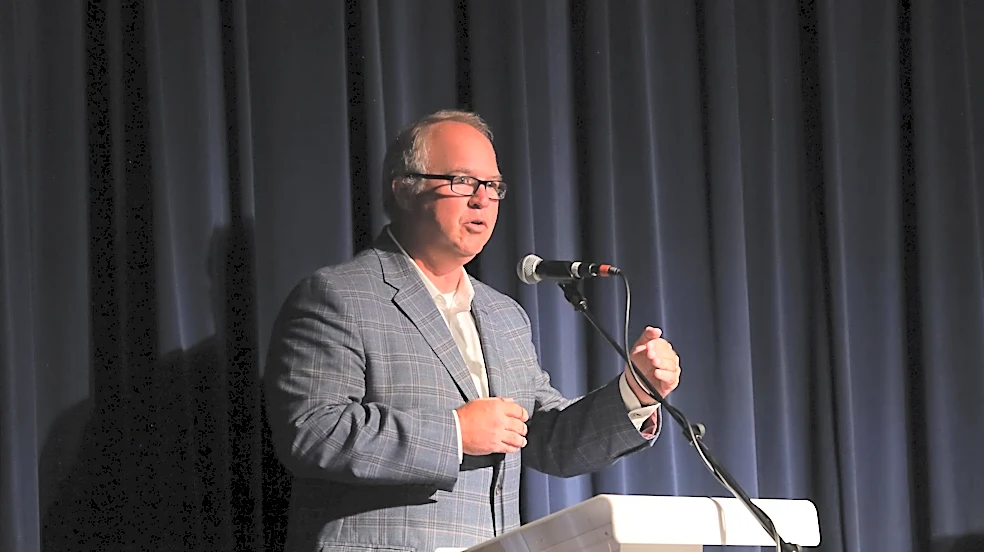
Before Council was set to vote on that agenda item, Councilman Jeff Warren made a mid-meeting substitution for another data center ordinance. Members of the public and some Council members did not know what they were voting on, and there was confusion over which agenda item was under consideration. In the end, Warren’s substitution passed, while the moratorium the public demanded did not.
So what actually happened?
What did the Memphis City Council actually pass?
The ordinance the Council passed at the end of the meeting has a few prongs to it.
First, it starts the clock on a 135-day period that pauses the development of any new data centers in Memphis. It also begins the process of amending the Memphis and Shelby County Unified Development Code, which acts as the official zoning code of the city and unincorporated parts of the county.
The passed ordinance requires the Memphis and Shelby County Division of Planning and Development to prepare the proposed changes to the development code — which will become permanent regulations when passed — within 90 days.
It's not yet clear what those changes will be.
The legislation also instructs the Division of Planning and Development with guidelines on how the Council wants data centers regulated. The division's staff will translate the provisions of the ordinance passed Oct. 20 into land zoning law, but it’s unclear exactly what regulations they will bring before Council.
The ordinance also requires a process for new applications for land use permits for data centers, along with certain public disclosure requirements.
The passed ordinance was sponsored by Councilwoman Rhonda Logan, which Warren substituted for his own ordinance that was originally on the agenda during the meeting.

The Council received paper copies of the substitution when Warren introduced it, but it wasn't widely distributed to the public. Some Council members handed copies into the crowd, and people huddled into groups to read them.
Some Council members tried to hold the vote for the next meeting to give time to read the substitution, but it didn't have support from enough of the body as a whole.
Warren defended the substitution and final vote. He told The Commercial Appeal the original and substituted ordinances had the same spirit and proposals, but Logan’s more solidly followed the City’s charter and was legally enforceable.
With his ordinance already on the agenda for a third reading, he said the substitution was the quickest way to get started on concrete legislation.

“Don't be mad at me because I used parliamentary procedure to beat you to the punches,” he said.
Warren also said a pause for the specific purpose of passing legislation would hold up in court, whereas a moratorium may have put the City at risk for legal action. He wanted the Council to think about long-term regulations, which he said his and Logan’s substitution was best suited for.
“Just because you can get a large crowd and you can convince them somehow that you have a moral thing that you’re doing here, doesn’t mean you’re right,” Warren said. “It means they believe you.”
Before any concrete zoning or data center regulations are passed, they will have to come before the City Council again, where there will be more opportunity for community input.

The pause is in effect now, but there's still a long road ahead to get regulations actually put in place. Existing data centers, including Musk's SpaceXAI facilities, can continue business as normal for now — this pause does not apply to them.
The following Council members voted to pass the substituted ordinance:
- J. Ford Canale
- Chase Carlisle
- Edmund Ford Sr.
- Rhonda Logan
- Philip Spinosa Jr.
- Jeff Warren
- Janika White
The following Council members voted against the substituted ordinance:
- Michalyn Easter-Thomas
- Jerri Green
- JB Smiley Jr.
- Jana Swearengen-Washington
- Pearl Eva Walker
Councilwoman Yolanda Cooper-Sutton was absent from the meeting.
The Council could extend the moratorium after 135 days, but it would require the body passing a separate ordinance.
How did Memphis get here?
While SpaceXAI is not one of the top polluters in Shelby County — the company ranks around 28th, according to the Shelby County Health Department — the company’s Colossus 1 and 2 facilities have recently drawn attention to the legacy of industrial pollution in South Memphis.
The project has also provoked ire from Memphis residents for its controversial figurehead, SpaceXAI CEO Elon Musk, who said in an Oct. 21 earnings call he's spending up to four days a week in Memphis to get the company'ssecond local data center, Colossus 2, online.

Several people who attended the Oct. 20 Council meeting held up signs directed at the Council that read "You work for us not Elon Musk."
What happened with the moratorium?
While the ordinance the Council passed pauses data center development, the moratorium that generated so much public attention in recent weeks failed.
“I think one of the reasons people do not trust government is because a lot of things seem to be happening without the input of the community or behind closed doors,” Councilman JB Smiley Jr. said after the meeting.
Smiley said that’s why he voted against the substituted ordinance and chose to support the moratorium, which he called “community-driven.” But the effort ultimately failed.
The following Council members voted to pass the moratorium:
- Michalyn Easter-Thomas
- Jerri Green
- JB Smiley Jr.
- Philip Spinosa Jr.
- Jana Swearengen-Washington
- Pearl Eva Walker
The following Council members voted against the moratorium:
- J. Ford Canale
- Chase Carlisle
- Edmund Ford Sr.
- Rhonda Logan
- Jeff Warren
- Janika White
With a 6-6 tie, the highly anticipated 18-month moratorium failed.
Memphis Mayor Paul Young said he understands frustrations after the 18-month moratorium failed, but said the passed ordinance gets at the heart of why a pause is needed in the first place.
“The whole spirit of the moratorium is about getting the guardrails in place,” he said to reporters Oct. 21.
Meanwhile, Young's data center study is underway
The Council's adoption of the new data center regulations comes just a few weeks after Young issued a related executive order.
Young signed an Oct. 9 executive order initiating a 90-day study to develop regulatory recommendations for hyperscale data centers in Memphis. The order assembles experts to formulate specific policy and guardrail suggestions to present to the City Council, Shelby County Health Department and other regulatory agencies. Community education sessions are also mandated, which will include an opportunity for public input.
Young has made it clear the order — which creates a timeline and calls for guidelines — does not interfere with any action from the council. Nor does it impose a moratorium on new data centers during the 90-day period.
"What I have done with the executive order is try to position us such that no matter what happens from a Council perspective, we're doing the work," Young said.
Chris Winton, the city's Chief Administrative Officer, is leading the initiative, and Young said he has gotten a good start in the weeks since he kickstarted the study, including holding meetings with SpaceXAI representatives and community stakeholders.
In response to community criticism that the City should have commissioned this work earlier, Young said he is making up for lost time now.
"We've been figuring this thing out in real time ...," he said. "I've seen many comments where people say, 'we should have done this two years ago.' Well, the next best time to do it is right now."
The substitute ordinance Council passed acknowledges the partnership with Young's commissioned study, saying it is "intended to complement the Mayor's Executive Order."
Young said the efforts of his administration and the Council will be aligned moving forward. He said city staff will dedicate time to this work on a daily basis.

The Council’s ordinance is aimed at making changes to the Unified Development Code, as is in their purview. Young said his study is looking to make similar zoning recommendations, but he also wants to look at air quality, power, water consumption and community benefits.
Annie Goldman covers government for The Commercial Appeal. She can be reached at annie.goldman@commercialappeal.com or 901-930-7431, and followed on X @AnnieSGoldman.
Jack Armstrong covers breaking news and the environment for The Commercial Appeal. He can be reached at jack.armstrong@commercialappeal.com and followed on X @jca2902.
This article originally appeared on Memphis Commercial Appeal: Memphis Council didn’t know what it voted on. Data center pause passed anyway