





On May 26, 1916, The Commercial Appeal declared the newly opened Brooks Memorial Art Gallery in Overton Park to be "a proclamation to posterity" that was destined "never to be closed in the face of lovers of art and creators of things artistic."
Posterity ain't what it used to be, and neither is never.
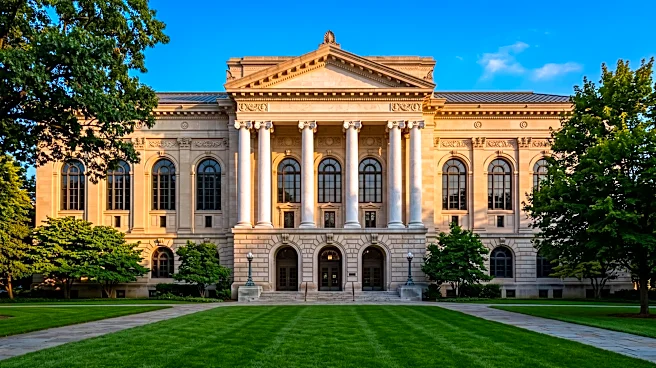
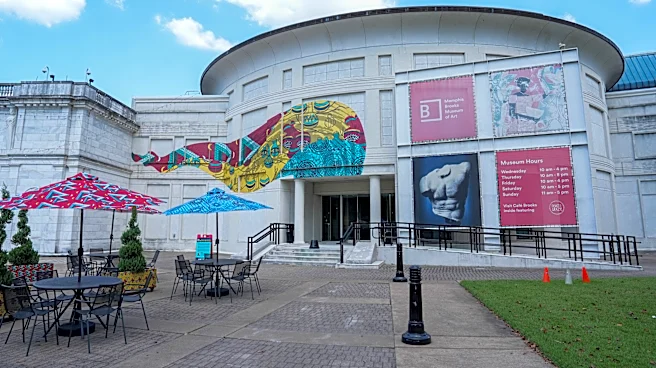
The Memphis Brooks Museum of Art in Overton Park — formerly known as the Brooks Memorial Art Gallery — closes its doors at 5 p.m. Sunday, Sept. 27, a century-and-a-decade after the newspaper declared the museum to be "the crowning beauty of what by many is already considered the most beautiful park in the South.”
Of course, the Brooks will live on, in an extraordinary riverfront relocation and reincarnation, when it reopens Dec. 6 as the Memphis
Art Museum, a $222 million "tourism magnet" that will be "transformational for the renaissance of downtown," to quote one of the museum's promotional booklets.
With its large street-level windows, its rooftop gardens, its hands-on art-making classrooms, its Front Street coffeehouse and gift shop and restaurant, and its 30,000 square feet of gallery space, the free-admission Memphis Art Museum is designed to be not only a spectacular showcase for art but a symbol of Memphis as a welcoming, accessible and even cultured place to live, work and visit.
Meanwhile, the somewhat malformed original museum, expanded in the 1950s, '70s and '80s from its original 1916 Beaux-Arts design, will continue to glow marble-white near the southwest corner of Overton Park, awaiting whatever purpose the city might find for it.

"We have definitely outgrown this building, for sure,” said Johnny Hill, Brooks director of building engineering and security, noting that some Brooks exhibitions had been compromised through the years because certain pieces of art literally were too large to fit through the museum’s doors.
Even so, “I’ve been here 29 years, so this place has a place in my heart,” said Hill, 55, whose work will continue at the new museum on the river.
“I will always love the jewel box in the park,” said Dorothy McClure, 67, offering her own characterization of the Brooks, where she worked in an on-off-on-again capacity from 1987 until her retirement in 2025.

She said the old museum has been "well lived-in and loved." But she said the new museum was “meant to be,” offering as evidence the coincidence of its Dec. 6 opening date, which marks “almost to the day” the opening of the Brooks’ expanded new entrance in 1989, with its two-story rotunda.
'To create joy through the power of art'
A privately funded nonprofit, the Brooks Museum was founded by Bessie Vance Brooks as a memorial to her late husband, Memphis banker and cotton broker Samuel Hamilton Brooks. Mrs. Brooks contributed the reported $100,000 cost of the project.
The Commercial Appeal was enthusiastic, proclaiming that a public art museum would greatly benefit a city "carved out of the primal forest on the far-flung line of frontier civilization," then hit by “the mailed hand of war” and “the fevered hand of pestilence," which "scorched her very soul.”

With so much to overcome, Memphis in the 19th century had been unable "to give much time to art." But with the pioneer days, the Civil War and the Yellow Fever epidemics in the past, a new art gallery would be "a visible credential" of the city's culture — "a proclamation to the world that the community has not only dreamed dreams, but that it has materialized them into such tangible forms of beauty as may be transmitted to posterity as a signal to high thinking and esthetic development."
The museum today uses less florid language to convey a similar sentiment. Under the website headline "OUR MISSION" is a simple declaration: "To create joy through the power of art."
'It's just strange to see it so empty'

During this final week, the museum in Overton Park is offering free admission to Shelby County residents. That policy will continue at the riverfront Memphis Art Museum, which will offer free admission to Shelby County residents "forever," according to museum executive director Zoe Kahr.
Visitors to the Brooks will encounter three remaining exhibits — "David Uzochukwu: Bodies of Water," "Navigating Knowledge" and "Memphis College of Art, 1936-2020: An Enduring Legacy" — and a number of empty rooms and blocked doorways.
For example, the upstairs "Art of the African Diaspora" gallery now resembles, in miniature, the end scene from "Raiders of the Lost Ark": The room is filled with wooden crates of various sizes, containing presumably valuable artifacts.
"Memphis on the Mississippi (Ode to Tom Lee)," a multi-panel acrylic painting by Memphis artist Carl E. Moore, has been packed away, so that one wall is now dominated by a long rectangular hollow. “Our offices are back there, and one day I walked out and it was gone,” said Kelly Helton, the museum’s director of development and strategic communications. “It’s just strange to see it so empty.”
'A museum for this city'
The museum's collection contains some 10,000 objects representing some 5,000 years of history. Each of these items — from a 2,000-year-old carving of the goat god, Pan, to an Ernest Withers photograph of Elvis to "The Family," Marisol's blocky sculpture of Joseph, Mary and the baby Jesus, with neon halos — is being painstakingly packed and transported to its new home, some four miles to the west.
Being left behind, perhaps, are the ghosts of exhibits past — the shows that decorated the Brooks through the decades, from an exhibit of watercolor paintings of Babar the Elephant to priceless artifacts from the Vatican Library.
“I feel like I grew up here,” said Kathy Dumlao, 54, museum director of education, who was hired at the Brooks at age 27. "I have lots of memories of lots of beautiful exhibitions."

Nevertheless, she said she is eager to take advantage of the extensive space for art education and art-making that will be available at the new museum, which will give not just visitors of all ages but kids on school trips opportunities for hands-on creativity.
The expanded space will enable the museum to better serve its attendees. "The audience has transformed through the years," Dumlao said. "It's much more diverse."
McClure said the new Memphis Art Museum will affirm that the Brooks has become truly "a museum for this city."
“We have been successful at busting out of the old notion of a museum as a bastion of the rich and homogenous," she said.
John Beifuss is an entertainment writer at The Commercial Appeal. Contact him at john.beifuss@commercialappeal.com.
This article originally appeared on Memphis Commercial Appeal: Memphis Brooks Museum of Art prepares to close doors in Overton Park