






A temporary 12-month data center moratorium in Memphis could be put on hold after Memphis City Council approved newly introduced resolutions that could eliminate such action.
The newly introduced resolutions come two weeks after the council moved forward with the initial ordinance upon first reading during the Aug. 18 meeting, approving it on the consent agenda.
During committee meetings, council member Philip Spinosa proposed a resolution to research best practices without a moratorium, while Jeff Warren proposed a resolution calling for green energy solutions on data centers. Both resolutions passed on first reading.
The initial ordinance for the temporary moratorium would ban, for 12 months, the processing and approval of zoning, special use,
planned development, and land use permits for data centers. Construction permits are approved via the Memphis and Shelby County Division of Planning and Development.
If passed, the ordinance would allow a permit intake, but construction permits would not be processed during the 12-month moratorium. Hearings would also not be allowed with associated Memphis and Shelby County development boards such as the Land Use Control Board and Board of Adjustment.
The initial ordinance is sponsored by council members J.B. Smiley Jr., Jana Swearengen-Washington, Jerri Green and Michalyn Easter-Thomas.

Time for research on best practices, expert opinions
During the Aug. 18 meeting, Memphis City Council acknowledged that the temporary ban proposal is designed to help city leadership better understand infrastructure and environmental impacts of hyperscale data centers such as SpaceXAI's Colossus and Colossus 2 data centers.
The City Council might extend the moratorium to continue studying and researching best practices before adopting a new unified code for the Memphis and Shelby County Division of Planning and Development.
During the potential moratorium period, research would be conducted by the Division of Planning and Development along with members of City Council, Memphis Light, Gas, and Water and industry experts, according to the ordinance. The group would consider several variables, including new zoning districts, power generation, noise suppression, water usage, stormwater management, environmental sustainability and impact studies, along with infrastructure costs and buffer parameters near neighborhoods. The study period would also seek a new methodology for Memphis to categorize data centers by size, utility demand, and operational intensity.
Currently, data centers are typically categorized into three types: colocation, service, and hyperscale. The latter has the highest power demand, driven by artificial intelligence and cryptocurrency. The current ordinance defines hyperscale data centers as "high-density computing facilities."
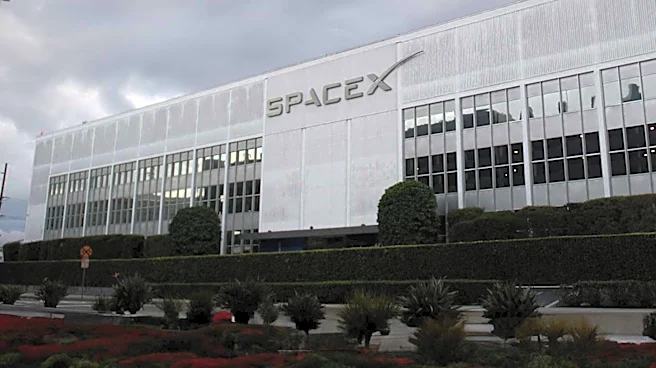
SpaceXAI has two active hyperscale data centers in Shelby County with a third planned near Colossus 2 along Tulane Road in Whitehaven. The company has an active gas turbine-powered power plant in Southaven and additional plans for a fourth data center at 2400 Stateline Road in Southaven.
The ordinance would also outline exemptions for existing "lawfully operating data centers that do not expand their building footprint" or utility demands.
SpaceXAI has several ongoing lawsuits, primarily in Mississippi in conjunction with alleged Clean Air Act violations with its Southaven power plant. That power plant, which had more than 60 turbines on site in July, powered Colossus 2 in Shelby County.
An ordinance exemption excludes computing infrastructure for hospitals, healthcare institutions, and financial institutions (primarily service data centers such as the ones at St. Jude Children's Research Hospital). The exemption also allows for a waiver application process that would be reviewed by the Division of Planning and Development and approved by Memphis City Council.
Despite SpaceXAI operating hyperscale data centers and construction for artificial intelligence data centers since March 2024, Memphis has not restricted any development. Other sites in the region, including Nashville and Jackson, Mississippi have recently passed temporary bans on data center development.
Additionally, Olive Branch passed in August some of the most restrictive ordinances and zoning regulations for data centers in the Mid-South.

New resolutions approved
During the committee meeting, Spinosa and Warren introduced their own resolutions drawing mixed responses.
Spinosa proposed a "pathway" to zoning and regulations without a moratorium to allow community input and analysis on data center impact. Warren proposed a resolution geared towards green energy solutions for data center infrastructure. Both were moved to the main council and were approved on first readings via the council's consent agenda. (Both changes were voted on independently of the initial moratorium proposal.)
"Memphis has an opportunity to change the game," Spinosa said during the committee. "We have not exercised our leverage to benefit the entire community."
New resolutions get pushback

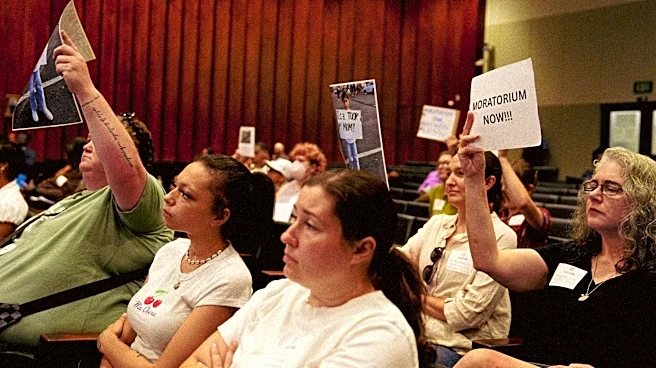
Dozens of residents sat in committee with signs that said "data centers cause dirty air," and "Say yes to data center moratorium."
Spinosa's and Warren's resolutions drew criticism and ire from fellow council members, including council member Yolanda Cooper-Sutton, who characterized the new resolutions as "grandstanding."
"I started working on an ordinance over a year ago and got told we (City Council) couldn't do anything," Cooper-Sutton said. "This body told me I couldn't do it."
In July, Cooper-Sutton introduced an ordinance for zoning changes and limitations for data center development. That ordinance framework came out after months of criticism regarding data center development from the councilwoman.
"We don't want a data center desert," Warren said during the committee session. Warren's comments drew audible hisses from residents in attendance. Warren defended his resolution as a way to find clean energy solutions for a growing industry and highlighted data center development as a positive for job creation and tax revenue for Memphis.
Pearson calls council's hesitation 'dysfunction'
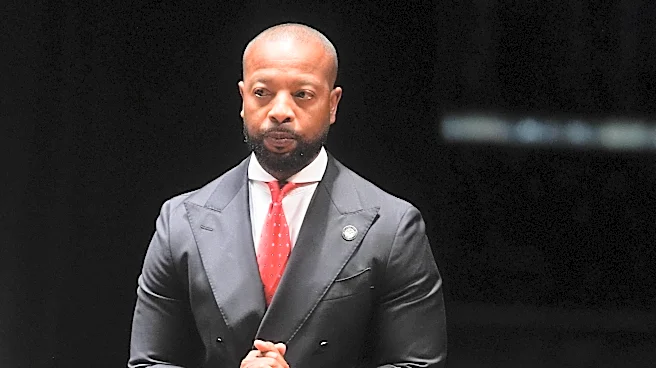
"The dysfunction is disappointing; we should be aligned," State Representative Justin J. Pearson said during a news conference outside Memphis City Hall, ahead of the council's afternoon session.
Pearson took a jab at city leadership, highlighting how quickly Nashville's Metro Council moved to place a temporary moratorium on "large-scale data centers," following public criticism andpushback on a proposed data center near the Nashville Zoo.
"Nashville passed a moratorium to protect zoo animals faster than we have to protect people," Pearson said.
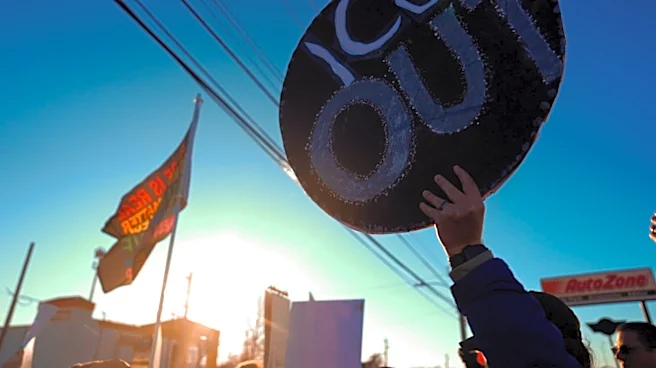
During the news conference, Pearson was joined by several dozen residents and advocacy group leaders, who urged City Council to move forward with a moratorium. Protect Our Aquifer executive director Sarah Houston said the organization supports the moratorium and stressed the importance of community input and community-supported regulations for hyperscale data centers.
"This should be a joint ordinance with the city and county," Houston said. She added that the council should look at adding further restrictions, such as no tax incentives, no payment-in-lieu-of-taxes (PILOT) for data center developments, and limitations on non-disclosure agreements with developers and city staff.
During the afternoon council session, residents continued heavy criticism of data center development, concerns over SpaceXAI's connection to the Iranian War, and the numerous lawsuits facing SpaceXAI's parent company, SpaceX.
Neil Strebig is a journalist with The Commercial Appeal. He can be reached at neil.strebig@commercialappeal.com, 901-426-0679
This article originally appeared on Memphis Commercial Appeal: Memphis City Council continues debate over data center moratorium