





Nestled on the Mighty Mississippi, Memphis has established itself as a world-class logistics and shipping hub, children's cancer research epicenter, international paper-maker and a hub for other various innovative businesses and institutions.
During the nation's 250th celebration, The Commercial Appeal is taking a look at the Memphis-based companies that have impacted industries on the world stage and are setting standards on a national and global scale.
From FedEx's beginnings as a class project by then-student Fred Smith to children being eradicated of invasive cancers to the auto industry being reshaped by the presence of AutoZone, the following list of businesses explores how key Memphis institutions have helped shape, grow and revolutionize
multiple global industries.
FedEx rises as nation's first shipping giant
From the timelate founder Fred Smith wrote a term paper at Yale University on a new business idea, FedEx’s impact on the world has revolutionized the way shipping is done globally.
The Memphis-basedlogistics is touted as creating the modern overnight shipping industry and allowing essential products and goods to move across distances in a single day. In addition, technological innovation by FedEx includes the FedEx World Hub at Memphis International Airport, which is a centralized hub-and-spoke sorting model that became the standard across the global transportation industry.

Richard Smith, son of Fred Smith, is FedEx’s chief operating officer and international and chief executive officer, Airline. Smith told the Commercial Appeal that his late father's daring venture became groundbreaking for the logistics industry.
"What started here in Memphis as a bold startup, grew into the world’s preeminent express company and an industrial logistics powerhouse that helped redefine global commerce forever,” Smith said. “Today, FedEx continues to play a critical role in connecting people and possibilities through trade, with a network spanning more than 99% of the world's GDP and transporting over $2 trillion worth of critical goods every year. We're immensely proud that a company founded right here in Memphis demonstrates how innovation born in this city can create opportunities around the globe.”
The Memphis-based logistics giant began operations in April 1973 in the Bluff City, with 389 employees, as 14 aircrafts delivered 186 packages to 25 U.S. cities.

However, over time, FedEx has been key in helping transform global commerce and logistics and contributing major value to the world economy. In October 2025, FedEx released its Global Economic Report. The company exceeded $125 billion in global economic impact, including $11.1 billion in Europe.
According to the report, FedEx averaged approximately 17 million package deliveries daily through its global network, while serving more than 220 countries and territories. That network includes 100,000 direct suppliers, with small- and medium-sized businesses accounting for 90% of the company's supply chain.
Supply chain spending in the United States accounted for $47.4 billion. FedEx contributed 6.6% of the total economic output for the nation's transportation and warehouse industry in 2025. FedEx employs more than 500,000 people across thousands of facilities globally.
AutoZone sets the standard in auto part industry
The AutoZone National Sales Meeting typically floods Downtown Memphis with an ocean of the company’s trademark red shirts. The event is also an annual reminder that the Bluff City remains home to one of the nation’s largest automobile parts companies and commercial success stories.
J.R. “Pitt” Hydee III founded AutoZone in 1979. The origins of the store start across the Mississippi River in Forrest City, Arkansas.
The 1979 concept was called “Auto Shack” and operated as a subsidiary of Malone & Hyde Inc. (Hyde’s father’s grocery store business.)
In 1981, Express Parts Service opened in Memphis. The service store was part of the Auto Shack brand, and ultimately the parts service concept would be the launchpad for the national chain and red color scheme associated with it today.
By the late 80s, the company would launch its own parts line, Duralast and rebrand as AutoZone. By 1991, the company was publicly traded on the New York Stock Exchange and was a Fortune 500 company before the turn of the century.
The 123 Front Street offices in Downtown Memphis opened in 1995 and still serves as the company’s headquarters. AutoZone employs over 120,000 employees with over 6,500 stores in the United States and nearly a 1,000 international locations in Mexico and Brazil.
AutoZone has also remained committed to Memphis and the Renasant Convention Center, selecting the venue as the host for its National Sales Meeting every year since the center’s $200 million renovation in 2021. The event brings thousands of attendees to Memphis and generates over $3 million in economic impact.

Grassroots start of Le Bonheur Children's Hospital, one of world's best
For a hospital that is widely recognized as one of the best for children in the U.S., the origins of Le Bonheur Children’s Hospital is truly grassroots. The Le Bonheur Club founded it in 1952, a women’s group that since 1923 had been making a difference for underprivileged children by sewing them clothes and driving them to doctor appointments.
From the day it opened, Le Bonheur has made it their mission to never turn away a child in need of care. According to Le Bonheur President Dr. Trey Eubanks, though most children come from within a 150-mile radius, Le Bonheur’s national reach cannot be understated, with children from 39 states cared for in 2025.
Every year on average, the hospital’s 3,400 employees under 45 pediatric specialties see a staggering 418,000 outpatient visits, 90,000 emergency room visits and 13,000 surgeries.
Le Bonheur has stayed firmly in Memphis for nearly 75 years, and great local partnerships are paramount to their operations. Local colleges are crucial - The University of Tennessee Health Science Center provides all of the faculty at Le Bonheur and is their primary pediatric teaching affiliate. The University of Memphis provides significant workforce education as well.

FedEx also plays a key role.
“Our FedExFamilyHouse provides free housing for families traveling to Le Bonheur from more than 50 miles away for their child’s care,” Eubanks said. “Without FedEx, the FedExFamilyHouse would not be possible.”
One of Le Bonheur’s most impressive and advanced specialties is the brain tumor program, also the fruit of a local collaboration.
“The Le Bonheur Neurology team, led by Dr. Jim Wheless and Dr. Paul Klimo, works in close partnership with St. Jude,” Eubanks said. “This collaboration is essential to the care of our patients and keeps us at the forefront of cutting-edge treatment, including the use of our intraoperative MRI that enables us to deliver the best possible outcomes and continually develop new approaches to care.”
Le Bonheur is still continuing to find ways to expand its ability to serve children.
“The return of heart transplant services in 2016 has further expanded our ability to care for children in need. The Cath Lab at Le Bonheur, led by Dr. Neil Tailor and Dr. Ashley Molloy, is one of the first of its kind in the United States. Recognized as one of the most innovative programs in the country, the Heart Institute continues to pioneer new and advanced ways to care for the patients we serve.
International Paper produces third of world's cardboard
A longtime Memphis-based company has impacted the world through its service of providing global commerce, e-commerce and everyday logistics through immense sustainable packaging and fiber-based manufacturing.
International Paper was formed in January 1898 through a merger of 17 pulp and paper mills. Amy Simpson, marketing and communications manager at International Paper, told the Commercial Appeal that over the next 128 years, the Fortune 500 company has helped support economic growth, commerce and communities across America by providing the products that move goods, protect resources and enable everyday life.

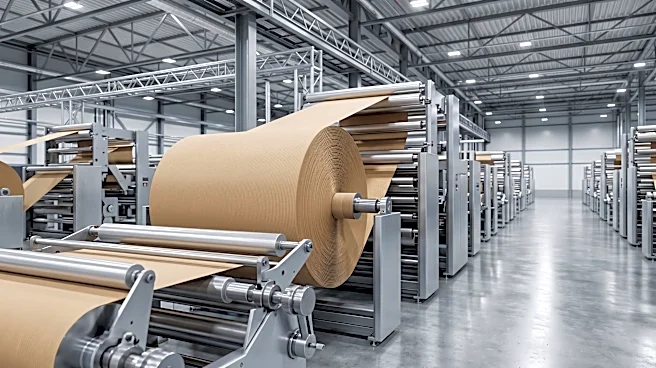
International Paper has shaped global commerce by manufacturing roughly one-third of the United States’ corrugated cardboard boxes and acting as a primary infrastructure backbone for modern e-commerce and retail supply chains.
“From our early days supplying paper for newspapers and books to today’s mission of creating sustainable packaging solutions, our purpose has remained rooted in creating value from renewable resources,” Simpson said.
Throughout its history, International Paper has made other contributions to the country. The company has transferred ownership of hundreds of thousands of acres of forestland to conservation groups and government agencies, according to Simpson. She cited one of the largest transfers of land happened in 2006. The sale — which was the largest exchange of private forestland in U.S. history — included nearly 220,000 acres in 10 southern states to the Conservation Fund and the Nature Conservancy

In 1986, International Paper —which was headquartered in Purchase, N.Y. — decided it was going to move its headquarters to Memphis. International Paper officially relocated its headquarters to Memphis in 2005. The move included around 600 employees moving to Memphis. International Paper now have a workforce of approximately 1,200 employees in Memphis and 57,000 employees globally.
“Today, International Paper is proud to employ thousands of team members, serve customers around the world and invest in the communities where we live and work,” Simpson said. “As America marks its 250th anniversary, we remain committed to building a more sustainable and prosperous future for generations to come.”
St. Jude Children's Research Hospital raises childhood cancer survival rates
At the time when St. Jude Children's Research Hospital was founded in 1962, the childhood cancer survival rate sat at around 20%. Today, that number is over 80% and rising, and it's thanks in part to St. Jude's cancer research efforts.
Before the hospital was the American Lebanese Syrian Associated Charities (ALSAC), founded in 1957 by entertainer and philanthropist Danny Thomas as the fundraising wing for the future hospital. Nearly 90% of all funds needed to maintain St. Jude are raised by ALSAC.
St. Jude sees more than 9,000 patients every year across 70 beds, and has treated children from all 50 states. Research covers a vast array of fields, from gene therapy and chemotherapy to hereditary and neurological diseases. It is the only pediatric hospital to be awarded a National Cancer Institute cancer center support grant.

That research is part of an expansion beyond a focus on cancer under outgoing CEO Dr. James R. Downing who led St. Jude further into neurological diseases, hematological diseases and infectious diseases under his 13 year tenure.
In a particularly stunning success, Acute Lymphoblastic Leukemia, recognized as the most common childhood cancer, now has a 94% survival rate. In 1962, the the chances of survival were not even 5%.
St. Jude's operations will continue until "no child dies from cancer." To achieve that, the hospital continues to set lofty goals for itself — currently, it is fulfilling its FY22-27 Strategic plan, which dedicates $1 billion to fundamental science and hire 2,300 new employees, expanding clinical care and research for cancers previously considered incurable. St. Jude Global also aims to cure at least 60% of children with six of the most common kinds of cancer worldwide by 2030.

Memphis Record Pressing leads in vinyl manufacturing
A relative newcomer, the Bartlett-based business Memphis Record Pressing LLC has already carved out its standing as the latest modern Memphis business success tale.
The company was founded in 2014 after a collaboration with Audiographic Masterworks and Fat Possum Records. In 2016, the business landed a partnership with the world's largest vinyl record manufacturer, GZ Media. That partnership has ultimately positioned the company as one of the leading vinyl record manufacturers not just in the United States, but internationally.
In 2022, the company began a $28.8 million expansion, creating more 280 jobs. That expansion has helped led allow Memphis Record Pressing to produce 125,000 records daily.
Since the company's founding, its record production has jumped from 880,000 in its first year to over 11 million annually today.

American Paper Optics largest eclipse glasses supplier in world
If you’ve ever worn 3D glasses, chances are American Paper Opticscreated them. The company is the world’s largest 3D optics company as well as the largest supplier of safe solar eclipse glasses, producing over three and a half billion glasses since it was founded by John Jerit in 1990.
Jerit, transformed a paper novelty business into a 3D eyeglass giant with products distributed worldwide.
In 2024, the company equipped about 75 million people across North America with glasses worn during the total solar eclipse that blanketed the continent.

Most recently, the company sold and distributed its glasses around the nation to celebrate America's 250th birthday with special 3D glasses equipped with special optical technology, or a far-field hologram, which projects a specific image in the glass lenses, activated by light.
At Fourth of July shows around the country, 3D glass wearers, such as guests at the city of Bartlett fireworks show, were able to see the image of the numerals 250 and the letters USA flash in sight while fireworks burst in the air.
With a staff of 44 employees, APO manufactures more than 14 different types of specialty paper 3D glasses in an unlimited number of frame shapes.
Memphis hub for cotton - 'the crop that changed the world'
Before the Memphis Cotton Exchange became a museum, the Union Avenue building in Downtown a block from the Mississippi River was the center of cotton exchange and distribution in the region — the first burgeoning international economy, according to museum director Ann Bateman.
"It was the early beginnings of the global supply chain for cotton before it was known today as the supply chain," Bateman said. "The brokers, merchants, warehouse workers, riverboat operators were all members of the supply chain at the Cotton Exchange."
Memphis, uniquely positioned on the Mississippi River with the banks equipped with cobblestones, made the port an ideal place for loading and unloading cotton bales onto ships. The Delta heat also provided the proper climate for growing cotton, boosting Memphis as a major distribution hub from the late 1800s to the mid-1900s.
"Cotton was the first globally traded commodity," Bateman said. "While England made wool and kept that technology closely guarded, the cotton industry thrived in the warm Southern climates and especially with the invention of the cotton gin."

Even though money isn't physically exchanged at the Cotton Exchange now, operating as a cotton museum, Bateman said the cotton industry still has an impactful presence in Memphis with companies and organizations headquartered in the city like American Cotton Shippers Association, National Cotton Council of America, The Cotton Board on Poplar Avenue, Allenburg Cotton Company, a subsidiary of the Louis Dreyfus Company and Dunavant Enterprises.
"It's the crop that changed the world," she said, and the Memphis Cotton Exchange was at the center.
Kerri Bartlett contributed to this story.
Corey Davis is the Collierville and Germantown reporter with The Commercial Appeal. He can be reached at Corey.Davis@commercialappeal.com or 901-293-1610.
Jacob Wilt is a reporter for The Commercial Appeal covering Dining, Retail and Real Estate in the Memphis area. You can reach him at jacob.wilt@commercialappeal.com.
Neil Strebig is business and development reporter for The Commercial Appeal.
This article originally appeared on Memphis Commercial Appeal: How Memphis-based companies like FedEx, St. Jude impact the world