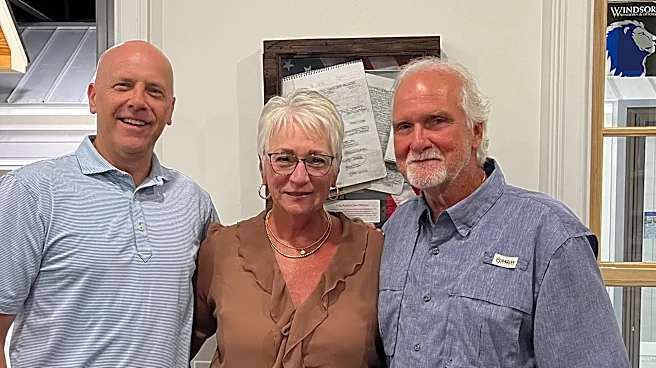








Fairley High School in Whitehaven is the location of a new pilot program that aims to support students inside and outside of the classroom.
The new partnership with Agape Child & Family Services connects students and families to Agape team members, community organizations and other partners to provide students with what they need for a successful education.
The program centers around the community school model, a concept that takes a holistic look at education to support students where they need it most.
That could mean providing a coat or a pair of shoes so a student can get to school on time, providing therapy for a student or connecting a family with a nonprofit that could help them with a housing situation.
"There are a multiplicity of factors
that impact education," said Agape President and CEO David Jordan. "We will bring the community together in that school to address all matters of social determinants, whether it's education, food, housing, workforce, child care, transportation, mental health, and physical health."
The partnership officially launched during a Sept. 9 ribbon cutting at Fairley High School.
"A child's zip code should never determine the quality of their education or the size of their opportunity," said school board member T.L. Harris, who represents District 6, at the ribbon cutting. "Today's ribbon cutting...it's about opening doors, doors for our children, doors for our families, and doors for the future of District 6."

MSCS has implemented the community school models across 10 schools, according to Agape, but Agape is the first nonprofit to lead a partnership with the district.
How does the partnership work?
Fairley High School has three Agape staff members embedded in the school. Two focus on student issues such as attendance, behavior, social and emotional matters and parent engagement. A third staff member works to connect with family members in the community and meet them at home to help provide stability.
The school plans to add a fourth staff member, a licensed therapist. The position is funded, Jordan said, and Agape anticipates filling that position within 30-60 days.
Families can reach out to the program for help and the school team can refer students for the program, said Sha Fanion, Chief Program Officer at Agape.
For example, if a student has missed a few days of school, someone on the Agape school team can refer the student to Agape's Stars Program, which intends to increase a student's daily attendance by removing barriers to them showing up for school. The program could help provide a student with a coat, shoes or transportation to school, Fanion said.
"We now have over 60 non-profits, churches, other groups who've signed on to say, 'yes, we'll be a part of this,'" Jordan said.
For example, the team uses a platform called Hope Hub that uses scores of one to five to rate how a family is doing with housing, mental health, childcare, transportation and other key areas. Agape can match the needs of a family with connected organizations and reassess how they're doing every 30 days.

The program also goes beyond high school education — Agape aims to help students connect with colleges, employers and other opportunities, Jordan said.
The program is looking at taking high school juniors on a trip to Atlanta to visit several colleges such as Clark Atlanta University, Morehouse College, Spelman College and maybe the Georgia Institute of Technology, Fanion said.
The program has the potential to expand to other schools, Jordan said.
Jack Armstrong covers breaking news and the environment for The Commercial Appeal. He can be reached at jack.armstrong@commercialappeal.com and followed on X @jca2902.
This article originally appeared on Memphis Commercial Appeal: How Memphis school, nonprofit are seeking new ways to help kids thrive