






A judge said the Memphis Police Department may have violated a longstanding consent decree that limits its surveillance of political activists and protests, a court order filed at the beginning of September read.
U.S. District Court Magistrate Judge Jon York for the Western District of Tennessee, in a Sept. 8 order, granted the American Civil Liberties Union of Tennessee’s demand that the City of Memphis turn over evidence about its activities from a March "No Kings" protest that spilled into a Downtown Memphis roadway.
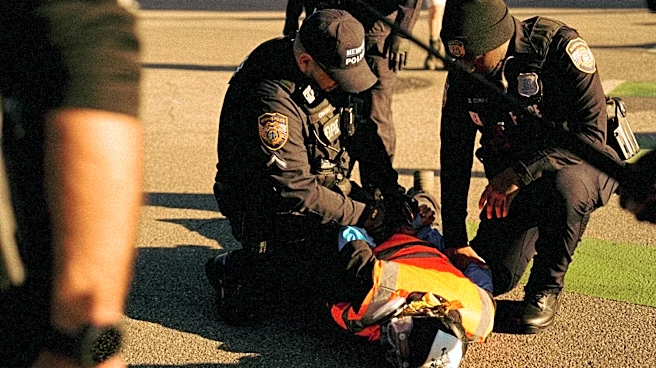
The March 28 protest ended with police pepper-spraying protesters, pushing some of the protesters over and arresting three people. At one point, MPD said six people were detained.
Charges against the three people arrested have since
been dismissed.
“Although the protesters marched without the required permit, the Memphis Police Department stands accused of having used excessive force to make the protesters disperse, allegedly pepper-spraying peaceful protesters without provocation,” York wrote in the ruling, saying later the actions “would violate” sections of the 1978 Kendrick Consent Decree if evidence proved the allegations to be true.
But York said there was a “potentially more problematic” aspect to MPD’s response to the "No Kings" protest that was not previously reported.
According to York’s ruling, MPD Chief Cerelyn “C.J.” Davis “issued an authorization for MPD officers to monitor all ‘publicly available social media platforms’ for the next 90 days ‘to identify emerging threats, assess the potential for unrest, and ensure public safety.’”

That authorization, York said, would also have violated the consent decree because the decree requires MPD to include “specific written findings” and analysis before authorization is given.
The City of Memphis and MPD did not respond to a request for comment at the time of publication.
Lucas Cameron-Vaughn, the legal director for the ACLU of Tennessee, said the order "underscores serious concerns" about MPD's response to the protest.
"The court did not find the City in contempt," Cameron-Vaughn said in an email statement. "It allowed limited discovery so the facts can be developed. We will use that process to seek answers and continue working to ensure that people in Memphis can exercise their First Amendment rights without improper police interference."
ACLU asks to examine MPD's response to protest
In the wake of the protest, the ACLU filed a motion to conduct limited discovery into MPD’s response and asked the court to order the City to show cause as to why it was not to be held in contempt of the consent decree.
York denied the motion for the City of Memphis to show cause, agreeing with the City's attorneys that the City does not yet need to prove it was in contempt. He did, however, say there has not been discovery conducted that could show the City knowingly violated the consent decree.
“…The city seems to be making reasonable, albeit flawed, efforts to comply with the decree,” York wrote, adding there was “no clear and convincing evidence at this stage that the MPD knowingly violated the decree.”

York did grant the ACLU’s motion to conduct limited discovery, though. In doing so, he allowed both parties to request 10 discovery items, ask five interrogatories, take up to five depositions, and seek third-party discovery.
That discovery process is set to be completed by Dec. 22.
The City’s opposition to opening up limited discovery and to showing cause led York to question the vagueness of the consent decree.
Kendrick Consent Decree had been modified
In January 2025, the former judge overseeing the case modified the decree by replacing the private, independent monitor who oversees compliance with two lawyers employed by the City of Memphis and assigned to MPD to oversee compliance in the future.
The modifications were described as a “sustainment proposal” which featured a transition timeline from July 1 to Sept. 30, 2025. That timeline was the goal for the City to hire and train two attorneys to oversee compliance with the decree.

“The decree at issue here is the oldest consent decree in the country,” York wrote. “The decree is also unique in its perpetual existence and scope. Both parties admit that the decree and resulting sustainment proposal are complex and ambiguous in places. And both sides remain uncertain about some of the decree’s dictates. The parties cannot even agree, for instance, on whether they are in the transition or sustainment period of the sustainment proposal.”
The City argued it finished with the transition period, so the ACLU was not owed any discovery because it did not abide by the sustainment proposal’s policies. But York said, since the timeline was just a goal and since the City had only hired and trained one person to oversee compliance, the City was still in the transition period.
York also, in part, denied the ACLU’s show cause motion because of the consent decree’s vagueness.
“Legitimate questions remain about the decree’s scope and requirements,” he wrote. “Most fundamentally, Section G of the decree applies to police ‘investigations,’ but the parties do not agree that responding to a protest qualifies as an investigation.”
But the show cause denial does not end the City’s risk of being found in contempt of the decree. York said that after a record is developed, which will happen when evidence is presented after the December discovery deadline, he could contemplate ordering the City in contempt.
Lucas Finton covers crime, policing, jails, the courts and criminal justice policy for The Commercial Appeal. He can be reached by phone or email: (901)208-3922 and Lucas.Finton@commercialappeal.com, and followed on X @LucasFinton.
This article originally appeared on Memphis Commercial Appeal: Memphis police response to 'No Kings' protest may violate consent decree