








Beginning Oct. 1, Supplemental Nutrition Assistance Program recipients will receive larger monthly benefits, but it could come at the expense of other state-run programs.
October marks the start of states paying a larger share of their SNAP costs, as dictated by President Donald Trump's
signature tax and spending law passed in 2025. Under this law, states will now cover 75% of SNAP administrative costs, up from 50%.That change may not be visible to SNAP recipients yet, but the added costs will strain state budgets at a time when they should be investing in the program to prevent future cuts from new federal requirements, analysts said.
Here is how these changes to SNAP could affect more than 600,000 Tennessee residents who use the program.
New regulations coming to SNAP benefits on Oct. 1
Most
Americans on SNAP, formerly known as food stamps, will see a small bump in their benefits from the annual cost-of-living adjustment, or COLA.
In Tennessee and many other states, maximum monthly SNAP benefits will increase by $23 for a family of three. Families of four will see an increase of $29, while families of five will receive an additional $34. Individuals will see an increase of $8.
On Oct. 1, 2026, states will begin paying for 75% of state-run SNAP programs, instead of only 50%. By Oct. 1, 2027, most states will also be responsible for a portion of benefit costs for the first time.
What each state must pay in that first year will depend on the state's "error rate," which measures how accurately state agencies determine eligibility and benefit amounts for participants, including both overpayments and underpayments to households.
By fiscal year 2027, any state with a SNAP error rate over 6% will have to pay a portion of benefit costs, on top of the additional 25% states will begin paying on Oct. 1, 2026.
According to data from the U.S. Department of Agriculture, which runs SNAP, Tennessee had a payment error rate of 9.47% in 2024. Based on that rate, Tennessee would have to pay an additional 10% of SNAP benefits.
How could these changes impact SNAP recipients?
Counties required to cover part of the nonfederal share of SNAP administrative expenses beginning Oct. 1 could see annual costs increase by as much as $850 million, according to the National Association of Counties.
The potentially significant costs associated with error-rate cost-sharing could compel states and local governments to weigh their options, according to Tim Shaw, director of the Benefits Transformation Initiative at the Aspen Institute's Financial Security Program. According to Farm Aid, a nonprofit that advocates for farmers, states could face financial responsibilities ranging from $15 million to $1.5 billion.
"Most states knew (the 75% administrative-cost requirement) was coming and budgeted for it. But in the longer term, pressure on budgets will increase and states will have to make tough choices," he said. "States will have less leeway to deliver benefits**, which could mean** fewer technological improvements, longer wait times for call centers and more complications in accessing SNAP."
Analysts noted that this could reduce SNAP enrollment. According to data from the U.S. Department of Agriculture, SNAP participation has already decreased by more than 4.7 million people nationwide since July 2025, as of March 2026.
Increased SNAP costs for states could have downstream effects.
Students in SNAP-participating households are automatically eligible for school meals. If parents lose SNAP benefits, about 832,000 students may lose free meals or need to fill out additional forms, according to the Urban Institute. Additionally, a decline in SNAP participation among school-age children could affect student eligibility and raise the cost of universal school meals.
Higher SNAP costs could also force states to find ways to keep budgets under control, analysts said. Options could include, according to the National Association of Counties:
- Cutting or scaling back critical services, including public health, nutrition, emergency response and rural development
- Raising local taxes or fees to cover new costs
- Delaying or canceling infrastructure and other investments
- Absorbing the long-term economic and social consequences of underfunded programs
Have Tennessee's SNAP restrictions taken effect?
Earlier this year, Tennessee was set to be one of several states enacting changes to what SNAP recipients could buy. The change in Tennessee was set to take effect on July 31, 2026, but a June 22 ruling from U.S. District Judge Amy Berman Jackson blocked the state's plan ahead of its implementation date.
Jackson ruled in favor of five individuals who argued that new regulations implemented in five states would restrict their access to food and could affect families dealing with conditions such as diabetes.
"The federal defendants and the states may have a genuine desire to improve the health of SNAP households by encouraging healthy choices at the store, and they can take lawful steps to meet those goals," Jackson said. "But what they cannot do is violate the law and their own regulations along the way."
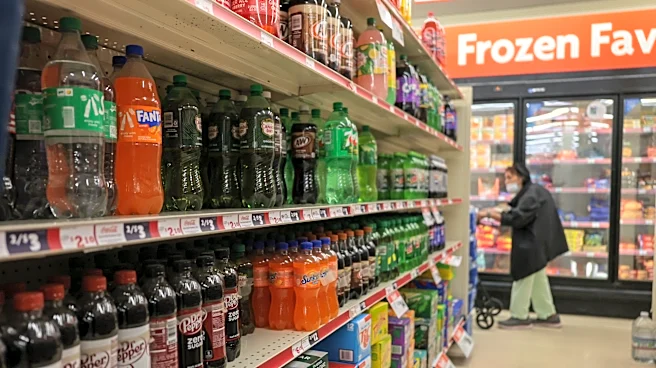
The restrictions mostly aimed to reduce the purchasing power of processed foods and beverages such as soda, energy drinks, and candy. The items that were supposed to be restricted were:
- Processed foods: Processed foods include foods altered from their natural state that list the following ingredients as the first ingredient:
- Sugar
- Cane sugar
- Corn syrup
- High fructose corn syrup
- Exception: Single-ingredient sugars used for cooking and baking (such as granulated sugar or raw sugar) remain eligible.
- Soda & Energy Drinks: Beverages that list carbonated water and one of the following as the first two ingredients:
- Sugar
- Cane sugar
- Corn syrup
- High fructose corn syrup
Which Tennessee counties use SNAP the most?
In August 2026, roughly 610,000 people received SNAP benefits statewide. This is a 1,200-person increase from July.
Recipients typically receive an average of $340 per family. Benefits are income-limited to families making $3,483 or less per month for a four-person household.
Here are the top five counties in Tennessee ranked by the number of individuals who received SNAP benefits in December, the most recent data available:
- Shelby County: 136,687 (22.4%)
- Davidson County: 51,236 (8.4%)
- Knox County: 30,912 (5.1%)
- Hamilton County: 29,770 (4.9%)
- Rutherford County: 18,630 (3.1%)
USA TODAY contributed to this report.
Jordan Green covers trending news for The Commercial Appeal and Tennessee. She can be reached at jordan.green@commercialappeal.com
This article originally appeared on Memphis Commercial Appeal: SNAP benefits are changing Oct. 1. Why it'll affect more than 600K in Tennessee