

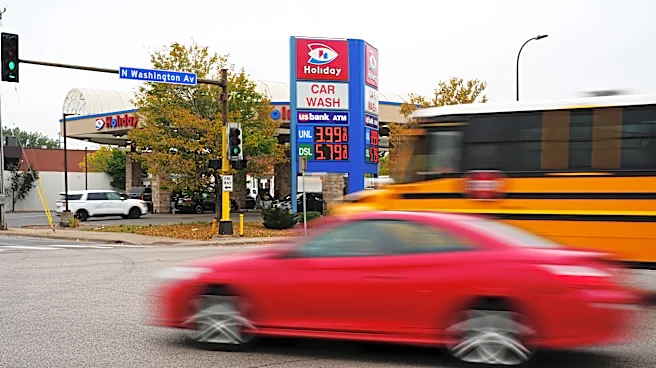
A barbecue restaurant in St. Louis was bragging about its Memphis-style barbecue.
That, in itself, might not sound particularly remarkable. Restaurants borrow from one another all the time. Regional styles travel. Recipes migrate. Pitmasters experiment.
But a stranger in Delaware noticed something about the claim.
He had been watching a Food Network-style program when the St. Louis restaurant announced that it served this "Memphis-style" barbecue. So he called the Memphis in May office and mentioned it to President and CEO Mack Weaver.
Weaver laughed when recounting this story to The Commercial Appeal during a recent interview. "I'm not sure you would see a local Memphis BBQ restaurant claim the reverse," he joked.
That little exchange captures something
that has happened to Memphis barbecue over the past century.
Somewhere along the way, the Bluff City stopped being merely a place where barbecue is made and became a place whose name describes how barbecue is made.
The term has become an adjective.
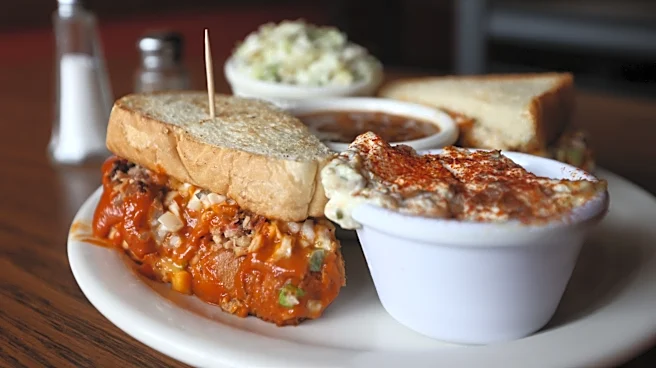
It now carries an idea far beyond the city limits: slow-smoked pork, dry-rubbed ribs, pulled shoulder, a sweet-and-tangy sauce, mustardy slaw and, above all, the unmistakable influence of smoke.
Memphians know it. And people travel thousands of miles to taste it.

Barbecue teams from around the world come to Memphis to compete, then take what they learned back home.
Pitmasters post their techniques on YouTube. Television chefs showcase it on their Food Network series. Restaurants outside Tennessee put the words on their menus.
Memphis did not invent barbecue. Its traditions grew from Southern pork cooking, Black Memphis and Mississippi Delta foodways, neighborhood pit cooking and the city's position on the Mississippi River.
But over more than a century, Memphis built something larger: a barbecue culture that could be passed down through family restaurants, measured in competition, bottled and shipped through a global logistics network, broadcast into living rooms and, eventually, spread around the world one social media post at a time.
As we continue to celebrate the 250th anniversary of the United States, here is the story of how Memphis-style barbecue became part of American culture and known around the globe.
It started with Leonard's: Memphis area home to 100+ BBQ joints
More than 100 local barbecue restaurants operate in Memphis and Shelby County, according to Kevin Kern, Memphis Tourism Vice President of Public Relations.
This is the most per capita of any city in the United States.
And it all started with Leonard's Pit Barbecue, widely recognized as the oldest, continuously operated barbecue restaurant in Memphis, having first opened in 1922.
Of course Leonard's didn't invent Memphis barbecue. But it represents a turning point: the moment Memphis barbecue began becoming a recognizable commercial restaurant tradition and not just something you did at home, slow-cooking a whole hog in a pit.
Leonard Heuberger opened Leonard’s in 1922 at Trigg and Latham in South Memphis, selling chopped pork sandwiches for about 5 cents. The Leonard's Pit Barbecue stand became enormously successful.
Ten years later, Leonard outgrew this location and moved to South Bellevue, where — by the 1940s and 1950s — the operation evolved into a huge drive-in, becoming the largest barbecue drive-in in the country.
Leonard’s demonstrated that barbecue could become a major business. And like-minded pitmasters followed, especially by the 1970s, opening barbecue joints all over the city. Many were family-driven.

In this decade, a massive wave of mom-and-pop barbecue restaurants began popping up everywhere.
Places like Cozy Corner, which was opened by Desiree Robinson and her late husband, Raymond Robinson. It began small, with a single pit and a limited menu, eventually growing to employ four generations of family members.
Another family institution that flourished at this time was Interstate Bar-B-Q, which the recently retired Jim Neely opened to serve South Memphis locals but ultimately became a city franchise.
These were a series of Memphis barbecue joints that became family dynasties, where barbecue knowledge wasn't necessarily written down. Instead it was passed from parent to child through demonstration and patience.
And no place was this truer than at Payne's Bar-B-Q.
Horton and Flora Payne opened their family business in April 1972. The original shop was on Lamar at Barksdale. Horton came from a barbecue family and according to his son Ron, “learned everything from his uncle, who owned a barbecue restaurant in North Memphis called Joe’s.”
The original Payne’s was tiny, essentially a counter-service operation. But Lamar Avenue was busy, including workers from businesses in the area, and the restaurant quickly developed a following.
Then, in 1976, Payne’s moved three blocks to its current building at 1762 Lamar, a former filling station and mechanic's shop. The reason was simple: The original place had gotten too small and the lines were out the door.

Two years later, the Paynes' son Ron was born. He now owns and operates the spot with his sister Candice.
According to Ron, he and Candice grew up in the restaurant, cleaning tables, talking to customers, working the cash register. Though Ron swore on some days he would never take up the family business, claiming it was “too hot in the summers” — his destiny was inevitable.
Like so many local family barbecue restaurants in the area, it’s tough to turn your back on a business so many people love and rely on.
"They like the consistency," he announced proudly.
Ron and his sister Candice still use the same basic recipes that began with their parents more than 50 years ago.
The slaw, for example, is a Payne family staple inherited through Ron's grandmother's side of the family. Its mustard and vinegary base is a trademark, famous for cutting through the richness of the tender Payne’s pork.

“We’re really just a mom-and-pop restaurant at heart,” Ron simply stated. “It’s all about family here. That’s why people keep coming back.”
According to Ron, Payne’s only employs four people. It’s a humble neighborhood business that just happened to become legendary. Ask locals about the best Memphis barbecue, and Payne’s is among the first places mentioned.
This is why — and how most — out-of-towners find them: online, reading articles, catching them on TV.
Ron says about 50% of their customers are tourists during the summer. In regular months, they make up around 30%.
“Just today we had people come here from Germany and London,” he recalled. “And earlier this week we had people from China. It’s crazy how people from all over the world find us.”
This — come to find out — is nothing new.
Kemmons Wilson, FedEx & Rendezvous ribs: Memphis BBQ goes global
Memphis had an unusual combination of barbecue, transportation infrastructure, tourism, hospitality and entrepreneurship that allowed a local favorite to travel worldwide.
In 1948, Charlie Vergos opened the Charlie Vergos' Rendezvous in the basement of a Downtown building.
He originally intended this space to become a beer hall, but when he discovered an old coal chute leading into the building, he began experimenting with cooking barbecue over charcoal.
That eventually became the signature Rendezvous dry-rub ribs, ones cooked over charcoal and seasoned with a distinctive dry rub rather than being smothered messily in a traditional barbecue sauce.
During a recent sit-down just before the lunch rush, co-owners John Vergos and his daughter Anna Vergos Blair — who currently manages the day-to-day — explained in great, fascinating detail how the Rendezvous went from small local barbecue joint to “world famous.”

“I think it really began with Kemmons Wilson, founder of the Holiday Inn hotel chain,” John, Charlie's son, explained with appreciation about this era during the 1960s and early 1970s. “That's when we started calling ourselves ‘world famous’ because Kemmons really loved our ribs. And anytime he would have a new franchisee or an investor, a bank, or whatever, he'd bring them to the Rendezvous. And so, you know, at that time, Holiday Inns were exploding all over the world. So he’d bring people from Indonesia and South America, whatever. And so, you know, he really gave us great word of mouth, international word of mouth.”
By the mid '70s, the Rendezvous became increasingly famous around the world, cementing Memphis’ growing reputation as the foremost barbecue tourist destination.
It had become the go-to culinary stop for celebrity visitors, royal dignitaries and prominent political figures. Everyone from The Rolling Stones to Julia Child to Al Gore to John F. Kennedy Jr. would drop by for some custom-made Memphis barbecue.
This brand awareness and reputation expanded even further when the Rendezvous got into the mail-order rib business — essentially a happy accident.
“My uncle worked for Delta for 50 years,” John recalled. “And we would have customers that loved our barbecue, and so we'd put it on a cab, out to the airport, and my uncle would arrange for someone to give it to the pilots, and they’d take it to Washington, D.C., or wherever. So, I mean, that was kind of a rough way to do it. And then, of course, when FedEx emerged, that’s when it all really began.”
In 1982, the Rendezvous was the first business ever, not just in Memphis but in the world to ship its perishable food overnight via Federal Express, to anyone in the United States. Of course, it was particularly well positioned here because FedEx is headquartered nearby and could provide fast overnight delivery.
And it wasn’t just ribs that were shipped in the middle of the night, more trademark Rendezvous products were included as well.

“Our shake seasoning and sauces,” John said. “Which are really good and unique. You know, people just really liked ‘em because you can put it on anything, and customers would leave with them. My dad would just give it away. Put it in a paper bag, like here, take your seasoning. So, it made sense to start bottling and selling them nationwide, too.”
It was during this time, through the mid '80s to the 1990s, when the Rendezvous name really began expanding beyond Memphis, scaling its business and launching the country’s first fully prepared barbecue mail-order industry.
Ahead of its time, it was quite the revolutionary flex where foodie fans — and other companies — began to take notice. In 1987, another Memphis barbecue institution Corky’s Ribs & BBQ started doing the same thing, cooking ribs and pulled pork to ship overnight to out-of-towners.
This essentially cemented Memphis as a go-to barbecue destination, whether you lived in Seattle, Sacramento or South Dakota.
At the Rendezvous, according to Anna, the retail side of things accounts for about 35% of their yearly revenue. And this now includes pulled pork samplers, pork shoulders and their BBQ nachos kit, which happens to be a favorite at the storefront.
“I’d say the brisket, the nachos and the sausage and cheese tray are our biggest sellers,” Anna confirmed.
Of course, the mail-order operation initially focused on the United States. But today, Rendezvous ships its sauce and seasonings to a handful of international countries. Because as you can imagine, word travels fast. But for now, the ribs can’t travel to Europe because of strict food safety standards.

“But we’ve catered parties all over the world,” John recalled. “We’ve catered parties in Australia at the American Embassy. In Ottawa, Canada, in Singapore. And the Dominican Republic, so many places. We cook it here and work with FedEx to fly it overseas and then show up there to serve it.”
And how did this first come about?
“The (former) American Ambassador to Australia Robert McCallum Jr. is a Memphian. And loves our barbecue.”
The business has genuinely gone global, with Memphis tourism, food media, celebrity visits, international travelers and a former Ambassador to Australia all helping create international buzz.
But according to the Vergos’ father and daughter duo, it’s not all because of their addictive barbecue.
“We’ve talked about the ribs and the seasoning and all that, but I think another big part of why this place has had such longevity and why folks from all over the world come here,” John began. “It’s because of the people that work here. They work here for so long, and their kids work here. It's the kind of place where people feel like they can come and feel welcome.”
Anna added: “There's kind of an authentic greeting. The same cooks are cooking the ribs that were here 30 years ago. You know, things kind of just stay the same. And it does feel like home, in a way.”
Memphis in May: Where the world comes to compete
Restaurants helped make Memphis barbecue famous. But another institution gave the city's barbecue something even more powerful: a way to compete, measure and share it.
That institution is the Memphis in May World Championship Barbecue Cooking Contest.
When the contest began in 1978, it was tiny by today's standards, with just one team and 18 individual contestants.
Nearly five decades later, it has become an international gathering of barbecue teams, drawing competitors from across the United States and around the world.
In 2026, teams representing 27 states and seven countries competed, including Australia, Ireland, Norway and Germany, according to Memphis in May President and CEO Mack Weaver.
That international reach is important because the contest doesn't simply bring people to Memphis to eat barbecue. It brings people to Memphis to learn how to make it.
A pitmaster can arrive with his or her own traditions, spend several days cooking alongside teams from across the country and overseas, study different techniques, taste the competition and then return home with new ideas.
In that sense, Memphis in May became something more than a barbecue festival. It became a classroom, a laboratory and, eventually, a distribution network for Memphis barbecue culture.

The competition helped turn barbecue into a transferable craft. Its categories — including ribs, shoulder, whole hog and sauce — gave cooks a framework for studying and refining their techniques. Barbecue wasn't simply something you made. It was something you could practice, compare, judge and improve.
And then you could take it home.
That is one of the less obvious ways Memphis influenced barbecue beyond the Mississippi River. The city didn't need to open a restaurant in every state or country. It could bring the world's prominent pitmasters to Memphis, let them experience the city's barbecue culture firsthand, and send them back out into the world.
And its reach continues to expand.
“We created a new contest this year, our first-ever Open Fire competition that really lit a fire in the competition. No pun intended,” Weaver said. “We're broadening the event beyond our traditional barbecue categories, like this new one, which involves cooking over an open flame. Teams came from as far away as Argentina and Mexico. But what was really interesting is we saw a surplus of new national teams, particularly in Texas, where this style has a large following.”
The growth was particularly notable because the event, like much of the hospitality industry, was hit hard by the COVID-19 pandemic."The Barbecue Cooking Contest drew about 68,000 visitors in 2019," Weaver said. "Attendance fell during the pandemic years before beginning to recover, reaching roughly 42,000 in 2025 and 50,000 in 2026."
And according to Weaver, it only promises to go up from there.
“Next year we celebrate the 50th anniversary of Memphis in May and the following year, we celebrate the 50th anniversary of the barbecue cooking contest so we’re very optimistic about future growth," Weaver said.
For Memphis in May, though, the numbers tell only part of the story.
The more important measure of influence may be what happens after everyone goes home.

Like what the stranger in Delaware told Weaver he saw on that Food Network show: Memphis-style barbecue in St Louis.
That's the Memphis effect in a nutshell.
Memphis barbecue has become recognizable enough that restaurants hundreds of miles away can use the city's name to tell customers what they're about to eat.
Memphis in May didn't invent that idea. But for nearly 50 years, it has helped give barbecue cooks from around the country and the world a reason to come to Memphis, compete against one another, absorb its traditions and carry what they learned back home.
The world didn't just come to Memphis to eat barbecue.
It came to compete.
Ready for its close-up: Memphis BBQ on TV, YouTube & Instagram

When asking Weaver what has been one of the most significant ways the Memphis in May barbecue contest has helped spread the word — and also the reputation — of Memphis barbecue, his answer was telling:
“The impact has been tremendous. You look at all of the barbecue shows on these cable stations like Food Network and you see pitmasters and teams who often mention they're competing in the Memphis in May barbecue contest. It’s the best kind of advertisement.”
The proliferation of cable television shows in the early 2000s has played a crucial role in increasing worldwide awareness of Memphis barbecue.
As food- and travel-focused programming became more common on networks such as the Food Network and Travel Channel, regional barbecue traditions were increasingly presented to audiences outside the South.
On shows like Food Network’s “FoodNation” and “Throwdown With Bobby Flay”, Memphis barbecue appeared frequently as a distinctive regional cuisine worthy of national attention.
TV personality Guy Fieri has visited several iconic barbecue joints in and around Memphis including Cozy Corner, Marlowe’s Ribs & Restaurant and Leonard’s Pit Barbecue.
Travel Channel has featured host Adam Richman visiting Charlie Vergos’ Rendezvous for his series “Man v. Food” and his show “Adam Richman's Fandemonium” filmed at the Memphis in May World Championship Barbecue Cooking Contest.
The Memphis-born culinary duo Pat and Gina Neely have hosted two primary nationwide television shows together on the Food Network: “Down Home With The Neelys” and “Road Tasted With The Neelys.”

All this television exposure over the last two decades has helped transform Memphis barbecue from a local tradition into a nationally recognizable part of the city’s culture.
These shows have introduced viewers to the local area’s distinctive dry-rub ribs, pulled pork and slow-smoking techniques associated with Memphis.
By showcasing both the food and the personalities and traditions surrounding it, these cable TV series have helped build Memphis barbecue's reputation as a culinary destination and encouraged tourists and food enthusiasts to seek it out for themselves.
Another recent factor that has helped contribute to Memphis’ preeminent stature as the barbecue capital of the world is social media. The advent of food influencers, bloggers and even regular consumers on platforms like Facebook, Instagram, Snapchat and YouTube have accelerated interest both quickly and effectively.
It makes it quick and easy to share images and videos of Memphis ribs, pork sandwiches and barbecue nachos. These visuals can make people curious enough to try Memphis barbecue themselves.
Memphis Travel, for example, has used social posts featuring Memphis barbecue to attract attention; one 2024 Facebook post about two British visitors reacting to ribs at The Bar-B-Q Shop received more than 855,000 impressions.
Ron Payne of Payne's Bar-B-Q witnessed the benefits of social media firsthand. When asked what their most popular item was, he said their signature smoked pork shoulder sandwich and mustard vinegar slaw.
But during the pandemic, a fan posted a TikTok about their ribs, it went viral and ever since the ribs have rivaled the sandwich as a top seller.
FedEx made it possible to ship Memphis barbecue. TikTok made it possible to ship the idea of Memphis barbecue.
Culinary tourism: Memphis BBQ is big business
“Barbecue is part of the soul of Memphis and one of our strongest travel motivators," said Kevin Kane, president and CEO of Memphis Tourism. "People come from around the world to experience our legendary barbecue, from iconic restaurants to generations of pitmasters who have helped define Memphis cuisine.
“But barbecue is also the gateway to a much broader food story. That’s why Memphis Tourism led the effort to bring the MICHELIN Guide to Memphis, to showcase the depth of our culinary scene and give travelers even more reasons to come hungry.”
The Memphis in May International Festival generates around $149 million for the city and Weaver said about 90% of this is from the barbecue cooking contest. It also brings in roughly $4.8 million in tax revenue.
And hopefully these numbers and statistics will continue to climb. It appears Memphis food and tourism have never been hotter, or more intertwined.
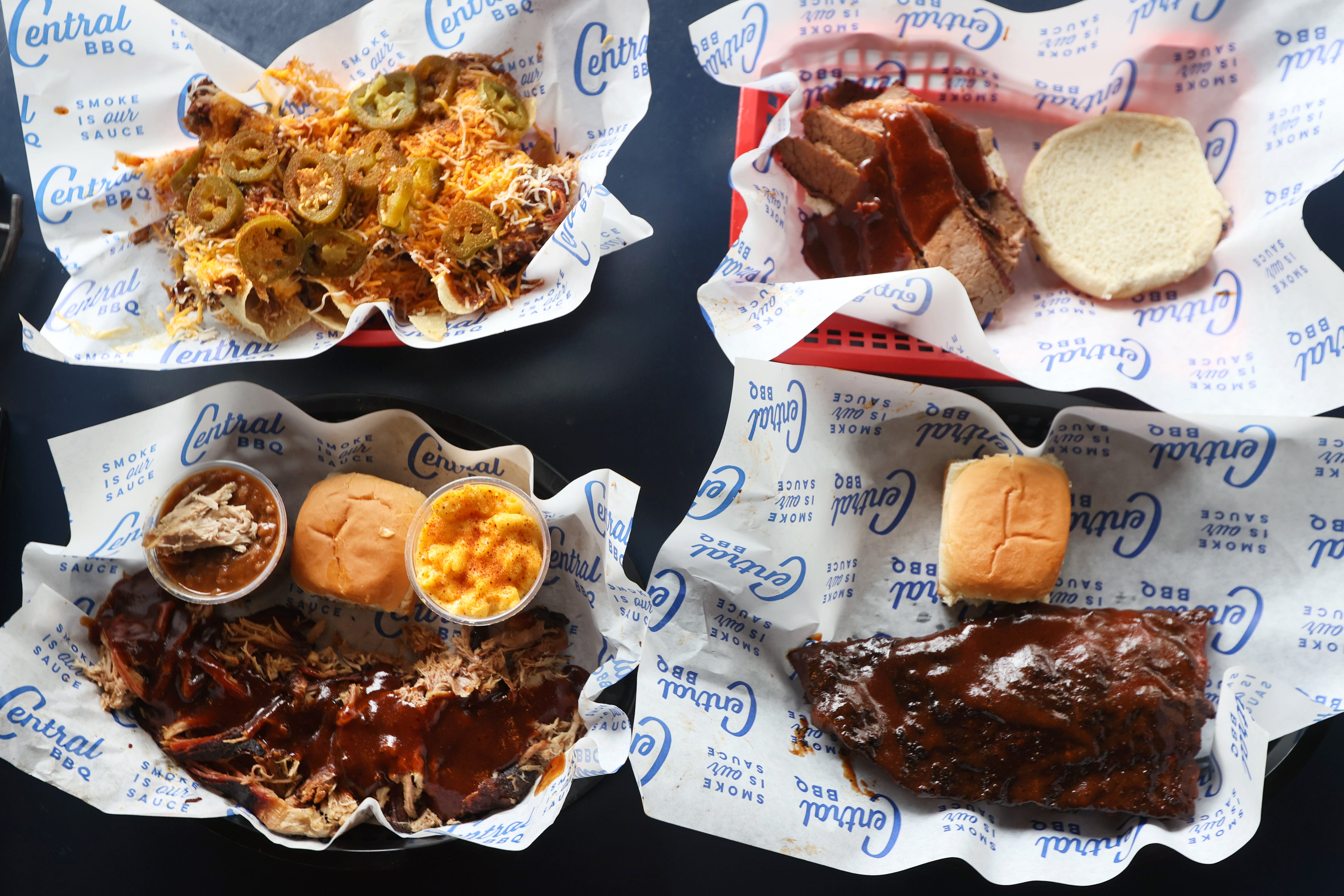
Just recently Travel + Leisure ranked Memphis as the “top road trip destination in the United States” and much of this was attributed to its culinary treasure: barbecue.
And U.S. News & World Report named Memphis “the 8th best food city in the country.” And again, it's not for the French fries.
According to Memphis Tourism, tasting world-famous barbecue ranks alongside visiting old music legends' stomping grounds and enjoying nightlife as a primary reason tourists visit Memphis. More than 20% of surveyed tourists chose a food-related word like “BBQ” when asked what they love about the city.
Memphis Tourism stats show more than 13.5 million visitors spend $4.3 billion annually in the city — and dining drives a massive portion of tourist budgets. Visitors traveling under 300 miles spend 64% of their trip money on local food and restaurants, while those traveling over 300 miles spend 49%.
Memphis barbecue, along with its tourism market, is indeed a big moneymaker for the city.
Just ask Memphis Mayor Paul Young.
“Feeding people is a love language in Memphis, and barbecue is one of the ways we show it,” he said in a statement to The Commercial Appeal. “From our approximately 100 barbecue restaurants, to the 200 teams from 27 states and seven countries who competed in the World Championship Barbecue Cooking Contest this year, to the sauces, spices, and techniques developed here, Memphis has an outsized influence on barbecue around the world. Our barbecue is shipped to customers across the globe and has inspired a whole category of culinary tourism. Memphis barbecue has created jobs, supported generations of local businesses, and built brands known worldwide.”
Brian Strickland is the Food & Dining reporter at The Commercial Appeal. Contact him at brian.strickland@commercialappeal.com.
To keep up with the latest news from the Memphis food and dining scene, sign up here for our Eat Drink Memphis weekly newsletter.
This article originally appeared on Memphis Commercial Appeal: The story behind Memphis BBQ and how it conquered the world