





The Memphis Area Transit Authority's former interim CEO dropped her federal lawsuit against the City of Memphis and its public transit agency.
Also in federal court, a judge said the Memphis Police Department may have violated a longstanding consent decree in its response to a protest.
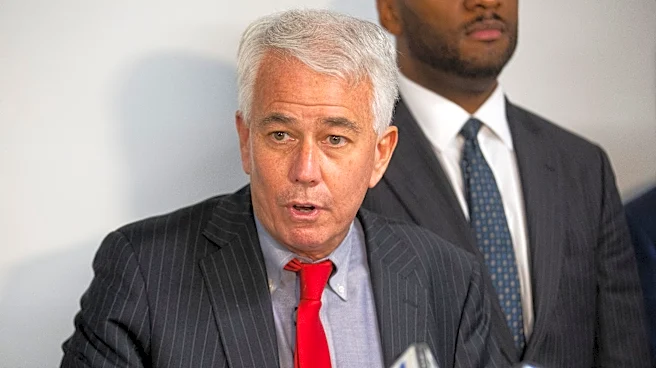
Locally, Shelby County District Attorney Steve Mulroy said his office is cracking down on kratom distribution just months after the drug became illegal in Tennessee.
Here's what else was on the docket for the week of Sept. 28, 2026.
Former MATA CEO voluntarily dismisses lawsuit, ends bid to get job back
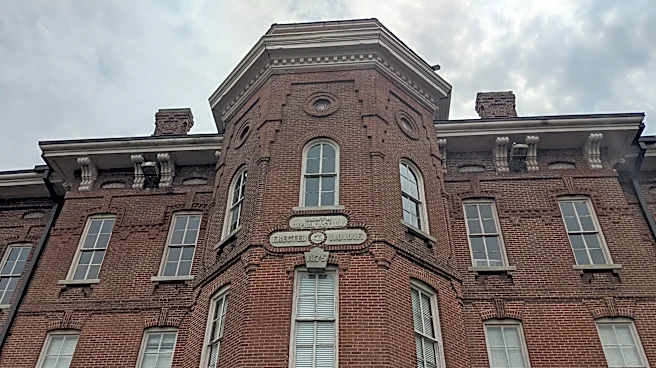
Bacarra Mauldin, the former interim CEO of the Memphis Area Transit Authority, has dropped her lawsuit against the public transportation agency, court documents show.
Mauldin was fired in March 2025 after an internal investigation found
Mauldin "violated MATA's procurement and travel policy, and did not take sufficient steps to ensure compliance among her direct reports." In May this year, she filed a wrongful termination lawsuit in Shelby County Chancery Court.
That case was eventually moved to federal court, and attorneys representing the City of Memphis and MATA countersued her. In the countersuit, MATA requested a judge order Mauldin pay damages for financial missteps at the transit authority, pay damages for money she is accused of misusing and pay back her salary from her time as CEO.
It was not immediately clear why Mauldin's attorneys filed a motion to voluntarily dismiss the lawsuit. The motion only said the parties "jointly stipulate that the above-captioned action filed by plaintiff and the counterclaims filed by Memphis Area Transit Authority shall be voluntarily dismissed without prejudice."
It is not uncommon for cases to be vague when they are voluntarily dismissed. Weeks earlier, the attorney retained by Shelby County Government voluntarily dismissed the ouster petition against then-Shelby County Clerk Wanda Halbert without an explanation.
In that case, Halbert was days away from leaving office due to her term expiring.
U.S. District Court Chief Judge Sheryl Lipman for the Western District of Tennessee granted the voluntary dismissal, also noting it was dismissed without prejudice, meaning similar claims can be filed again.
Did Memphis police violate the Kendrick Consent Decree? One federal judge says 'maybe'
A judge said the Memphis Police Department may have violated a longstanding consent decree that limits its surveillance of political activists and protests, a court order filed at the beginning of September read.
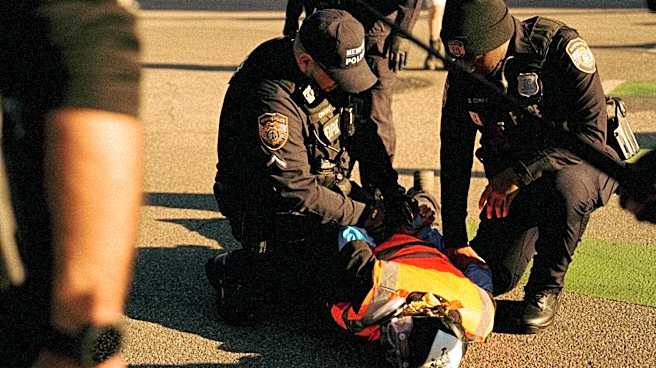
U.S. District Court Magistrate Judge Jon York for the Western District of Tennessee, in a Sept. 8 order, granted the American Civil Liberties Union of Tennessee’s demand that the City of Memphis turn over evidence about its activities from a March "No Kings" protest that spilled into a Downtown Memphis roadway.

“Although the protesters marched without the required permit, the Memphis Police Department stands accused of having used excessive force to make the protesters disperse, allegedly pepper-spraying peaceful protesters without provocation,” York wrote in the ruling, saying later the actions “would violate” sections of the 1978 Kendrick Consent Decree if evidence proved the allegations to be true.
According to York’s ruling, MPD Chief Cerelyn “C.J.” Davis “issued an authorization for MPD officers to monitor all ‘publicly available social media platforms’ for the next 90 days ‘to identify emerging threats, assess the potential for unrest, and ensure public safety.’”
York described this, in the court order, as a "potentially more problematic" topic in the litigation.
Despite granting the ACLU's motion to conduct limited discovery, York denied another one of the ACLU's motions. That second motion would have required the City of Memphis to present evidence to prove Memphis police were not in contempt of the consent decree.
Shelby County DA launches crackdown on kratom distribution
The West Tennessee Violent Crime and West Tennessee Drug task forces carried out raids on two warehouses in Shelby County in the morning hours of Oct. 1 and recovered "tens of thousands of packages" of synthetic kratom.

Kratom in its natural form is a plant-based drug that has been widely available for years. At low doses, the Mayo Clinic said it acts as a stimulant and, at higher doses, it has been reported to reduce pain and anxiety. It has been previously used to ease opioid withdrawal symptoms, but Mayo Clinic said kratom has its own addictive risks.
The raids on Oct. 1 were part of a broader investigation into kratom distribution in West Tennessee. Law enforcement obtained a search warrant, Shelby County District Attorney Steve Mulroy said, to raid Novelty King Wholesale warehouses.
Kratom was, until recently, legal in Tennessee. On July 1, a state law took effect criminalizing all forms of kratom. Mulroy, who noted the raid was focused on synthetic kratom, said he wants to send a message to distributors.
"To any gas station owner, convenience store owner, or any other potential vendor of this illegal drug: Kratom is now illegal in Tennessee. Do not sell it," he said. "If you do, you'll be subject to arrest and prosecution."
Thursday's investigation focused on synthetic kratom, which Mulroy described as more dangerous than naturally-occurring kratom. Despite that, he warned that all kratom possession — both natural and synthetic — is now a crime under state law.
Top Commercial Appeal courts, public safety stories readers have viewed
- From Oct. 1: Shelby County warehouse raids find 'tens of thousands' of kratom packs
- From Sept. 30: Memphis police response to 'No Kings' protest may violate consent decree
- From Sept. 30: Memphis rappers sue DJ Sound for alleged copyright infringement
- From Oct. 1: Christa Pike was second botched 2026 TN execution. Tony Carruthers was first
- From Sept. 29: Family of man killed by Memphis police in 2025 sues for $35 million
Latest in Memphis' biggest cases
Over the last month, attorneys in the Tyré Nichols civil case have argued whether the depositions of three former Memphis Police Department officers will be taken in person or via written responses.
Attorneys representing the City of Memphis and the former officers favored written response depositions, pointing to the potential for self-incrimination for the ex-officers. Though partially convicted in the federal case back in fall 2024, U.S. District Court Chief Judge Sheryl Lipman for the Western District of Tennessee ordered a new trial for them.
Earlier in the year, those same former officers were dismissed from the lawsuit to avoid further delays due to the pending criminal case.
Whether they are tried again is still pending before the U.S. Sixth Circuit Court of Appeals.
The attorneys representing the former officers also said they plan to invoke their Fifth Amendment right against self-incrimination during the depositions. This, they said, could lead to a negative inference being taken by jurors at trial.
The city's attorneys also accused the attorneys representing Nichols' mother, RowVaughn Wells, of a "documented history of harassing and abusive conduct" during depositions.
Wells' attorneys argued the depositions should be taken in person to avoid answers that were proofread by the former officers' attorneys. They also argued an in-person deposition would allow them to get responses from the officers themselves, develop impeachment evidence if testimony changes, and said they plan to show footage of Nichols' beating during a deposition.
Lipman, in a Sept. 24 ruling, found in favor of Wells' attorneys.
"Anticipating a problem in a highly contentious case is not a sufficient basis to alter a party's choice as to the method of discovery, particularly when such an alteration would likely prejudice the party seeking discovery," Lipman wrote in her ruling.
She added there was not enough evidence presented of the alleged "harassing and abusive conduct" and that alternatives to an in-person deposition would be equally cumbersome.
Have a question for us?
Do you have a burning public safety question you want answered? Send an email to metro@commercialappeal.com or lucas.finton@commercialappeal.com.
Lucas Finton covers crime, policing, jails, the courts and criminal justice policy for The Commercial Appeal. He can be reached by phone or email: (901)208-3922 and Lucas.Finton@commercialappeal.com, and followed on X @LucasFinton.
This article originally appeared on Memphis Commercial Appeal: Ex-MATA CEO ends lawsuit against the City of Memphis, transit agency