






This a landmark year for America and for arts and culture in Memphis, too.
As most readers likely are aware, the United States of America on July 4, 2026, celebrated its semiquincentennial, or 250th birthday — the 250th anniversary of the signing of the Declaration of Independence.
Meanwhile, as many readers probably also are aware (we hope! — we published a big story on the topic in April), numerous Memphis arts organizations are marking anniversaries and milestones of their own.
So it is no surprise that some of the city's major arts institutions are hosting retrospective exhibitions that provide historical perspective while also functioning as proud, crowd-pleasing "greatest
hits" roundups of remarkable work.
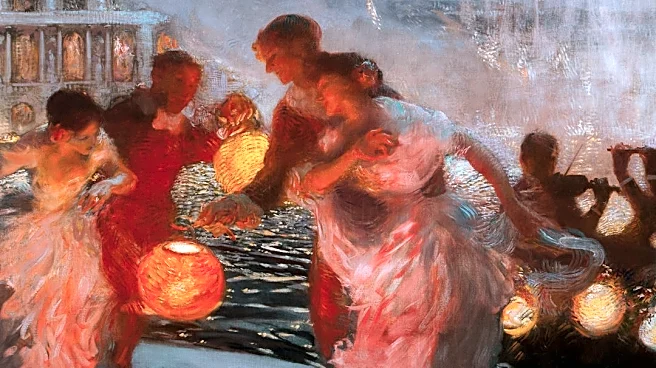
The latest of these is the Dixon Gallery & Gardens in East Memphis, which this week opened "An Investment in Pleasure: Fifty Years of the Dixon Gallery and Gardens Collection," which collects close to 180 works by such master artists as Matisse, Cezanne and Monet.
With a title that partly summarizes the motivation of the museum's founders, "An Investment in Pleasure" joins a number of similar surveys already on public view.
For example, when the Metal Museum opened this month in its new home in Overton Park, it introduced itself with a pair of shows that are almost mission statements.

On view through March 21, "From the Bluff to the Park: The Metal Museum's Collection Through Time" documents the institution's almost 50-year history with a display of whimsical, decorative, grotesque, surprising, mammoth and miniscule art pieces that demonstrate that copper, bronze, iron, steel, sterling silver and other metals can be versatile and expressive. The other opening exhibit — "Strike! Pour! Create!: Works by Metal Museum Apprentices," on display through Jan. 31 — is similarly eclectic, with works by 20 artists who have apprenticed at the museum since its founding.
Nearby, the Memphis Brooks Museum of Art — free to the public through its Overton Park closing day of Sept. 27, as it prepares for a December relaunch as the Memphis Art Museum, in its massive new Downtown riverfront home — is hosting, as its swan song, "Memphis College of Art, 1936-2020: An Enduring Legacy," which collects not quite a century's worth of quality Memphis-connected art.
The show at the Dixon — the museum and its grounds are open Tuesday through Sunday, with free admission — is especially generous. Organized by Julie Pierotti, the Dixon's Martha R. Robinson Curator (or chief curator, essentially), "An Investment in Pleasure" is loaded with work by American and European art-world heavyweights of the 19th and early 20th centuries.
Most of the Dixon's recent major surveys — such as "Black Artists in America: From the Bicentennial to September 11" and "Mary Sims: A Retrospective" — showcased relatively contemporary work, distinct from the Impressionism that inspired the museum's founders. But to mark the golden anniversary of the Dixon's founding in 1976, "An Investment in Pleasure" was organized to "allow us to really — to use a current term — to really lean into the European and American art that is the foundation of the collection," Pierotti said. "To really go deep into that time when there was so much radical creativity."
The Dixon — which features some 17 acres of woods, landscaped grounds and flower gardens, in addition to its galleries — was established in 1976 in the former home of Margaret and Hugo Dixon (a British-born cotton exporter), who had arranged for their estate and art collection to become a private nonprofit museum, with a mission to collect European and American art from roughly 1850 to 1950 (while also sometimes hosting exhibitions with art outside those boundaries).
"It's inspiring and almost mind-boggling to think about how quickly it transformed from a private home to a museum," Pierotti said.

The Dixon began with a bequeath of 27 paintings, two works on paper and six sculptures from the Dixons, who collected classically styled "Grand Manner" British paintings before becoming enamored of Impressionism and Post-Impressionism. Thanks to various gifts and the efforts of the museum's directors (from founding leader Michael Milkovich to current director Kevin Sharp, who plans to retire in summer 2027), the Dixon grew rapidly; the holdings now include some 2,000 pieces, including extensive collections of porcelain and pewter.
Pierrot describes the exhibition as "almost like a journey through time, from where we started to where we are today."
The show starts with the pieces of the original bequest: a 1775 portrait of an aristocratic Englishwoman, by Sir Joshua Reynolds; a Degas ballerina, in charcoal and pastel; a cerulean Chagall painting of a vase of flowers, and so on. Other galleries host later acquisitions, including a number of Fauvist, cubist and modernistic works.

A visitor will encounter images of dancers, snowstorms, geese and gardens; a "Bowl of Cherries" (1890), by Charles Ethan Porter, and "A Little Madness," a porcelain piece by Chris Antemann. There's "Still Life with Corn," from 1954, by Alma Thomas, one of the first African American women to earn recognition as a significant painter, and a series of lithographs by the French social satirist and political cartoonist Honoré Daumier.
The exhibition roll call also features such notable names as Corot, Renoir, Rodin, Gauguin, Toulouse-Lautrec and Mary Cassatt, not to mention the Memphians Ted Rust, Burton Callicott and Carroll Cloar.
“Our goal is our people come away with a better understanding of who we are as an institution and why we have grown the way we’ve grown," Pierotti said. "So you come away with a realization that every work of art that enters the collection, we have added it in a very thoughtful way."
“An Investment in Pleasure: Fifty Years of the Dixon Gallery and Gardens Collection” will be on display through Jan. 10.

John Beifuss is an entertainment writer at The Commercial Appeal. Contact him at john.beifuss@commercialappeal.com.
This article originally appeared on Memphis Commercial Appeal: Dixon Gallery & Gardens marks 50 years with Monet, Matisse and more