


As the Memphis Safe Task Force nears a year of operations in Memphis, there is still no end date, officials said.
A combination of at least 30 federal agencies, the Tennessee Highway Patrol, Memphis Police Department and Shelby County Sheriff’s Office, the Task Force started operations officially on Oct. 1, 2025.
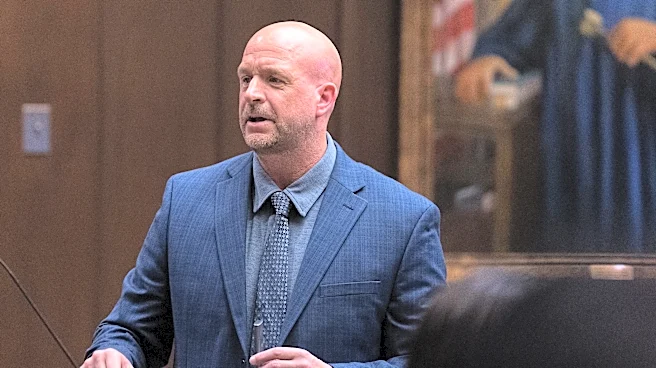
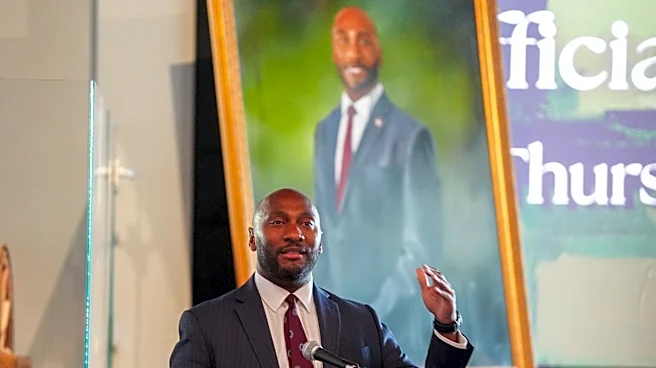
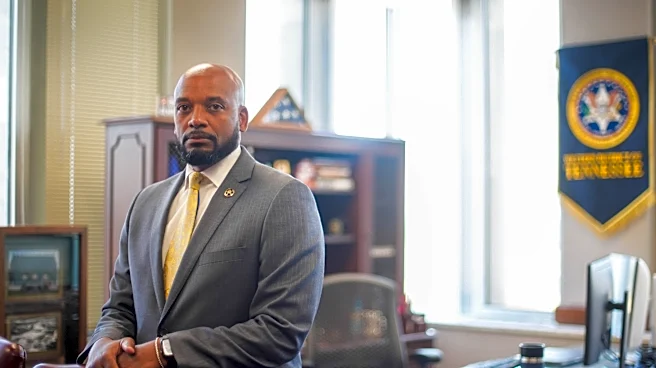
As of Sept. 10, U.S. Marshal Tyreece Miller for the Western District of Tennessee said the Task Force had made 12,604 arrests. Of those arrests, 128 have been for homicides, he said.
“I like to look at that as there are 128 families that were victims who have been seeking justice for the individual that was lost,” Miller told The Commercial Appeal during an interview. “We’re just trying to deliver justice to these people because I can
tell you the biggest thing that people want when someone’s life has been taken is for someone to be held accountable.”
Miller is member of the agency charged with leading the Task Force ― the U.S. Marshals Service ― but he described the Marshals’ role as “coordinating” the efforts.
For about six years, Miller has overseen the Western District of Tennessee for the Marshals. In that time he said he’s built a rapport with local and state law enforcement, which have long had relationships with federal authorities.
The FBI, the Bureau of Alcohol, Tobacco, Firearms and Explosives, and Drug Enforcement Administration are among the federal agencies that also have longstanding relationships locally. Prior to the Task Force, federal agencies worked with local law enforcement on Operation Viper and the Marshals frequently work with local police to track down suspects as part of the Two Rivers Violent Fugitive Task Force.
“I feel like I was a known commodity to them,” Miller said. “This was not someone coming in from somewhere else in the country, who landed in Memphis and said, ‘Hey guys, y’all got to come work with us.’ It wasn’t like that.”
That was a sentiment shared by FBI Special Agent in Charge Terence Reilly, who oversees the FBI’s Tennessee presence from the Nashville Field Office. Reily said there’s no longer “this old thought process that the feds are gonna come in and take the case,” and partnerships have flourished in recent years.
Memphis has an FBI resident agency, which maintains a long-term presence of agents.
No set Task Force end amid Memphis crime decline, high overall crime rate
Crime has continued to decline over the last two years. Memphis crime in 2025, when the most recent audited crime data was released, is the lowest it has been since 2010. Early numbers from 2026 reflected a continued decrease as well.
Since a near record-high in 2023, Memphis crime has been declining continuously. Despite that, Memphis still has the worst overall crime rate in the nation.
And that, according to Miller, is why there is no real end date for the Task Force.

“We’re not looking at a date on the calendar to decide that we’re pulling out,” he said. “We will pull out when we feel like the city is in a good place, and the partnerships are solidified, and the state and local law enforcement are able to sustain the gains.”
That sentiment was echoed by U.S. Attorney Mike Dunavant for the Western District of Tennessee, who said he has been ordered by the president to "engage in hypervigilant policing and aggressive prosecution."
"I will do that until I'm told otherwise," Dunavant added. "There is no announced end date, so we're not taking our foot off the gas. We're not trying to shift."
Miller and Dunavant both acknowledged there could be an element of suppression to the Memphis Safe Task Force. With federal agents constantly cycling into the city, he said there may be a preventative aspect to the Task Force's presence beyond the arrests it makes.
“It is a concern and I will tell you that’s why we are still here,” Miller said when asked about a potential crime increase when the Task Force leaves.
That potential increase also has led to discussions about how to transition away from the Task Force while maintaining an increased federal presence. Both Miller and Reilly said the U.S. Marshals and FBI are seeking a permanent increase in agents to be stationed in Memphis.
Dunavant said his office has backfilled a number of vacant prosecutor roles since he took office, but also benefited from the deployment of Judge Advocate General's Corps (military attorneys) to Memphis as well. The first deployment of JAG attorneys have their rotation in Memphis expire on Sept. 30, but Dunavant said there is an agreement on the books to get another round of JAG attorneys "going forward from October."

Miller said the decision as to how a withdrawal will look will ultimately come from the nation’s top public official.
“The president of the United States announced the creation of the Task Force from the Oval Office,” he said. “He’s the individual that will decide how the announcement, if any, is made.”
But he added a quiet withdrawal from Memphis could be beneficial.
“We don’t want to announce to the criminal element that we’re no longer here because I think they recognize that we’re here. Making that announcement (of withdrawing), I think that they would celebrate it,” he said. “They’re the only ones that want us to leave.”
Task Force involved in at least four fatal interactions
The Task Force has received plenty of scrutiny from outside the "criminal element," though.
Questions about immigration enforcement, the deployment of the National Guard, and the Task Force's use of force and alleged intimidation tactics have been consistently raised among observers and some officials.
At least four people have been fatally shot by task force officers throughout its operation. Darrin Pigram was killed on May 13 by a DEA agent serving a warrant; Jonah Neal was killed by a Homeland Security Investigations agent on May 20 during a mental health crisis; Tyrin Johnson was killed by the National Guard during a foot chase on July 5; and Alfonzo Ivy was killed by DEA agents on July 8 while they attempted to serve a warrant.
As of publication, no charges have been filed in any of the shootings. The Shelby County District Attorney’s Office declined to prosecute the DEA agent who shot Pigram. The other cases remain under investigation.
Neal and Johnson’s cases have received the most scrutiny from the public.
Johnson’s autopsy showed he was shot in the back, which raised questions from activists about whether he actually turned toward members of the National Guard during the chase. Immediately after he was killed, law enforcement said he turned toward National Guard members with a gun in his hand.

Law enforcement was called by Neal’s mother because he was having a mental health emergency. His mother waited outside and told local news outlet Fox13 she heard a single gunshot. She told Fox13 she waited for hours to find out her son had been killed.
Neal’s autopsy listed his cause of death as a gunshot wound to the neck, though it also said he had many other wounds.
Miller did not speak specifically about the shootings but said “any loss of life is tragic” and law enforcement’s first goal is to apprehend someone. If a situation becomes dangerous, he said, the next step is to stop the threat.
“It’s dangerous work,” he added. “These men and women that raise their right hand swear and take an oath to support and defend the Constitution and serve the city and the state and this country. Use of force is never what you want, but that is a part of law enforcement work.”
The CA obtained autopsies for Ivy, Johnson and Neal. Each noted emergency medical procedures were undertaken prior to their deaths.

Another point of criticism from activists has been the lack of body camera footage released. Investigations into each shooting but Pigram’s are ongoing, and it is not clear if there is footage from those incidents. But, in Pigram’s case, the DEA agents serving the warrant did not have their body cameras turned on.
The only footage from Pigram’s shooting death were security cameras inside the Burger King he worked at. None of the cameras recorded audio.
Despite detractors of the Task Force, Miller said he has been surprised by what he described as overwhelming positivity from the community.
“Since [the Task Force has] been here, I’ve attended at least three clergy round tables in Memphis,” he said. “The conversation is always about the Task Force and the overwhelming thing that people ask is, ‘What took you guys so long? Why did it take this long for you guys to come here and help this community?’”
Outward community support was also seen from local restaurants, which provided free meals for Task Force members, and a welcome rally for the National Guard hosted by the Shelby County Republican Party.
Lucas Finton covers crime, policing, jails, the courts and criminal justice policy for The Commercial Appeal. He can be reached by phone or email: (901)208-3922 and Lucas.Finton@commercialappeal.com, and followed on X @LucasFinton.
This article originally appeared on Memphis Commercial Appeal: Trump's Memphis Task Force has no end date in sight. Here's why