






This past month, both Florida Gov. Ron DeSantis and Texas Gov. Greg Abbott, typically ‘tough-on-crime,’ ‘back-the-blue’ officials, have supported a “Defund The Flock Police” movement. They’re picking up on a nationwide backlash against Automatic License Plate Reader (ALPR) cameras (with Flock the most prominent brand) due to privacy concerns.
The Democratic and Republican opposition has been supercharged by a recent series of many police officers across the country misusing the cameras to track romantic partners or relatives. Citizens are up in arms at town hall and city councilmeetings, with some blocking the view ofor even vandalizing the cameras. More than 50 cities in 20 different states have deactivated or otherwise rejected Flock cameras.
As a District Attorney, I’m sensitive to both the need to solve crimes and the need to protect privacy. With ALPR, we should neither uncritically use nor categorically ban. The answer is not celebration or revocation, but regulation.
Flock, explained
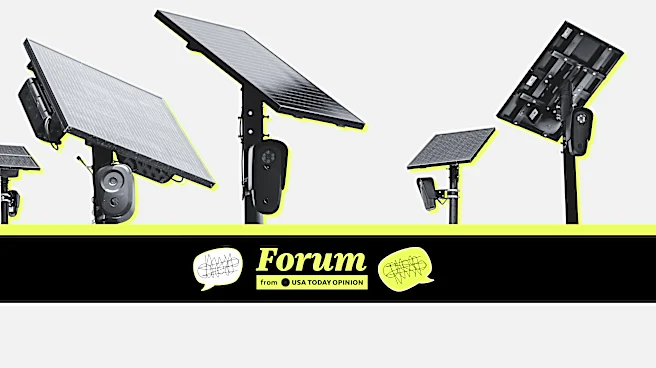
The cameras read license plate numbers and surrounding details like bumper stickers, make and model of car, etc., and tie them into a national database. They can view all cars crossing a certain location within a certain time period, or follow a particular vehicle for a long time period. Using AI tools, they can put in natural language search terms like ‘red pickup with broken taillight.’ This is clearly some powerful surveillance potential, approaching Big Brother levels.
Indeed, the Flock Safety company itself has acknowledged the recent abuses, adopting certain restrictionsas safeguards, such as listing a reason for every search and making internal audits mandatory. While critics have dismissed this self-policing, asserting that police can use vague terms like “investigation” and “hehehe” as the basis for a search, Flock says they’ll now be required to use a code from their records management system to tie it to a specific case, with overrides for emergencies automatically flagged for auditing review.
The Flock company alone has more than 120,000 cameras in 49 states. Realistically, they’re not going away. Nor should they, entirely: they have proven valuable in solving homicides and burglaries, among many other types of offenses. They’re particularly useful in locating stolen vehicles and missing persons, including both kidnap victims and vulnerable people, like confused elderly persons. Recently, they helped track suspects in a large Memphis auto parts heist to Georgia.
Valid concerns
But opponents have valid concerns. They can yield “false positives,” with erroneous “hits” occurring, according to some police department internal reviews, as high as 37%, leading to innocent civilians being pulled over, held at gunpoint, jailed for weeks, and even bitten by a police dog. As we’ve seen in many recent cases, they can be misused by law enforcement-- to stalk ex-girlfriends, spy on protesters, etc.
An omnipresent government Eye of Sauron is certainly concerning. But it’s worth pointing out that under the law, people have no “reasonable expectation of privacy” of where they travel on public streets for everyone to see. Since the cop on the corner can see you as you drive by, it’s no invasion of privacy for a camera to do so as well. (That’s why we can use red-light cameras, a similar but distinct technology.)
The problem is one of scale and volume. Checking out who came and went to the scene on the night of a triple homicide is one thing. Following a suspect’s travels for a full month tracking everywhere they go—their doctor, their dissident group, their abortion clinic—is quite another. The Supreme Court recognized this distinction in a case called Carpenter v. U.S.dealing with cell phone tower tracking data. The Court held that police could get a warrantless cell tower “dump” of all phones nearby a tower at a certain time, but needed a warrant to get so-called “historical data” tracking the location of a suspect over a significant period of time. A similar analysis applies to ALPRs.
Common sense rules
So how to square the circle? Here are some common-sense rules of the road (so to speak).
1. Limit Warrantless Searches. ALPRs can be used without a warrant to check traffic to and from a crime scene in the hours before and after the crime; to find vehicles reported stolen, and persons reported missing; and in other emergency-type cases. But as in Carpenter, police would need a warrant before they could use it to track the travels of a suspect over time.
2. Limit it to Crime. Surveillance this powerful should be reserved for actual crime. It shouldn’t be used to catch truant kids, or otherwise law-abiding undocumented immigrants , or to allow employers to spy on employees. Indeed, some cities and states have already barred sharing ALPR data with immigration authorities.
3. Impose Real Safeguards. Police using ALPR must record a legitimate, already-approved, specific case investigation as the reason for the search. Supervisors must regularly conduct audits of Flock use to check for abuses, which must give rise to swift and certain administrative punishment. The results of such regular audits should be published for public transparency. Affected civilians should have a “private right of action” to sue the law enforcement agency for privacy abuses.
4. Have Humans Check The AI. If the Flock system says a particular car at a certain time and place is a “match” (for the stolen vehicle, the missing person, the car spotted fleeing the crime scene, etc.), make sure human officers double-check before making a traffic stop, and require more than just the computer match for a full arrest. With smart policing, and humans running the audits, we can keep that “false positive” rate well below 37%.
5. Make It Transparent. In addition to audit procedures and results, local governments should publish the number of cameras; which agencies have access; the number of searches done per month; the number of “false hits” per year; how long records are retained; and the main types of warrantless searches conducted (see Point 1 above for examples).
6. “Purge” Data—Don’t Retain It. Records should be purged after 30 days, unless previously the subject of a legitimate search and made part of a case or investigation file. That purge should include not only the photographic images (of both license plate number and surrounding images like bumper stickers and the like), but also any technical ‘metadata’ associated with the image, which could later be abused for unsupervised “data mining.”
With clear limits on how and why it’s used, and meaningful internal controls, we can have our high-tech crime-solving cake and eat our civil liberties frosting too.

Steve Mulroy is the elected District Attorney for Memphis and Shelby County, TN.
This article originally appeared on Memphis Commercial Appeal: Common sense rules to regulate Flock | Opinion