






Reimagined as the Memphis Art Museum, the Memphis Brooks Museum of Art is relocating to a Front Street river bluff, after 110 years in Overton Park.
Its migration follows the dissolution of the Memphis College of Art, which closed in 2020, after 61 years in Overton Park.
Yet the statues of E.H. "Boss" Crump and Margaret "The Memphis Belle" Polk that stand like sentinels of local history inside the park have no need to feel abandoned. They already have been joined by similarly monumental if more abstract metal companions, alongside a revitalized building that soon will be filled with robust artistic activities.
Saturday, Sept. 5, the Metal Museum — "the world’s only museum dedicated exclusively to fine metalwork," according to its website — hosts
its public reopening inside its new home in Overton Park, some seven miles from its original location, south of Downtown.
The move ensures that art exhibition, art education and art creation will continue to have a significant public presence among the 342 acres of walkways, old growth forest, zoo enclosures and other attractions within the park that has been one of the city's primary gathering places for 125 years.
More specifically, the Metal Museum has relocated to the former Memphis College of Art, adding the outdoor "Robyn & John Horn Sculpture Walk" to the small campus — some pieces weigh close to 5,000 pounds — and readapting the school's main building, the suddenly amusingly named Rust Hall, into a space for not just metal exhibition but for metal fabrication — forging, welding, cutting, assembling and so on.

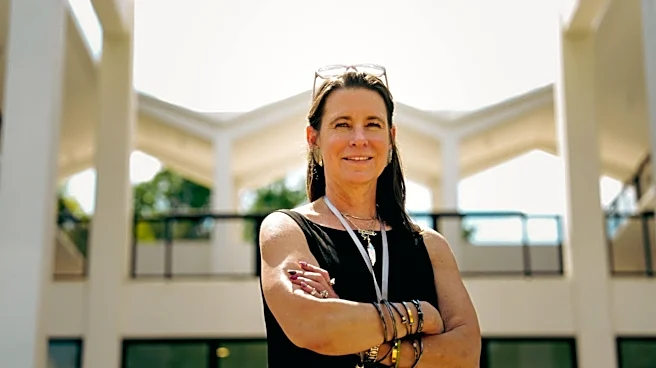
The continuity with the college — which trained many nationally renowned artists within an acclaimed mid-century building designed by Memphis architects Roy Harrover and William Mann — has been reassuring to Memphians, said Carissa Hussong, the Metal Museum's executive director since 2008.
"It's one of the reasons people love that we're doing this," said Hussong, 56.
To spread this love, the museum's relaunch — dubbed "A Very Metal Grand Opening" — is a weekend event that begins with an evening of free "Metal" rock music at the Overton Park Shell at 7 p.m. Friday, Sept. 4.
The "Grand Opening" of the museum itself runs from noon to 4 p.m. Saturday, Sept. 5, and offers free admission to the museum's exhibits, along with metalsmithing demonstrations, hands-on activities and more.
'People can find us'
Tradition and sentiment aside, the new location at the heart of the city, within the same popular park as the Memphis Zoo (which gets more than a million visitors a year), is certain to elevate the profile of a museum that had been something of a hidden gem.
Perched high on a bluff of the Mississippi River and nestled between the cantilevered trusses of the old Memphis & Arkansas Bridge and the ancient ceremonial mounds of Chickasaw Heritage, the original museum boasted an attractive but relatively remote address. It was founded as the National Ornamental Metal Museum in 1979 by the late James Wallace, a blacksmith and artist, who leased the space — a former Marine hospital — from the city, and handled much of the renovation of the ramshackle buildings himself.
The Metal Museum will continue to lease and operate that property, with its foundry and blacksmith shop and artists-in-residence and park-rental opportunities; but the focus now will be on Overton Park, where officials hope to double or triple the museum's typical attendance of about 30,000 visitors per year.

"It's all about accessibility," Hussong said. "The bluff location is not a place you stumble onto. You have to want to go there. The closest bus stop is a mile away." At Overton Park, "people can find us. People can ride a bike here."
The greater accessibility should elevate attendance for the museum's many programs and events, she said, including its school field trips, summer camps, fine metal workshops, jewelry-making classes and, of course, its ever-popular "Repair Days" fundraiser (set this year for Nov. 5-8), which invites guests to bring "treasured metal items — anything from heirlooms to everyday objects — to be expertly restored and returned to their former glory" by "skilled metalsmiths."
A private nonprofit with an operating budget of about $4 million, the Metal Museum began making plans to move to Overton Park in 2018, after the College of Art announced its closing.
The museum formalized its lease for the city property in 2022, and launched a $35 million fundraising goal that is just short of completion, thanks in large part to a $12 million grant from the Little Rock-based Windgate Foundation, which provides funding for projects and initiatives related to crafts and the visual arts. Consequently, the large art-making space at the west side of the bottom floor has been named Windgate Metal Studios.

Those familiar with the College of Art campus will find much that is surprising as well as familiar within the Metal Museum's renovation and reworking of the 75,000 square feet of Rust Hall. The original 1959 building, the so-called "North Tower," will function as the museum's public space, with its galleries, its classrooms, its workshops and studios, all with large windows so the public can watch artists at work. Added later, the "South Tower" will house offices and other behind-the-scenes activities. Meanwhile, the lower-level auditorium will return to public use (Hussong said Opera Memphis and Indie Memphis already have events planned).
As a Metal Museum press release states: "The new location brings together expanded galleries, collections storage, working studios, educational facilities, and public programs, creating new opportunities to experience the art and craft of fine metalwork."
'Different ideas'

A facility for blacksmithing, casting, fabrication, and welding, the Windgate Metal Studios at the west end of the bottom floor represents probably the most significant change and investment.
Unlike some artists' studios, the place is almost industrial, because a metalsmith or metal artist works with sometimes heavy, even dangerous material (stay away from the molten metal) and powerful equipment (beware the "power hammers"). Specialized cranes — "jib cranes" and "bridge cranes" — have been installed, to lift and move massive pieces of metal. "Snorkel vents" reach from the walls with articulated robot-like arms, to suck up fumes and dust. "Utility trenches" lace the floor, to route electric wires and compressed air and combustible gas lines. Large windows overlook this space, to enable curious park pedestrians to ogle the heavy metal activity.
The museum's galleries will showcase work created by the artists who use such spaces. Covering the museum's almost 50-year history, the opening exhibit, "From the Bluff to the Park: The Metal Museum's Collection Through Time" — on display through March 21 — features whimsical, decorative, grotesque, surprising, mammoth and miniscule art pieces that demonstrate that copper, bronze, iron, steel, sterling silver and other metals can be as versatile and expressive as any other medium.
The other opening exhibit — "Strike! Pour! Create!: Works by Metal Museum Apprentices" — is similarly eclectic, with work by 20 artists who have apprenticed at the museum since its founding. The exhibit will be up through Jan. 31.
Museum curators and organizers hope the "Grand Opening" weekend will stoke visitors enthusiasm for metal art and for the museum in general.
Thais Lloyd, 26, the museum’s exhibits manager, said she trained as a painter, but has become fascinated with the ways in which metal artists use their craft to express “completely different ideas.”

“You can see something you can use in your house right next to something you’re never going to see outside of a museum or a gallery,” she said. For example, Russell Jaqua’s “Kelp Bed” is a huge steel bedframe, designed with a seaweed motif. Useful! But nearby, James P. Leonard’s “Rattlesnake Whirligig,” fabricated from multiple metals, is a plaything with fangs. Impractical!
Originally from Anchorage, Alaska, Ashley Walker, the museum’s director of collections and exhibits, said she trained as a “social historian,” so she appreciates the crucial and even transformative role of metal, in art and culture. (“The Odyssey,” for example, is set at the end of the period dubbed “The Bronze Age.")
“This is an ancient art form that draws us back to our ancestors," she said. "It connects us to them in a real way."
John Beifuss is an entertainment writer at The Commercial Appeal. Contact him at john.beifuss@commercialappeal.com.
Metal Museum: 'A Very Metal Grand Opening'
"Metal Night": 7 p.m. Friday, Sept. 4, at the Overton Park Shell. Music by Nashville-based KaRRot, a Nashville-based KoRn tribute band. Admission: free. Visit overtonparkshell.org.
"Grand Opening Day": noon to 4 p.m. Saturday, Sept. 5, at the Metal Museum in Overton Park. Free admission to the museum, metalsmithing demonstrations with hands-on participation, music, food and more. Visit metalmuseum.org.
Metal Museum regular hours: Opens Sept. 11, 9 a.m.-5 p.m. Tuesday-Sunday. Free admission for Shelby County residents every Thursday.
This article originally appeared on Memphis Commercial Appeal: Metal Museum opens new Overton Park home. Take a first look inside