






Memphis and Shelby County are standing at an important crossroads.
Local environmental and community advocates are calling for a halt on additional approvals and expansions of major data processing and artificial intelligence facilities until we better understand their environmental, economic and community impact.
I believe their concerns deserve serious consideration.
This should not become a debate between those who support economic development and those who support environmental justice. We should demand both.
A Fundamental Question of Fairness
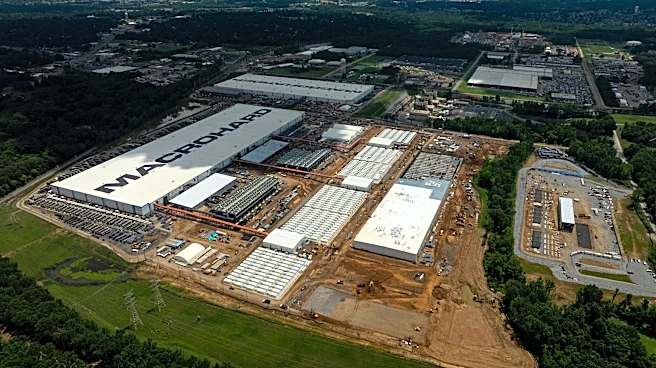
Two of the major data center facilities are located in the South Memphis area, raising a fundamental question of fairness.
Why should one part of our community
bear a disproportionate share of the environmental burden associated with our region's technological and economic expansion?
For families living near these facilities, the questions are not theoretical. What are the immediate and long term effects on air quality? What protections exist for our water supply and the Memphis Sand Aquifer? What are the consequences of increased noise and industrial activity? And what happens to the property values and quality of life of families who have invested generations in these neighborhoods?
These questions deserve measurable answers not simply assurances.`

What about the Water?
Water is another serious consideration. Newer closed loop and water recycling systems can dramatically reduce the amount of fresh water required to cool large data centers. That is encouraging and should be required wherever technologically feasible.
Data Centers, for example, say waterrecycling facilities will reduce demand on the Memphis Aquifer and will also serve other industrial users.
But solving one problem can create another. If reducing water consumption requires greater electrical demand, what does that mean for our power grid?
The Greater Memphis Chamber reports that xAI's Colossus operation, once fully operational, could use approximately 300 megawatts of power. We need independent analysis of what continued expansion means for grid capacity, reliability and ultimately the utility bills of ordinary citizens.
Then there is the economic argument.
Companies understandably point to investment, tax revenue and job creation as evidence of their value to Memphis. Those benefits are important. But we should always ask a simple question.
Follow the Money
Recently, while observing activity around these facilities, I paid attention to the license plates on vehicles entering and leaving the job sites. What struck me was how few appeared to carry Tennessee tags. That observation is not a scientific workforce study, but it raises a legitimate question. How much of this extraordinary investment is actually remaining in Memphis and Shelby County?
Our local and state leaders should require those answers to be quantified and publicly reported.
How many permanent full time employees are Shelby County residents? What are their salaries? How many construction workers are local? How many contracts are awarded to Memphis and Shelby County businesses? How many minority women and locally owned businesses are participating? How much money is being invested directly into the neighborhoods most affected by these facilities?
Economic development cannot simply mean allowing billion dollar companies to operate here. It must mean economic participation for the people who already live here.
Going forward, elected officials should seriously consider locating future large scale data centers in appropriately zoned, less populated areas with adequate buffers from residential neighborhoods. Before additional expansions are approved, companies should also provide enforceable community benefit agreements establishing commitments for local hiring, workforce development, environmental monitoring and neighborhood investment.
That investment should include our young people, youth sports, stem education, paid internships, apprenticeships and workforce development programs. It should include meaningful support for homelessness initiatives, neighborhood infrastructure and community organizations already doing the difficult work of strengthening Memphis.
I am not opposed to technology. I am not opposed to artificial intelligence. And I am certainly not opposed to economic development.
I am opposed to economic development that asks one community to carry the burden while others receive the benefits.
Memphis can become a national center for technology and artificial intelligence. But if we are going to build the economy of the future, we must build it responsibly.
Our elected leadership must stand strong enough to welcome investment while protecting seniors, families, homeowners and children.
The question before us is not whether Memphis should grow.
The question is. Who benefits from that growth, who pays the price for it, and are we willing to follow the money until we know the answer?

Dr. Joseph B. Kyles, a theologian, behavioral scientist, and human rights advocate working at the intersection of faith, public policy, and economic justice. He is president of the Rainbow Push Coalition Memphis.
This article originally appeared on Memphis Commercial Appeal: Memphis and Shelby County are standing at an important crossroads | Opinion