


No Tennessean should have to choose between getting the medical care they need and keeping a roof over their family’s head.
But on the campaign trail, I have heard too many stories from people who were forced into exactly that impossible choice. I have met Tennesseans who are fighting to survive because they got a devastating diagnosis, their children got sick or they needed emergency care. They did what any parent, spouse or loved one would do: They got the care they needed to survive. Then the bills came.
I met a father whose micro-preemie twins needed multiple helicopter flights to save their lives. Those flights were not optional. They were not a luxury. They were the difference between life and death for his children. Yet the financial burden
that followed became something his family had to carry long after the medical emergency was over.
I met a woman who suffered a severe asthma attack and needed emergency transportation to a hospital hundreds of miles away. The medical crisis was frightening enough. But the cost of getting her to the care she needed left her financially devastated and ultimately contributed to her losing her home.
These are not stories about people making irresponsible financial decisions.
They are stories about Tennesseans getting sick.
My plan to eliminate medical debt in Memphis
Medical debt is different from other kinds of debt. Nobody plans for a premature birth. Nobody budgets for a helicopter flight to save their child's life. Nobody expects an asthma attack to cost them their home.
Yet our system too often treats the resulting debt as though it were simply another unpaid consumer bill. It isn't.
Medical debt is a healthcare problem. It is an economic-security problem. And for too many Tennessee families, it is a poverty problem.
I’m starting with what we can do right now.
As a Memphis City Councilwoman, I am sponsoring a resolution to use community grant funds to support medical-debt relief in conjunction with Undue Medical Debt, a nonprofit organization whose purpose is to strengthen communities by erasing financially burdensome medical bills. I believe it demonstrates what is possible when government thinks creatively about how to use public dollars to help families.
Here is what makes the proposal so powerful: With an investment of just $159,202.77, we can eliminate more than $17 million in qualifying medical debt for approximately 12,169 Memphis-area residents living in or near poverty.
Think about what that means. A relatively modest public investment could wipe away years of financial burden for thousands of Memphis residents.
And families would not have to fill out another complicated application to receive the benefit. Under the program's established process, qualifying individuals are identified based on eligibility criteria, their qualifying debt is abolished and they are notified.
That matters. When someone is already struggling to pay a medical bill, we should not make them prove their hardship over and over again just to receive help. We should meet people where they are.

Day One: Erasing medical debt across Tennessee
What I am working to do in Memphis should not stop at the city limits.
Tennessee has the ability to take this concept statewide. My Day One plan as Tennessee's new governor calls for using $10 million in TANF (Temporary Assistance for Needy Families) fundsto buy and erase medical debt for more than 100,000 Tennesseans.
The principle is straightforward: Use resources that are already available to help Tennessee families that are struggling, leverage those dollars through organizations that can purchase qualifying debt at a fraction of its face value and eliminate the debt rather than forcing families to spend years trying to pay it off.
We should be asking a basic question: If we have public resources that can provide substantial relief to struggling families, why aren't we using them? TANF exists to help families experiencing economic hardship. Medical debt can be one of the fastest ways a family falls into that hardship.
A medical emergency can drain a savings account. A major diagnosis can turn a credit card into a lifeline. An ambulance ride or emergency medical transport can become a bill that follows a family for years. For a family already living on the edge, one medical crisis can be the difference between staying housed and becoming homeless.
We should not wait until families reach that point before we act.
Families cannot afford to wait
This is about people, not numbers.
I think about the father I met whose premature twins needed helicopter flights to survive.
I think about the woman whose asthma attack ultimately contributed to losing her home.
And I think about the thousands of other Tennesseans whose stories I have heard but whose names never appear in a statistic.
They are not irresponsible.
They are not failures.
They got sick. They needed help. And they should not have to lose everything because they got it.
My Memphis resolution shows that we can take meaningful action now. A statewide investment could take that relief to more than 100,000 Tennesseans. We have the resources. We have a model. And we have families who cannot afford to wait.

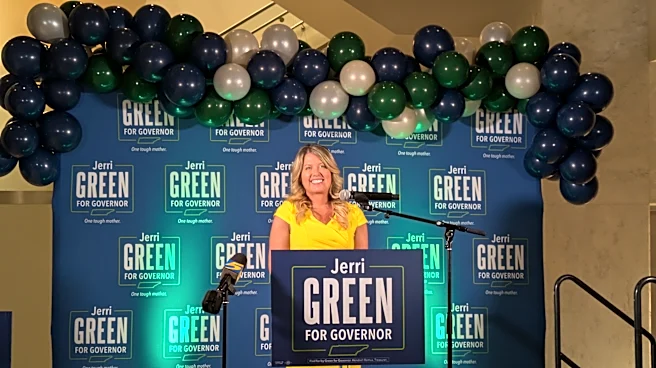
Jerri Green is a mom of three, Memphis City Councilwoman and proud Democrat who recently made history as the first woman from either major political party to secure the nomination for Governor of Tennessee. A lifelong Tennessean, she was raised in Memphis, educated in Knoxville, and began her career in Nashville. Choosing Memphis as home, she’s fought for her community by championing living wages for public employees, championing paid family leave for the first time in City history, advocating for free public transit, and successfully flipping her council seat blue for the first time in history.
For more information about Jerri Green visit: greenforgovernor.com.Contact: press@greenforgovernor.com
This article originally appeared on Memphis Commercial Appeal: As governor, Jerri Green wants to erase your medical debt | Opinion