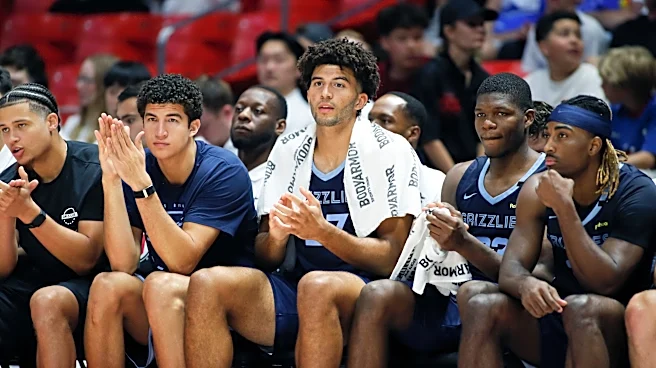



A major change to the NBA landscape came in summer 2023. A new collective bargaining agreement was put in place that would later impact many teams, including the Memphis Grizzlies.
There were changes to the league’s structure, including the introduction of the NBA Cup, but few were more significant than the stricter luxury tax thresholds and roster-building restrictions.
The league created a so-called first and second apron, shifting the way teams build rosters and plan for the future.
The current collective bargaining agreement includes a potential mutual opt-out after the 2028-29 season before the deal is set to expire following the 2029-30 season. With this format likely to remain in place for at least the next three seasons, it’s important
to understand the future ramifications as the Grizzlies continue their rebuild.
Here’s everything to know about the apron rules and how they affect Memphis.
Luxury tax
Memphis has traded away many of its biggest contracts the past two seasons, creating financial flexibility and helping it avoid the luxury tax.
The tax line is set annually based on the league’s salary cap. For the 2026-27 season, the salary cap is $164.96 million and the luxury tax line is $200.43 million.
The Grizzlies have operated firmly above the salary cap but below the luxury tax in recent seasons. Once teams cross the tax line, they begin paying penalties based on how far they exceed it.
While Memphis’ contract numbers will remain fluid as the team works to reduce its roster, it is nowhere close to entering the luxury tax.
The team is positioned to avoid those potential penalties for years to come. Of the Grizzlies' top six contracts, four have potential opt-outs after this upcoming season. Even if they decide to spend more next offseason, they should have the flexibility to do so without immediately pushing themselves into the tax.
First apron
This is the payroll threshold level where some of the NBA’s top projected teams for the 2026-27 season will reside.
The first apron for this season is $209.02 million, with the second apron beginning at $221.69 million.
Teams above the first apron face additional restrictions that don’t apply to teams below it. Among them, first-apron teams face more restrictive rules when matching salaries in trades, generally being limited to taking back 110% of the outgoing salary rather than the more generous matching rules available to teams below the apron.
First-apron teams also face restrictions involving sign-and-trades, buyouts and waiver claims.
Memphis isn’t close to the first apron, so these restrictions don’t have a direct impact on the Grizzlies right now.
The bigger significance is what the first apron could mean down the road. If they eventually build an expensive roster around their young core, the front office will have to weigh the benefits of spending above the line against the restrictions that come with it.
For now, the Grizzlies’ financial flexibility is an advantage.
Second apron
The second apron may be the two scariest words in the NBA.
Several teams have moved on from key players they otherwise might have preferred to keep because of the harsh restrictions and penalties that come with operating above the second apron, which begins at $221.686 million for the 2026-27 season.
The Denver Nuggets are currently the only team above the second apron. That’s part of the reason why their wings, including Cam Johnson and Peyton Watson, have emerged as potential trade names this offseason. Teams operating near or above the second apron can face difficult decisions when trying to balance talent with the league’s financial restrictions.
Among the second-apron restrictions, teams cannot use most avenues to sign outside free agents for more than the league minimum. They can retain their own players above that amount, but doing so can come with significant financial and roster-building consequences.
The second apron also carries perhaps the most significant draft-related penalty.
If a team finishes a season above the second apron, its first-round pick seven years in the future becomes frozen and cannot be traded. If the team remains above the second apron enough times within the league’s designated four-year window, that frozen pick can be moved to the bottom of the first round.
The second apron is far from being a concern for Memphis. In fact, the Grizzlies’ current position gives them financial flexibility that many contenders don’t have.
That could become especially valuable if Memphis eventually wants to acquire a player from a team trying to get below an apron. A team facing second-apron restrictions may be more willing to move a valuable player or attach draft assets to a contract simply to create financial breathing room.
That is where the apron rules could eventually become relevant to the Grizzlies.
They don't need to worry about escaping the apron right now. Instead, they have the flexibility to potentially take advantage of teams that do.
Damichael Cole is the Memphis Grizzlies beat writer for The Commercial Appeal. Contact Damichael at damichael.cole@commercialappeal.com. Follow Damichael on X, formerly known as Twitter, @DamichaelC.
This article originally appeared on Memphis Commercial Appeal: What it means for Grizzlies with NBA tax aprons, how they affect roster building