





When Lee Harris assumed the role of Shelby County mayor eight years ago, his goal was to shift the public debate to issues that actually mattered to the average Memphian.
He was fed up with hearing elected officials toss around things that "wouldn't move the needle" for regular families, and he wanted to do everything he could to honor the working class.
When Harris now looks back at his two terms as county mayor, he sees work that aligned with this mission — like raising the minimum wage for Shelby County employees and a commitment to healthcare with the launch of ShelbyCares. He reflects on the pride county employees have for their work and the "research hospital" model he cultivated to encourage ideas from his staff.
But he also sees work that
is left undone, work that newly sworn in Mayor Mickell Lowery inherited on Sept. 1. Issues like the state of the county's schools, budget issues and the debate over county jail persist.
Harris sees new county jail as a lower priority
The deferred maintenance of county schools has stuck with Harris as he exits his office.
With the average public school building in the county being built in 1950, Harris would like to see Lowery's administration take on building replacements.
With county spending, Harris said he prioritized in terms of need. Though many people, including elected officials, argue for immediate spending on a new county jail, Harris said the opposite.
The county jail, often known as 201 Poplar, was built in 1981, making it one of the county's newest buildings. Harris said this pushed it toward the bottom of his list of priorities. Public schools, need more immediate attention, he said.

"You can’t just skip these folks, these buildings, that are much older and in much worse shape, and go straight to something just based on press conferences," he said.
The buildings housing the Shelby County Division of Corrections are pushing 100 years old, Harris said, and "we were still able to run an effective operation."
“It’s just management in my view," Harris said.
The bigger issue, according to Harris, is the state of Tennessee not paying Shelby County what it costs to house state inmates. He said the county's "devastating" budget issues stem from this.
“If the state paid us for the inmates we house, then Shelby County would be flush with resources," he said.

Harris said the state is paying the county $80 per inmate less per day than what it costs to house hundreds of state inmates, amounting to a loss of tens of millions of dollars each year. Instead, he said, county taxpayers are fronting that burden.
He urged the state to do the right thing and pay what they owe Shelby County, but he didn't seem hopeful, calling state officials “deadbeats."
Shelby County's "roller coaster ride" of a budget will continue until this issue is solved, Harris said.
Years later, Harris is at peace with county response to COVID-19
Reflecting on what became a controversial county response to the COVID-19 pandemic, Harris said he is happy with his role in the public health emergency, overall.
His biggest mistake, though, was “assuming that the state was a friend of Memphis and Shelby County," he said. When he looks back at vaccine distribution and putting health protocols in place, his biggest gripe is with the state of Tennessee's role in dictating his work.

“I guess I wasn’t ready for that," he said about the level of involvement from the state.
Commercial Appeal reporting in early 2021 showed that thousands of doses of the COVID-19 vaccine were wasted and that tens of thousands were improperly stored or stockpiled. In some instances, children were vaccinated before the vaccines were approved for children and some doses were stolen from vaccination sites. The state of Tennessee later took away Shelby County's oversight of vaccine distribution and gave it to the City of Memphis, hospitals and pharmacies.
Harris in support of centralizing government
In a county with several mayors and administrations from different municipalities working side-by-side, sometimes butting heads, Harris said he is "absolutely" in support of centralizing local governments.
He said one of the issues that has always plagued Shelby County is the need for strong leadership among a sea of conflicting voices and bureaucratic red tape preventing quick action.
“Anyone who’s seen all this up close, worked on this stuff really, really seriously on a day-to-day basis, it’s kind of hard not to walk away and say, 'yeah we should have had consolidation,'" he said. "We have too many power centers."
But in order to make a push for consolidation, someone has to "quarterback" it, Harris said, and it wasn't his priority.
“Everybody’s satisfied with it because nobody wants to give up their little power center," he said.
What's next for Harris?
Harris, quite definitively, said he will not be running for the county mayor seat again. He said he's just "trying to stay out of the news."
After being brought on to the University of Mississippi's as a tenured law professor this fall, Harris said he has enough on his plate to keep him busy.
He is also excited about a new volunteer opportunity he's been working on — leading tours of Elmwood Cemetery. Memphis' oldest cemetery, created just over 30 years after the city's founding, Elmwood allows Harris to "nerd out" on local history, he said.
He said he's excited to flex his "amateur historian" muscles and share his love of Memphis culture with others.
Harris has also started working with Epicenter Memphis, a sort of incubator for startup businesses. He hopes to create a resource that would help adults finish their degrees through remote learning, and is already inching toward its launch.
A native Memphian, Harris has been a state senator, a Memphis City Council member and most recently, the sixth mayor of Shelby County.
Harris taught at the University of Memphis Cecil C. Humphreys School of Law for 13 years before he was elected as county mayor. He was previously a faculty member at George Washington School of Law, Yale Law School and Grenoble Ecole de Management in France, and authored two textbooks about business law.
He also practiced law in the private sector with Baker Donelson in Memphis.
Harris holds an undergraduate degree from Morehouse College and a law degree from Yale Law School.

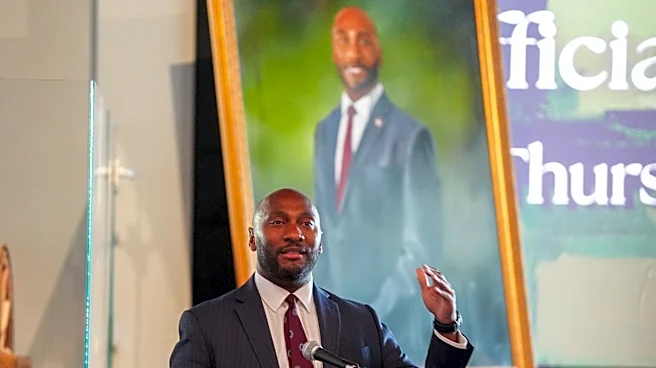
Harris marked the end of his administration with an unveiling of his official portrait on Aug. 27 at the National Civil Rights Museum's new addition, The Legacy Experience. City and county leaders and staff, family, friends and supporters honored him at the event.
Associates spoke of his leadership, humor and impatience, what Shelby County Attorney Marlinee Clark Iverson referred to as "Lee Harris standard time."
"I am out," he said in his remarks at the event. "And I got out alive."
Annie Goldman covers government for The Commercial Appeal. She can be reached at annie.goldman@commercialappeal.com or 901-930-7431, and followed on X @AnnieSGoldman.
This article originally appeared on Memphis Commercial Appeal: Former Shelby County Mayor Harris talks consolidated government, COVID response