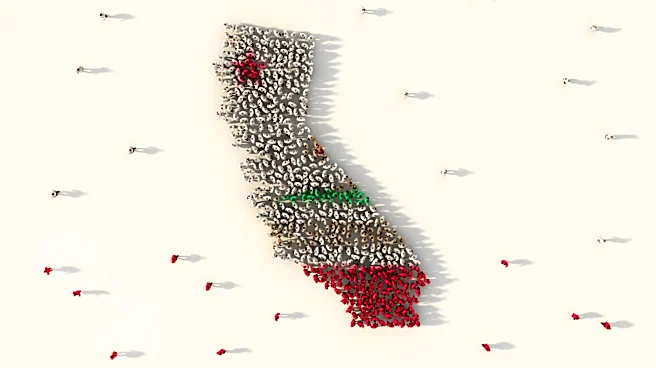








California is among five states that saw population declines last year, according to a new report.
From 2024 to 2025, the Golden State saw its population fall by 0.02%, a report from the financial technology company SmartAsset found.
To determine population trends for the 50 states, SmartAsset used United States Census Bureau estimates. To derive the year-over-year rate change, the company compared the July 1, 2025, estimates with July 1, 2024, estimates, the most recent data available.
"The study also examines which states have the oldest and youngest populations. Together, the results show how growth rates and age distribution are reshaping the nation’s demographic profile," SmartAsset said.
Here's what to know about the report, including its
findings for California and the rest of the nation.
What repot found for California
California's population stood at 39,355,309 in 2025, while that figure was 39,364,774 in 2024, making for a 0.02% decline, according to SmartAsset's analysis. The state was just behind New York, which saw a year-over-year population change of 0.01%.
The median age in the Golden State is 39. Meanwhile, 5.21% of the population is under the age of 5 and 17.54% is 65 or older.
The five states that saw population declines
Here are the five states that saw population declines from 2024 to 2025, along with the year-over-year rate change:
- Vermont: -0.29%
- Hawaii: -0.15%
- West Virginia: -0.07%
- New Mexico: -0.06%
- California: -0.02%
States where population is growing the most
Here are the 10 states that saw the greatest population gains from 2024 to 2025, along with the year-over-year rate changes:
- South Carolina: 1.46%
- Idaho: 1.44%
- North Carolina: 1.32%
- Texas: 1.25%
- Utah: 1.03%
- Delaware: 0.94%
- Washington: 0.92%
- Arizona: 0.89%
- Nevada: 0.88%
- Tennessee: 0.88%
Population's growth slowed nationally, US Census Bureau finds
Across the nation, population growth slowed significantly from 2024 to 2025, the US Census Bureau said when it released its Vintage 2025 population estimates in January.
The nation saw an increase of 1.8 million people, or about 0.5%, which, according to the agency, is the nation's slowest population growth since the early period of the COVID-19 pandemic when the population grew by 0.2% in 2021.
In 2024, there was a "sizeable uptick of growth," the agency said. During that period, the nation grew by 1.0% with the addition of 3.2 million people, "the fastest annual population growth rate since 2006."
“The slowdown in U.S. population growth is largely due to a historic decline in net international migration, which dropped from 2.7 million to 1.3 million in the period from July 2024 through June 2025,” Christine Hartley, assistant division chief for estimates and projections at the Census Bureau, said in the release. “With births and deaths remaining relatively stable compared to the prior year, the sharp decline in net international migration is the main reason for the slower growth rate we see today.”
The entire country saw slowed population growth.
"All four census regions and every state except Montana and West Virginia saw their growth slow, or their decline accelerate," the agency said.
The nation's oldest and youngest states
With a median age of 33, Utah has the nation's youngest population.
"It also has the highest share of residents younger than age 5, at 6.5%, and the lowest percentage of residents 65 and older, at 13%," according to SmartAsset.
By contrast, New England has an aging population, as Maine, New Hampshire and Vermont have the nation’s oldest populations, the report found.
"Maine has the nation’s highest median age, at 45 years, as well as the largest share of residents 65 and older," SmartAsset said. "New Hampshire and Vermont closely follow, each with a median age of 44 years and large shares of residents 65 and older."
This article originally appeared on Palm Springs Desert Sun: California among five states that lost population last year, report finds