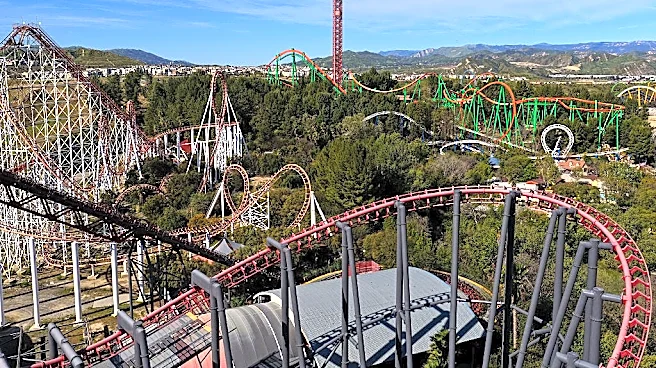






Three new lawsuits filed in Los Angeles County allege that riders suffered catastrophic brain injuries after riding the X2 roller coaster at Six Flags Magic Mountain in Valencia,raising new questions about ride safety, warnings provided to guests, and what park operators knew about prior injury claims.
The lawsuits, filed Sept. 21, were brought by riders Pamela Guillen, Naomi Greer-Wilkinson and attorney Michael Wilk. The plaintiffs accuse Six Flags and ride manufacturer S&S Worldwide of operating a defectively designed attraction and failing to adequately warn guests about the alleged risk of serious brain injuries.
According to the complaints, the riders suffered massive intracranial hemorrhages and traumatic brain injuries after riding X2,
a fourth-dimension coaster that rotates riders independently from the track while reaching speeds of up to 76 mph.
Six Flags has not publicly commented on the specific allegations because of ongoing litigation. In previous court filings related to separate X2 injury claims, the company denied that the ride caused riders' brain injuries, arguing testing showed the coaster operated within accepted industry limits and that some injuries were linked to pre-existing medical conditions. The ride remains closed following incidents reported in July.
What the Six Flags X2 lawsuits allege
The complaints claim X2 exposed riders to sudden, violent, and excessive forces capable of causing catastrophic head and brain injuries. Plaintiffs allege the ride was defectively designed, lacked sufficient warnings, and continued operating despite a history of reported brain injury claims.
Pamela Guillen, 39, rode X2 on July 5 while celebrating her daughter's 16th birthday. According to the lawsuit, her daughter observed her sitting motionless with a vacant stare when the ride ended. Guillen allegedly became confused, stumbled while exiting the attraction, and later collapsed.
Hospital scans showed what the complaint describes as a massive intracranial hemorrhage that required emergency brain surgery and multiple subsequent procedures. The lawsuit says her treating physicians concluded the injury resulted from forces experienced on the ride.
Six days later, on July 11, Naomi Greer-Wilkinson, 25, rode X2 with her siblings. Her lawsuit alleges she became confused, struggled to walk after leaving the coaster, and rapidly lost consciousness. She underwent multiple emergency neurosurgical procedures after doctors discovered extensive brain bleeding.
According to the complaint, Greer-Wilkinson remains bedridden, ventilator-dependent, unable to speak, and in a minimally conscious state.
Riders say Six Flags knew about prior X2 brain injury claims
A central allegation in both lawsuits is that Six Flags had prior knowledge of serious brain injury claims involving X2. The complaints cite previous litigation involving rider Sheila Katerelos, who alleged she suffered a traumatic brain injury and subdural hematoma after riding X2 in 2020. They also reference the case of 22-year-old Christopher Hawley, who died in 2022 after suffering a brain hemorrhage following a ride on X2.
The lawsuits contend Six Flags had been sued more than a dozen times over alleged catastrophic brain injuries connected to X2 or earlier versions of the attraction. Plaintiffs argue guests were never adequately warned that riders had allegedly suffered permanent brain damage, intracranial bleeding, comas or death after riding the coaster.
The Greer-Wilkinson complaint goes further, alleging park officials knew about Guillen's injuries immediately after the July 5 incident yet continued operating X2 for nearly a week before Greer-Wilkinson boarded the ride. Plaintiffs contend that information would have been material to guests deciding whether to ride the attraction.
Why the X2 roller coaster is different
X2 is one of the most recognizable attractions at Six Flags Magic Mountain and was originally introduced as "X" in 2002. The roller coaster is known as a "fourth-dimension" ride because seats rotate independently of the train and track, causing riders to spin while traveling through drops, inversions, and high-speed turns.
The lawsuits note that the attraction experienced operational and design changes after opening, including a closure in 2002 and another extensive redesign in 2007 that led to the ride's relaunch as X2 in 2008. Plaintiffs allege the coaster has experienced additional mechanical and operational issues over the years and argue that safer alternative designs were available.
Six Flags disputes claims that X2 causes brain injuries
While the new lawsuits focus on alleged design defects and inadequate warnings, Six Flags has previously challenged claims that X2 can cause brain hemorrhages.
According to court filings in earlier litigation cited by news reports, Six Flags argued that engineering and biomechanical testing showed X2 operated within accepted acceleration limits and did not generate forces capable of causing some riders' brain bleeds.
The company also pointed to warning signs posted for guests and argued certain injuries stemmed from underlying medical conditions rather than the ride itself. A jury has not resolved those allegations.
The new lawsuits remain in their early stages, and the claims have not been proven in court. Both sides are expected to present expert testimony about whether forces generated by X2 are capable of causing the severe brain injuries described in the complaints.
This article originally appeared on Palm Springs Desert Sun: Six Flags Magic Mountain's X2 faces 3 new brain injury lawsuits