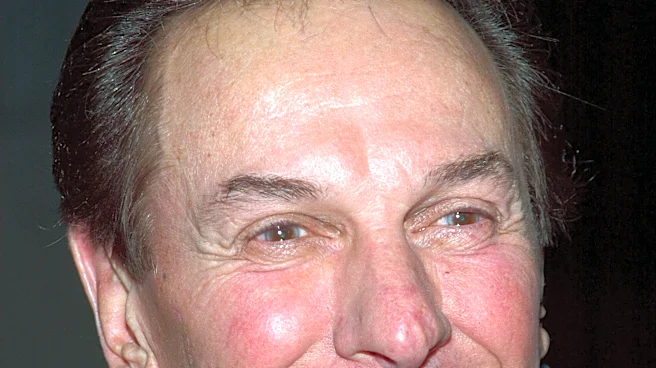



Freddy Cannon, the singer known for early rock-and-roll hits including "Palisades Park" and "Tallahassee Lassie," died July 17 at a hospice facility in Oxnard after a battle with cancer. He was 89. Longtime friend Tom Cuddy confirmed Cannon's death to Deadline, saying his adult children were with him during his final days.
While Cannon built his music career far from California, the state became part of his final chapter. The Massachusetts-born performer spent his last days in Ventura County and remained a popular attraction on oldies and nostalgia concert circuits decades after his chart success peaked.

How Freddy Cannon became one of rock's early hitmakers
Born Frederick Anthony Picariello Jr. in Lynn, Massachusetts, Cannon emerged from the Boston music scene in the late 1950s. Nicknamed "Boom Boom"
for the energetic style that defined his recordings, he broke through nationally with the 1959 hit "Tallahassee Lassie," which he co-wrote with his mother.
His career gained momentum with support from TV personality Dick Clark, whose Swan Records label signed Cannon and helped bring his music to a national audience. Cannon became a frequent guest on "American Bandstand," making what reports describe as a record number of appearances on the influential music program.
Among his biggest hits were "Way Down Yonder in New Orleans," "Action" and "Abigail Beecher," but none matched the success of "Palisades Park."
Why 'Palisades Park' became Freddy Cannon's signature song
Released in 1962, "Palisades Park" climbed near the top of the charts and became Cannon's most enduring recording. The song paid tribute to the now-closed New Jersey amusement park of the same name and stood out for its use of amusement-park sound effects.
Written by Chuck Barris — who later created television shows including "The Dating Game" — the song tells the story of a nighttime visit to the park, where the narrator experiences its rides, attractions and a budding romance.
The recording outlasted the amusement park itself, which closed in 1971. Over the years, "Palisades Park" was covered by artists including The Beach Boys and The Ramones, introducing the song to new generations of listeners.
A legacy that extended beyond the charts
Although Cannon's run of major hits slowed by the mid-1960s, he continued performing for decades. He remained a fixture on oldies tours, particularly in the United Kingdom, and frequently appeared at "American Bandstand" reunion events.
In a2017 interview with the Ventura County Star,he shared fond memories of legendary 'Bandstand" host Dick Clark.
"He was a giant on television and if you were on his show, you sold a lot of records, and that's exactly what happened with me," Cannon said. "I owe a lot to him."
His influence reached beyond his own recordings. Artists including The Beach Boys, Fleetwood Mac and The Rolling Stones later recorded versions of songs associated with his catalog.
For many rock-and-roll fans, Cannon remained a symbol of the genre's early years — an era defined by energetic singles, television exposure and the rise of youth culture in America.
This article originally appeared on Palm Springs Desert Sun: Freddy Cannon, singer of 'Palisades Park,' dies at 89 in California