





California’s statewide minimum wage will increase to $17.40 per hour starting in January 2027, more than double the federal minimum wage, Gov. Gavin Newsom’s office announced Friday, July 31.
The increase, which is an automatic annual wage adjustment to keep pace with inflation under state law, raises the minimum wage from $16.90 per hour, the governor’s office said in a July 31 news release.
Newsom’s office said the increase will give California the highest statewide minimum wage in the nation.
Currently, the state of Washington has the highest statewide minimum wage among the 50 states at $17.13 per hour, though the District of Columbia's minimum wage is higher at $18.40 per hour.
In announcing the increase, Newsom, who has acknowledged interest
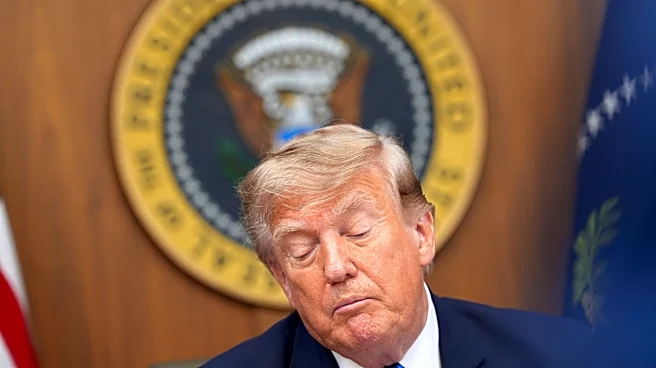
in a 2028 presidential run, criticized President Donald Trump and Republicans, noting that the federal minimum wage has remained unchanged at $7.25 per hour since 2009.
“For years, Donald Trump and Republicans have blocked efforts to raise the federal minimum wage while handing tax breaks to billionaires and big corporations,” Newsom said in a statement. “California has chosen a different path — one that rewards work, grows the economy, and puts working families first. We believe if you work hard, you deserve a decent paycheck. They think $7.25 an hour is enough. We don’t.”
Not all Californians praised the increase.
Republican gubernatorial candidate Steve Hiltonsaid the wage increase will be “devastating for small business.”
“We already have the highest unemployment rate in the country. Now they're pushing up the minimum wage,” Hilton said in a video on X. “It's just going to throw more thousands of Californians on the scrap heap.”
Although California's minimum wage is currently $16.90 per hour, many workers already earn higher minimum wages under local laws.
According to CalPay, nearly 40 jurisdictions in California have a general minimum wage higher than the state’s current $16.90 per hour rate, with Emeryville ($20.34 per hour), West Hollywood ($20.25 per hour), and Berkeley and San Francisco ($19.61 per hour) having the highest rates.
Additionally, per California law, fast-food workers in the state are paid a mandated minimum wage of $20.00 per hour, and health care workers have a minimum wage range of $19.28 to $25.00 per hour, depending on the specific facility type and size.
How much has California's minimum wage risen in the past decade?
In April 2016, then-California Gov. Jerry Brown signed Senate Bill 3 into law, establishing a path to raise the state's minimum wage to $15 an hour and creating automatic annual inflation adjustments beginning in 2024.
“This is about economic justice, it’s about people,” Brown said of signing the legislation in an April 2016 statement. “This is an important day, it’s not the end of the struggle but it’s a very important step forward.”
Here's a breakdown of California's minimum wage over the past decade, based on data from the California Department of Finance:
- 2016: $10.00 per hour (for employers with 26 or more employees; $9.00 for smaller employers)
- 2017: $10.50 per hour (large employers) / $10.00 (small employers)
- 2018: $11.00 per hour (large employers) / $10.50 (small employers)
- 2019: $12.00 per hour (large employers) / $11.00 (small employers)
- 2020: $13.00 per hour (large employers) / $12.00 (small employers)
- 2021: $14.00 per hour (large employers) / $13.00 (small employers)
- 2022: $15.00 per hour for all employers
- 2023: $15.50 per hour
- 2024: $16.00 per hour
- 2025: $16.50 per hour
- 2026: $16.90 per hour
- Starting Jan. 1 2027: $17.40 per hour
This article originally appeared on Palm Springs Desert Sun: California minimum wage to increase again in 2027, Newsom says