










Over these last few weeks, we've talked about some collectibles that are overvalued and others that are undervalued, along with a few that are ascending and descending in value. But what is value anyway?
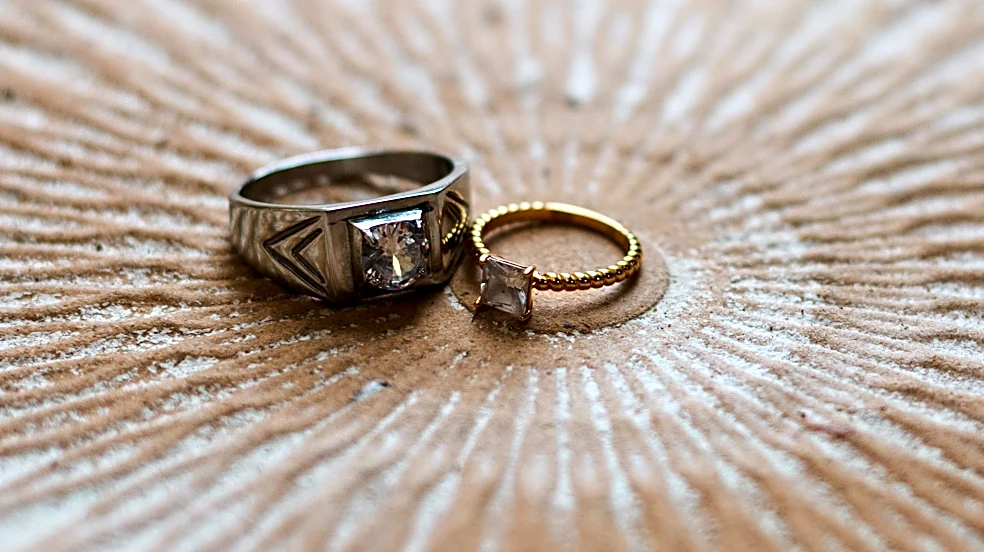
Sometimes it's the intrinsic value of a piece, i.e., the elements that make up the whole. A solid gold ring will always have as its underlying value the gold from which it was made. Its design and workmanship may add or subtract from its price, but its precious metal value will never disappear. In contrast, some collectibles are valued for their association to a personage or event, occasionally to the point of complete insanity. Let's explore a few extreme examples.
Earlier this year, a life vest from the RMS Titanic sold at auction for $906,000.
It was worn by a female survivor of the ship's sinking in 1912 during which more than two-thirds of the 2,200 passengers aboard lost their lives. As it turned out, there weren't nearly enough life vests to go around, greatly increasing the magnitude of the disaster. All the same, the life vest itself is a bulky and unattractive piece of gear and would otherwise be unappealing to collectors. However, as a Titanic artifact with an unassailable provenance, its appeal to collectors is enormous.

Another example is the Vostok space capsule launched in 1961 as a final run-up to Yuri Gagarin's becoming the first human to travel in space. It was manned by a mannequin and a live dog, the latter of which actually survived the trip. (The mannequin was, well, already dead). By any modern measure, the capsule was crudely made with little to recommend it either aesthetically or technologically. Still, it sold not long ago to a Russian buyer for a price in excess of $2.8 million.
A further example is the pair of ruby slippers worn by Judy Garland in "The Wizard of Oz." Apparently there were several of these worn in the movie but this particular pair, covered as it was in red sequins, remained in remarkably good condition. As an unattributed pair of shoes, its value would be modest. As an iconic artifact from one of the world's most famous movies of all time, this particular pair recently sold at auction for $28 million plus fees. You can buy a lot of Air Jordans for that.
Not to pile on, but a further extreme example of value by association is a diamond and pearl pendant owned by Marie Antoinette, the famous "Let Them Eat Cake" queen of France who was beheaded in 1793 at the age of 37. It's a lovely piece of jewelry, but hardly exceptional. Nonetheless, its auction not long ago realized more than $36 million for the seller.
And the list goes on: an Apollo 11 lunar sample bag in ordinary nylon used by Neil Armstrong ($1.8 million), Kurt Cobain's 1959 Martin guitar ($6.1 million), Michael Jackson's red-and-black Thriller jacket ($1.8 million) and more. What all these items have in common, apart from their associations, is uncontestable documentary evidence that they are what they purport to be. Without that, it's all just … stuff.
Mike Rivkin is the former proprietor of Antique Galleries of Palm Springs. His new venture will open later this fall. Contact him at scmcorp@sbcglobal.net.
This article originally appeared on Palm Springs Desert Sun: When talking antiques, what does value by association mean?